


Meaning of Vibhuti – Why Lord Shiva Wears Sacred Ash & Its Spiritual Significance 🔥
Among all the powerful symbols associated with Lord Shiva — the Trishul, the Damru, the Third Eye, the crescent moon — one symbol appears deceptively simple yet profoundly meaningful: Vibhuti, the sacred ash that adorns Shiva’s body.
At first glance, ash may appear ordinary. It is what remains after fire has consumed something. It is grey, light, and seemingly lifeless. Yet in Sanatan Dharma, Vibhuti represents one of the deepest spiritual truths: everything material eventually returns to ash.
When devotees see Lord Shiva covered in sacred ash, it is not an aesthetic choice. It is philosophy made visible. It is a reminder of impermanence, detachment, purification, and ultimate truth.
This detailed guide explores the meaning of Vibhuti through mythology, Shaiva traditions, symbolism, temple rituals, yogic philosophy, psychology, and its relevance in modern life.
🕉️ What is Vibhuti?
The word “Vibhuti” comes from Sanskrit and carries multiple meanings including glory, power, and divine manifestation. In Shaiva tradition, Vibhuti refers to sacred ash used for spiritual purposes.
Traditionally, Vibhuti is prepared from the ash of sacred fire rituals (yajna) or from specially purified cow dung cakes burned according to Vedic procedures. However, beyond its physical form, Vibhuti represents spiritual purification and the residue of transformation.
In simple terms, Vibhuti is what remains after the fire of transformation has completed its work.
🔥 Why Does Lord Shiva Wear Ash?
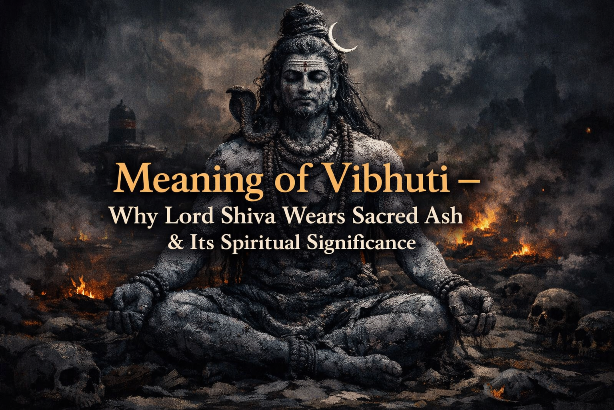
Lord Shiva is often depicted sitting in meditation, covered in ash from head to toe. This imagery carries profound symbolism.
Fire reduces everything to its most basic form — ash. Whether wood, cloth, or any other material, once burned, distinctions disappear. Ash represents equality. It symbolizes the truth that all forms ultimately dissolve into the same state.
By covering himself in ash, Shiva represents detachment from material identity. He reminds humanity that wealth, beauty, status, and ego are temporary. What remains eternal is consciousness.
📜 Mythological Origins of Vibhuti
Several mythological stories explain why Shiva wears ash. One popular narrative describes Shiva sitting in cremation grounds, symbolizing his mastery over life and death. Cremation ash represents the ultimate reality of impermanence.
Another story links Vibhuti to the destruction of Tripura — the three demon cities. After burning them with divine fire, the ash represented the dissolution of ego, ignorance, and attachment.
These stories are symbolic. They teach that destruction in spiritual context means transformation — the burning away of illusion.
🌿 Vibhuti as a Symbol of Impermanence
Perhaps the most powerful message of Vibhuti is impermanence. Everything material — the body, possessions, achievements — eventually turns to ash. This awareness is not meant to create fear but clarity.
When devotees apply Vibhuti on their forehead, they symbolically accept the transient nature of life. This acceptance can create humility, gratitude, and detachment from unnecessary pride.
⚰️ Shiva and the Cremation Ground – The Deeper Meaning of Ash
One of the most striking aspects of Lord Shiva’s imagery is his association with cremation grounds. Unlike other deities who are depicted in royal palaces or celestial realms, Shiva is often shown meditating in the silence of the smashana — the cremation ground.
This symbolism is deeply philosophical. The cremation ground represents the final destination of the physical body. It is the place where identity, ego, wealth, and social status lose meaning. In that space, only truth remains.
By covering himself with ash from the cremation ground, Shiva demonstrates complete detachment from material identity. He is not bound by birth or death. He represents the eternal consciousness that remains when all temporary forms dissolve.
The ash reminds devotees that life is precious because it is temporary. It encourages living with awareness rather than attachment.
🕉️ The Spiritual Meaning of Tripundra (Three Lines of Vibhuti)
When Vibhuti is applied on the forehead, it is often drawn as three horizontal lines known as Tripundra. These three lines carry layered spiritual meaning.
They represent the three fundamental impurities described in Shaiva philosophy: ego (anava), karma (action and consequence), and illusion (maya). Applying Vibhuti symbolizes the intention to transcend these limitations.
The three lines also symbolize creation, preservation, and transformation — reminding devotees that life moves through cycles and awareness is required to navigate them.
In another interpretation, the three lines represent body, mind, and intellect — the aspects that must be purified through discipline and self-awareness.
🔥 Vibhuti and the Fire of Transformation
Fire holds sacred significance in Vedic tradition. It represents transformation. When something is offered into fire, it changes form completely. What remains is ash — pure, reduced, and equalized.
Vibhuti represents the final stage of this transformation. It is what remains when ego and ignorance are burned away through knowledge and awareness.
In this sense, Vibhuti is not a symbol of destruction but of purification. It reminds devotees that spiritual growth requires burning away pride, attachment, and negativity.
🌿 Vibhuti in Shaiva Philosophy
Shaiva traditions emphasize detachment and self-realization. Vibhuti plays an important role in these practices. Applying sacred ash is not merely ritualistic; it is symbolic self-remembrance.
It reminds the practitioner that the physical body is temporary, but consciousness is eternal. This awareness shifts focus from external accumulation to inner growth.
For ascetics and sadhus, Vibhuti represents renunciation. It is a visible expression of freedom from worldly identity.
🌙 Vibhuti and the Dissolution of Ego
One of the central teachings of Shiva philosophy is the dissolution of ego. Ego creates the illusion of separateness — the idea that one is isolated from the larger existence. It generates pride, comparison, and attachment to identity.
Vibhuti symbolizes the end of ego. Just as fire reduces everything to ash without distinction, spiritual awareness reduces pride and false identity to humility.
When devotees apply Vibhuti on the forehead, it serves as a reminder that the “I” built on status, appearance, or achievement is temporary. What remains eternal is awareness.
🛕 Vibhuti in Temple Rituals and Daily Worship
In many Shiva temples across India, Vibhuti is offered to devotees after worship. Receiving sacred ash is considered a blessing.
It is commonly applied to the forehead, throat, or chest. Each placement carries symbolic meaning. The forehead represents thought and perception. Applying Vibhuti there symbolizes purification of thinking.
In Shaiva Agama traditions, Vibhuti is sometimes sanctified through specific mantras before application. This ritual enhances its symbolic value as a reminder of spiritual awareness.
🧘 Vibhuti and Yogic Detachment
Yogic philosophy emphasizes vairagya — detachment from unnecessary attachment. Detachment does not mean indifference; it means remaining steady regardless of external changes.
Vibhuti symbolizes this steadiness. Just as ash is light and unaffected by form, the yogic mind remains balanced in success and failure.
🌍 Psychological Interpretation of Vibhuti
From a psychological perspective, symbols help reinforce mindset. Applying Vibhuti can act as a physical reminder of deeper values.
It can reinforce humility, awareness of mortality, and gratitude for the present moment. Recognizing impermanence can actually reduce anxiety by shifting focus to what truly matters.
⚡ Vibhuti and the Acceptance of Mortality
Human beings often avoid thinking about mortality. However, spiritual traditions encourage gentle awareness of life’s temporary nature.
Vibhuti represents acceptance. Instead of fear, it invites clarity. It encourages living purposefully, compassionately, and mindfully.
🌿 Vibhuti as a Symbol of Equality
One of the most overlooked yet profound meanings of Vibhuti is equality. When fire burns different materials — whether sandalwood or dry grass — the end result is ash. The distinctions that once existed disappear.
This symbolism reflects a powerful spiritual truth: beyond social identity, wealth, status, caste, or external appearance, all beings share the same essential nature.
By wearing ash, Shiva represents absolute equality. He does not differentiate between king and ascetic, rich and poor. In the presence of ultimate truth, external identity dissolves.
🔥 Vibhuti and the Three Impurities (Anava, Karma, Maya)
Shaiva philosophy describes three primary impurities that bind the soul: Anava (ego-centered identity), Karma (the cycle of action and consequence), and Maya (illusion or misperception).
The three lines of Tripundra symbolize the burning away of these impurities through knowledge and awareness. Applying Vibhuti becomes a symbolic declaration of spiritual intention — the desire to transcend limitation.
🌙 The Subtle Meaning of Ash in Meditation
In deep meditation, thoughts gradually reduce in intensity. When distractions dissolve, the mind becomes clear and silent. Ash symbolizes this final stillness.
Just as ash remains after fire completes its work, clarity remains after intense self-inquiry dissolves confusion.
🛕 Vibhuti Across Shaiva Traditions
Different Shaiva traditions use Vibhuti in slightly different ways, yet the core symbolism remains consistent — purification and detachment.
In some traditions, devotees apply it three times daily. In others, it is used during specific rituals or spiritual observances.
🌍 Modern Relevance of Vibhuti
In modern life, where identity is often built on external validation, Vibhuti carries a powerful reminder of simplicity and humility.
It encourages focusing on inner growth rather than external accumulation. It reminds individuals to live mindfully and with gratitude.
Frequently Asked Questions (FAQs) ❓
1. What is Vibhuti in Hinduism?
Vibhuti refers to sacred ash used in Shaiva tradition. It symbolizes purification, detachment, impermanence, and spiritual awareness. While physically it is ash from sacred fire rituals, spiritually it represents the residue of transformation after ego and illusion are burned away.
2. Why does Lord Shiva wear ash?
Shiva wears ash to symbolize detachment from material identity. Ash represents the ultimate reality that all forms eventually dissolve. By covering himself in Vibhuti, Shiva reminds devotees of impermanence and the importance of spiritual awareness.
3. What is the meaning of Tripundra (three lines of ash)?
The three horizontal lines represent various spiritual triads: ego, karma, and illusion; body, mind, and intellect; or creation, preservation, and transformation. They symbolize purification and transcendence of limitation.
4. Is Vibhuti different from Bhasma?
The terms are often used interchangeably, but traditionally Bhasma refers specifically to ash from sacred fire rituals, while Vibhuti carries a broader meaning including divine glory and spiritual power.
5. Why is Vibhuti applied on the forehead?
The forehead represents thought and perception. Applying Vibhuti there symbolizes purification of thoughts and remembrance of impermanence.
6. What is the spiritual benefit of applying Vibhuti?
Spiritually, it serves as a reminder of humility, detachment, and awareness. It reinforces the understanding that material identity is temporary.
7. Is Vibhuti only for Shaivites?
While strongly associated with Shaiva tradition, sacred ash is respected across various Hindu practices as a symbol of purification.
8. Does Vibhuti have scientific meaning?
Traditionally prepared Vibhuti from sacred fire rituals contains natural alkaline elements. However, its primary significance remains symbolic and spiritual rather than medical.
✨ Conclusion 📌
Vibhuti as the Reminder of Ultimate Truth
Vibhuti may appear simple, yet it carries one of the deepest spiritual messages in Sanatan Dharma. It reminds humanity of impermanence, equality, humility, and transformation. Ash represents what remains when illusion, ego, and attachment are reduced to their essence.
Through mythology, philosophy, and ritual, Vibhuti teaches that life’s external identities are temporary. What endures is awareness. By applying sacred ash, devotees symbolically accept this truth and align themselves with clarity and detachment.
In a world often driven by external validation, Vibhuti stands as a quiet yet powerful symbol of simplicity and inner strength. Its message remains timeless: burn away illusion, embrace humility, and live with awareness.
🙏 हर हर महादेव 🙏





Leave a comment