






















🕉️ What Hanuman Teaches About Focus, Fear, and Self-Control in a Distracted World
In an age where attention is constantly fragmented, fear is amplified by information overload, and self-control is mistaken for suppression, the relevance of Hanuman has quietly intensified. He is often remembered for strength, devotion, and heroic feats, yet these outward qualities are only expressions of a far deeper inner discipline. Hanuman’s real significance lies not in what he could do, but in how he governed his mind while doing it.
Unlike many mythological figures whose power is dramatic and emotional, Hanuman represents a rare form of mastery — strength without ego, courage without impulsiveness, and focus without rigidity. This understanding aligns closely with how discipline functions in spiritual symbolism, a theme explored more deeply in why Mahadev wears Rudraksha as a symbol of restraint rather than ornament.
In a distracted world driven by urgency and constant stimulation, Hanuman’s inner architecture offers a framework that feels almost countercultural. His life suggests that clarity does not arise from escape, aggression, or excess effort. It emerges from alignment — between intention, discipline, and awareness.
🧠 Focus Without Obsession: Hanuman’s Relationship With Attention
One of the most misunderstood aspects of focus today is the belief that it requires strain. Concentration is often approached as a battle against distraction, leading to mental exhaustion rather than clarity. Hanuman’s focus operates on an entirely different principle. His attention is unwavering not because distractions are eliminated, but because his inner orientation is clear.
In traditional narratives, Hanuman never displays scattered intent. Whether leaping across the ocean or standing silently before Rama, his attention is singular. This is not tunnel vision. It is coherence. His mind does not jump between competing desires because his purpose is settled. Modern distraction thrives on unresolved intention. When goals conflict, attention fractures. Hanuman’s example reveals that focus stabilizes when internal conflict dissolves.
This distinction is critical. Focus is not the act of narrowing attention forcefully. It is the result of knowing what deserves attention and releasing the rest without struggle — a principle also reflected in why astrology rewards effort rather than quick fixes, where clarity emerges through preparation instead of pressure.
🔥 Fear as Information, Not an Enemy
Fear plays a central role in the human psyche, yet it is rarely understood correctly. In contemporary culture, fear is either dramatized or denied. Hanuman’s life offers a third approach — fear is acknowledged, but not obeyed.
When Hanuman faces overwhelming challenges, fear is never depicted as paralyzing him. Nor is it portrayed as absent. Instead, fear exists as contextual information. The body recognizes risk. The mind assesses consequence. Yet action proceeds from clarity, not reaction. This is the essence of self-control: responding without being hijacked.
Fear becomes destructive only when it dominates identity. Hanuman’s identity is not built around fear or courage. It is built around responsibility — a principle that mirrors the deeper understanding of pressure explained in why Sadhe Sati often feels worse before it feels better, where challenge intensifies only when responsibility is delayed.
🪔 Self-Control Without Suppression
Self-control is often misinterpreted as denial — denying emotion, desire, or impulse. This misunderstanding creates internal tension and eventual collapse. Hanuman’s restraint works differently. He does not repress energy; he channels it.
His immense strength is always available, yet rarely displayed unnecessarily. This restraint is not weakness. It is intelligence. Energy that is not compulsively discharged remains accessible when truly needed. Modern burnout is often the result of constant emotional leakage — reacting to everything, proving constantly, engaging endlessly a pattern also examined in Navgraha don’t create problems — they reveal weak structures, where pressure exposes the cost of uncontained energy.
Hanuman’s discipline teaches that self-control is not about becoming rigid. It is about becoming reliable — internally reliable. When impulses no longer dictate behavior, freedom increases rather than decreases.
🌍 Why Hanuman Feels More Relevant Today Than Ever
The modern world amplifies distraction, accelerates fear, and rewards impulsive expression. Under these conditions, attention becomes unstable and self-control feels exhausting. Hanuman stands as a counter-example — not by rejecting the world, but by remaining internally unfragmented within it.
He does not withdraw from action. He does not chase stimulation. He does not dramatize struggle. His power flows from steadiness. This is precisely what the distracted mind lacks — not intelligence or motivation, but coherence.
Hanuman’s teachings are not sermons or commandments. They are embodied principles. Focus grows when purpose is clear. Fear softens when responsibility is accepted. Self-control becomes effortless when awareness matures.
In the sections ahead, we will explore how Hanuman’s discipline operates in real psychological terms — how his example applies to modern attention disorders, fear-driven decision-making, and the erosion of inner authority in a constantly reactive world.
🧩 Courage Without Noise: Why Hanuman’s Strength Is Silent
Modern culture often equates courage with loud action — confrontation, visibility, and constant assertion. Strength is measured by how much space one occupies or how aggressively one responds. Hanuman represents the opposite end of this spectrum. His courage is quiet, precise, and situational. It appears only when required and disappears once the task is complete.
This silence is not passivity. It is restraint rooted in awareness. Hanuman does not need to prove strength because strength is already integrated. Fear does not disappear; it simply stops controlling action. In psychological terms, this reflects a nervous system that is regulated rather than reactive.
In contrast, much of modern anxiety stems from unexpressed fear seeking outlets through overreaction, overplanning, or avoidance. Hanuman’s model shows that courage stabilizes when fear is acknowledged but not dramatized. Action becomes intentional instead of compulsive.
📱 Distraction as Identity Loss, Not Attention Loss
Distraction today is often blamed on technology, notifications, or lack of discipline. While these factors contribute, they are symptoms rather than causes. At its core, distraction arises when identity is fragmented. When a person does not know what truly matters, attention becomes vulnerable to everything.
Hanuman’s attention remains stable because his identity is settled. He does not oscillate between competing self-images. He is not trying to be admired, feared, or validated. His role is clear, and clarity protects attention.
This explains why attempts to “control distraction” through external discipline often fail. Removing stimuli without addressing inner fragmentation only delays relapse. Hanuman’s example suggests a deeper solution: stabilize purpose, and attention follows naturally.
⚖️ Self-Control as Capacity, Not Resistance
Resistance-based self-control exhausts the mind. It frames impulses as enemies and discipline as force. Over time, this creates internal conflict and eventual collapse. Hanuman’s restraint works through capacity rather than resistance.
He does not fight impulse; he contains it. Energy is neither indulged nor suppressed — it is held in reserve. This reserve allows responsiveness instead of reactivity. In modern life, where emotional triggers are constant, this distinction is critical.
Self-control matures when one can feel an impulse fully without acting on it immediately. This is not denial; it is sovereignty. Hanuman’s discipline reflects inner authority — the ability to choose rather than be compelled.
🪜 Why Discipline Comes Before Freedom
Freedom is often misunderstood as the absence of structure. In reality, freedom emerges when structure becomes internal. Hanuman’s life demonstrates this sequence clearly. His discipline precedes his freedom. Without internal order, power becomes destructive and freedom becomes chaos.
Modern discomfort with discipline arises because discipline is mistaken for limitation. Traditional systems understood discipline as predictability — a stabilizing force that allows awareness to expand safely. Without it, exploration becomes destabilizing.
Hanuman’s steadiness allows him to move between stillness and action effortlessly. This balance is what modern seekers often miss when they chase liberation without preparation.
🌱 Applying Hanuman’s Teachings in Daily Life
Hanuman’s relevance does not lie in imitation of form, but in adoption of principle. Focus begins with resolving internal conflict. Fear softens when responsibility replaces avoidance. Self-control strengthens when awareness precedes action.
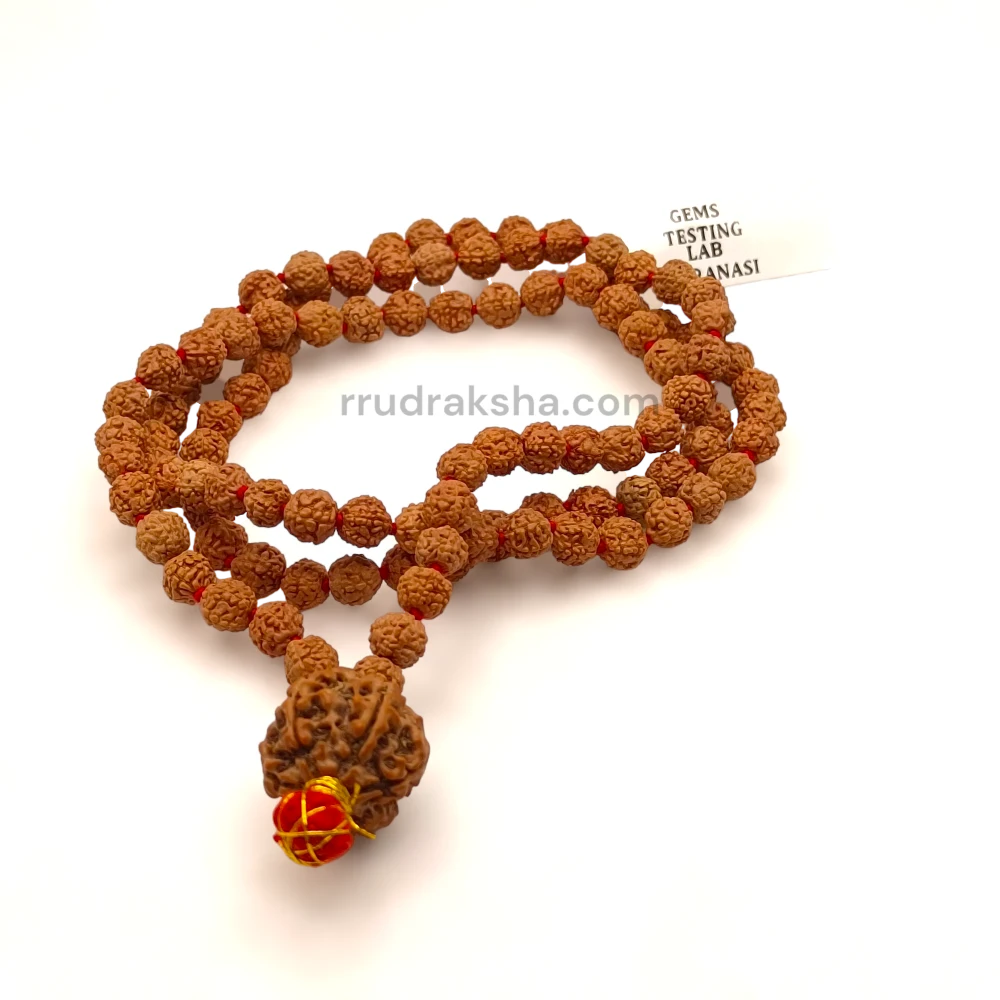
In practical terms, this means simplifying commitments, honoring routine, and reducing emotional leakage. It involves learning to pause without paralysis and act without urgency — psychological necessities in a hyper-stimulated world. For some, this steadiness is reinforced through quiet daily anchors such as a 5 Mukhi Rudraksha mala used during consistent reflection, serving as a reminder of continuity rather than intensity.
Hanuman’s path is demanding not because it is extreme, but because it is honest. It removes excuses. It exposes where attention is scattered, where fear governs, and where discipline is inconsistent. Yet it also offers a path forward — steady, grounded, and humane.
🕯️ Why Hanuman’s Discipline Is Not Asceticism
A common misunderstanding is that discipline requires withdrawal or harsh self-denial. Hanuman’s life contradicts this entirely. He participates fully in the world, yet remains unattached to outcomes. His discipline is functional, not punitive.
This distinction matters deeply today. Many people oscillate between indulgence and austerity, neither of which produces stability. Hanuman demonstrates a middle path where enjoyment does not become dependence and restraint does not become repression.
This balance allows strength to remain available without being weaponized. It allows devotion without loss of autonomy. And it allows power to exist without ego.
❓ Frequently Asked Questions (FAQs)
Why is Hanuman associated with focus and self-control?
Hanuman represents focus because his attention is anchored in purpose rather than impulse. In traditional understanding, focus is not forced concentration but the natural outcome of clarity and responsibility. His self-control emerges from awareness, not suppression, allowing him to act decisively without being reactive.
Does Hanuman symbolize fearlessness or mastery over fear?
Hanuman does not symbolize the absence of fear. He represents mastery over fear. Traditional texts emphasize that fear exists but does not dictate action. This distinction is crucial, as unmanaged fear leads to avoidance or aggression, while mastered fear leads to clarity and courage.
How is Hanuman’s discipline different from modern ideas of self-discipline?
Modern self-discipline often relies on resistance and control, which can be exhausting. Hanuman’s discipline is capacity-based — built through consistency, routine, and inner alignment. It does not fight impulse; it contains it, allowing steadiness without burnout.
What does Hanuman teach about handling distraction in daily life?
Hanuman’s example suggests that distraction is less about external stimuli and more about internal fragmentation. When purpose is unclear, attention scatters. By stabilizing identity and responsibility, focus becomes resilient even in distracting environments.
Is Hanuman’s path relevant outside religious practice?
Yes. Hanuman’s teachings apply to psychology, leadership, and daily decision-making. His principles — restraint, clarity, responsibility, and disciplined action — are practical tools for navigating stress, pressure, and complexity, regardless of belief system.
Does discipline limit freedom according to Hanuman’s philosophy?
No. Discipline precedes freedom. Without internal structure, freedom becomes chaos. Hanuman demonstrates that when discipline is internalized, freedom expands naturally without instability or excess.
Why is Hanuman often described as powerful yet humble?
Humility in Hanuman’s context arises from clarity, not self-denial. He knows his strength but does not identify with it. Power is used when required and released afterward, preventing ego from forming around capability.
How can one apply Hanuman’s teachings in a modern, busy lifestyle?
Application begins with simplifying commitments, maintaining routine, and responding rather than reacting. Small, consistent practices build internal steadiness, making focus and self-control sustainable rather than effortful.
Is devotion central to Hanuman’s discipline?
Devotion in Hanuman’s path is not emotional dependency. It is alignment with responsibility and purpose. This form of devotion strengthens autonomy rather than weakening it.
Why does Hanuman’s example feel difficult to follow today?
Because modern culture rewards speed, visibility, and reaction. Hanuman’s path emphasizes patience, consistency, and quiet strength — qualities that develop slowly and do not provide instant validation.
🔚 The Quiet Radicalism of Hanuman
Hanuman’s teachings feel radical today precisely because they reject spectacle. In a world that rewards visibility, urgency, and reaction, he represents coherence, patience, and inner alignment. His discipline is not impressive; it is reliable. His courage is not loud; it is consistent. His focus is not obsessive; it is clear. These qualities do not trend — they endure.
In rediscovering Hanuman beyond symbolism, we rediscover a blueprint for psychological stability. Not through escape, not through shortcuts, but through responsibility, clarity, and disciplined awareness.
🙏 हर हर महादेव 🙏





Leave a comment