


🔥 Holika Dahan Puja Vidhi: The Complete Story, Rituals & Spiritual Meaning
The night before Holi carries a unique kind of silence — the kind that feels sacred. Streets are quieter than usual, the air carries a hint of spring, and in neighborhoods across India, small groups of people gather around piles of wood waiting patiently for sunset.
Children run around excitedly, elders discuss traditions, and families arrive carrying small plates filled with grains, flowers, and sweets. Soon, the sky begins to darken. A flame is lit. Slowly, a bonfire rises toward the night sky.
This moment marks the beginning of Holi. Not with colors, but with fire.
This ritual is called Holika Dahan, and it is one of the most symbolic and meaningful traditions in Hindu festivals. While Holi is known for colors and celebration, Holika Dahan is about reflection, purification, gratitude, and new beginnings.
This guide explores Holika Dahan in a detailed storytelling style — its origin, symbolism, rituals, preparation, and how to perform the puja at home step by step.
🌕 The Night That Begins the Festival of Colors
Holi is often described as the festival of colors, joy, and togetherness. Yet the true spiritual beginning of the festival happens the night before, during the full moon of the Hindu month of Phalguna.
This full moon night has been celebrated for centuries as a time of transition. Winter fades, spring begins, and nature prepares for renewal. Farmers harvest new crops, flowers begin to bloom, and the atmosphere shifts from cold and still to warm and lively.
Holika Dahan reflects this transformation in symbolic form.
🔥 Why Fire Is Central to Holika Dahan
Fire holds a sacred place in Hindu rituals. It represents purification, transformation, and the presence of divine energy. From weddings to yajnas, fire has always symbolized the power to transform one state into another.
Holika Dahan uses fire as a symbol of burning away negativity, ego, and harmful thoughts. It marks the emotional and spiritual cleansing that prepares people to celebrate Holi the next day.
📖 The Ancient Story Behind the Ritual
The ritual of Holika Dahan originates from the story of Prahlad and Holika — a story that symbolizes faith, courage, and the victory of truth over arrogance.
According to tradition, the bonfire represents the burning of Holika and the protection of Prahlad.
🌱 Holika Dahan and Seasonal Change
Beyond mythology, Holika Dahan also reflects agricultural traditions. The festival marks the end of winter and the beginning of the harvest season.
Offering grains into the fire symbolizes gratitude for the harvest and hope for prosperity in the coming year.
🏡 Preparing for Holika Dahan at Home
Preparations for Holika Dahan often begin early in the day. Homes are cleaned, puja items are gathered, and families prepare sweets and offerings.
Cleaning the home symbolizes clearing negativity and welcoming positivity.
🪔 The Emotional Atmosphere of Holika Dahan Evening
As evening approaches, families gather near the bonfire. The atmosphere is calm yet festive. Unlike the playful chaos of Holi, this night carries a sense of reflection and gratitude.
This peaceful beginning sets the tone for the celebration that follows.
🪔 Step 1: Understanding the Auspicious Timing (Muhurta)
Before any ritual begins in Hindu tradition, timing is considered deeply important. Holika Dahan is performed after sunset on the full moon night of the month of Phalguna. The ritual is usually performed during the evening when the full moon is visible in the sky.
This timing represents the transition between seasons and symbolizes the shift from darkness to light. Families often check the local muhurta for Holika Dahan each year to perform the ritual at the most auspicious time.
🪵 Step 2: Preparing the Bonfire with Intention
Long before sunset, communities begin arranging wood, dried branches, and natural materials to prepare the Holika bonfire. In many neighborhoods, this preparation becomes a shared activity. Children help gather twigs, elders guide the arrangement, and families contribute materials.
The bonfire is typically arranged in a circular structure. The circular shape symbolizes the cycle of life, renewal, and continuity.
Traditionally, a symbolic representation of Holika is placed within the wood structure. This symbolizes the negative energies that are to be burned away.
🙏 Step 3: Preparing the Puja Thali
As the sun begins to set, families prepare a puja thali filled with sacred items. Each item used in the ritual carries symbolic meaning.
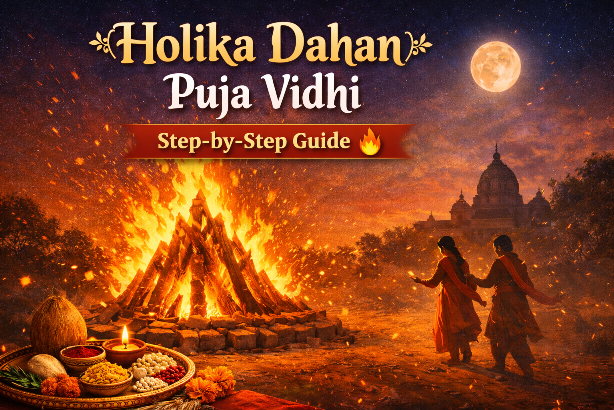
The puja thali typically includes kumkum, turmeric, rice grains, flowers, sweets, coconut, jaggery, and newly harvested grains. These offerings represent gratitude, prosperity, and blessings for the coming year.
🌕 Step 4: Invoking Blessings Before Lighting the Fire
Before lighting the bonfire, devotees gather around the wood structure and offer prayers. This moment is calm and reflective. Many families chant simple prayers and express gratitude for the past year.
This stage of the ritual symbolizes intention — the act of consciously choosing to let go of negativity and welcome positivity.
🔥 Step 5: Lighting the Sacred Fire
As darkness falls, the bonfire is lit. Flames slowly rise into the night sky, creating a powerful visual moment that marks the beginning of Holika Dahan.
The rising flames symbolize the burning of ego, fear, and negativity.
🔁 Step 6: Parikrama Around the Fire
Devotees walk around the fire in a clockwise direction, a ritual known as parikrama. Families often walk around the fire multiple times while offering prayers for health, happiness, and prosperity.
The circular movement symbolizes the cycle of renewal and protection.
🌾 Step 7: Offering Grains and Coconut
Grains and coconut are offered into the fire as symbols of gratitude and surrender. This ritual connects the festival with agricultural traditions and seasonal change.
🌾 Step 8: Offering the New Harvest to the Sacred Fire
In many regions, Holika Dahan is deeply connected with agriculture and the arrival of spring. As the winter harvest season ends, farmers bring newly harvested grains such as wheat, barley, and chickpeas to the bonfire.
Offering these grains into the fire is a symbolic gesture of gratitude. It represents appreciation for nature’s abundance and a prayer for prosperity in the coming year. This ritual connects the festival not only with mythology but also with the rhythm of nature and the cycle of seasons.
🥥 Step 9: Breaking the Coconut – A Symbol of Letting Go
Breaking a coconut is one of the most symbolic moments of Holika Dahan. The coconut represents the human ego. Its hard outer shell symbolizes pride and negativity, while the pure white interior represents truth and purity.
Breaking the coconut during the ritual symbolizes surrendering ego and negative emotions. It is a reminder to begin the new season with humility and clarity.
🔥 Step 10: Collecting the Sacred Ash
The morning after Holika Dahan, many families return to the bonfire site to collect a small amount of ash. This ash is considered symbolic of purification and renewal.
Some people apply the ash on their forehead as a blessing, while others keep it at home as a reminder of the ritual.
🌈 From Fire to Color: The Transition to Holi
After the night of reflection and purification, the next morning begins the joyful celebration of Holi. The transition from fire to colors carries deep symbolism.
The fire represents the burning of negativity, while the colors represent happiness, unity, and new beginnings.
🌍 Holika Dahan in Modern Times
Even in modern cities, Holika Dahan continues to bring communities together. Neighborhoods gather, families reconnect, and traditions are passed to younger generations.
Frequently Asked Questions (FAQs) ❓
1. Why is Holika Dahan celebrated the night before Holi?
Holika Dahan marks the spiritual beginning of the Holi festival. The ritual is performed on the full moon night of the Hindu month of Phalguna to symbolize the burning of negativity and the victory of faith and truth. Lighting the bonfire represents the ancient story of Prahlad and Holika and reminds devotees to let go of ego, fear, and harmful thoughts before celebrating Holi the next day.
2. What is the deeper spiritual meaning of Holika Dahan?
Holika Dahan represents purification and renewal. The fire symbolizes the destruction of negativity, while the following day of Holi symbolizes joy and new beginnings. Together, they represent a journey from reflection to celebration, from letting go to welcoming positivity.
3. Can Holika Dahan be performed at home?
Yes, families who cannot join community celebrations can perform a small symbolic Holika Dahan at home. Even lighting a small lamp or candle with prayers can represent the same intention of purification and gratitude.
4. Why do people walk around the fire (Parikrama)?
Walking around the fire symbolizes purification and protection. The circular movement represents the cycle of life and renewal.
5. Why are grains offered in the fire?
Offering grains represents gratitude for the harvest and prayers for prosperity.
6. Why is coconut broken during Holika Dahan?
The coconut symbolizes ego and negativity. Breaking it represents surrender and humility.
7. What is the significance of collecting Holika ash?
The ash represents purification and blessings.
8. Is fasting required for Holika Dahan?
Fasting is optional and depends on personal tradition.
9. What should we pray for during Holika Dahan?
Devotees pray for health, happiness, prosperity, and protection.
10. What life lesson does Holika Dahan teach?
The ritual reminds us to burn negativity and welcome positivity.
🔥 Conclusion 💫
Holika Dahan is far more than a ritual bonfire. It is a spiritual tradition that connects mythology, seasonal change, and emotional renewal. The festival begins with reflection and purification before moving into the joyful celebration of Holi.
By understanding the rituals and symbolism of Holika Dahan, families can celebrate the festival with deeper awareness and appreciation.
🙏 हर हर महादेव 🙏





Leave a comment