
















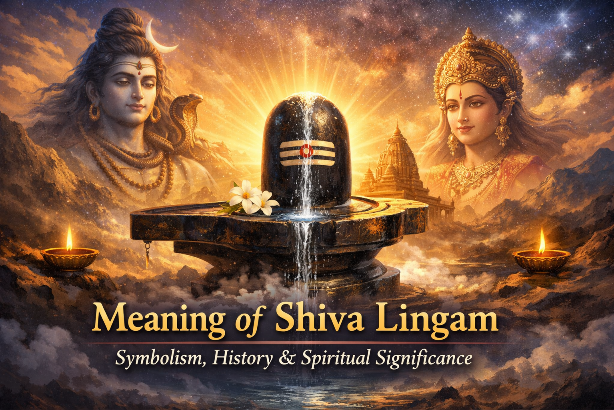
Meaning of Shiva Lingam – Symbolism, History, Types, Rituals & Spiritual Significance 🔱
Across the sacred geography of India — from the icy Himalayas to the southern shores of the Indian Ocean — one symbol appears again and again at the heart of temples, caves, forests, and homes: the Shiva Lingam. For millions of devotees, this sacred form represents Lord Shiva, the embodiment of stillness, awareness, and transformation. Yet the Shiva Lingam is far more than a religious object. It is one of the most profound spiritual symbols ever created, carrying layers of philosophy, mythology, cosmology, and meditation wisdom.
To understand the Shiva Lingam is to step into the worldview of ancient Indian sages who explored the deepest questions of existence long before modern science emerged. These sages asked questions that still resonate today: What is the nature of reality? What existed before creation? What lies beyond time and space? And how can the human mind understand the infinite?
The Shiva Lingam emerged as a symbolic answer to these questions. It represents the idea that ultimate reality is formless, limitless, and beyond human imagination. This article explores the meaning of the Shiva Lingam through mythology, philosophy, temple traditions, symbolism, and spiritual practice in a deeply detailed way.
🕉️ Understanding the Word “Lingam” in Sanskrit
The Sanskrit word “Lingam” is often misunderstood in modern interpretations. In its original context, the word does not mean idol or statue. It means sign, symbol, or mark — something that points toward a deeper truth beyond physical form.
Ancient philosophers used the word Lingam to describe a symbol that represents something invisible or infinite. In this sense, the Shiva Lingam is a symbolic representation of the divine presence that exists beyond shape, gender, and identity.
🌌 Why Shiva Is Worshipped as the Formless Divine
In Sanatan Dharma, the divine is described in both personal and impersonal forms. Some deities are represented with human-like features to help devotees relate emotionally. However, Lord Shiva occupies a unique place in spiritual philosophy. He represents pure consciousness — the silent awareness that exists beyond thoughts, emotions, and physical form.
Because pure consciousness cannot be captured in a human shape, ancient sages chose a simple, abstract form to represent Shiva. The Lingam became this form — a symbol that avoids limiting the infinite to any single identity.
🔥 The Myth of the Infinite Pillar of Light (Lingodbhava)
One of the most powerful stories explaining the origin of the Shiva Lingam appears in the Shiva Purana. According to this story, a cosmic dispute once arose between Lord Brahma, the creator, and Lord Vishnu, the sustainer. Each believed himself to be the supreme force of the universe.
Suddenly, a blinding pillar of light appeared before them, stretching infinitely upward and downward. Unable to comprehend this phenomenon, Brahma transformed into a swan and flew upward to find the top of the pillar. Vishnu transformed into a boar and traveled downward to find its base.
After an immense journey, neither could find the beginning or end. They realized the pillar represented Shiva — the infinite reality beyond creation and preservation.
This pillar of light, known as the Jyotirlinga, became symbolized by the Shiva Lingam.
🌿 The Lingam as the Cosmic Axis of the Universe
Ancient cosmology often described the universe as revolving around an invisible center — a cosmic axis connecting heaven, earth, and the spiritual realm. The Shiva Lingam symbolizes this axis, representing stability amidst constant change.
Everything in life changes: seasons, civilizations, and individual lives. Yet behind this change lies a constant awareness. The Lingam represents this eternal presence.
🌺 Shiva and Shakti – The Union of Consciousness and Energy
The Shiva Lingam is traditionally placed within a circular base known as the Yoni. Together they symbolize the union of Shiva (consciousness) and Shakti (energy). This union represents the creative force of the universe.
🌌 Shiva and Shakti – The Cosmic Union Explained in Depth
To understand the Shiva Lingam fully, one must understand the philosophical concept of Shiva and Shakti. Ancient Indian philosophy teaches that the universe exists because of the interaction between two fundamental principles: consciousness and energy. Shiva represents pure consciousness — silent, still, and unchanging awareness. Shakti represents energy — dynamic, creative, and constantly moving.
Without consciousness, energy would have no direction. Without energy, consciousness would have no expression. The universe emerges from the balance between these two principles. The Lingam represents Shiva, while the Yoni represents Shakti. Together they symbolize the harmony that sustains existence.
🌍 The Shiva Lingam as a Symbol of Creation
In Sanatan Dharma, creation is not viewed as a one-time event. Instead, it is seen as an ongoing cycle of creation, preservation, and transformation. This cycle can be observed everywhere in nature — sunrise and sunset, birth and death, growth and decay.
The Shiva Lingam represents this eternal cycle. It reminds devotees that change is not separate from life; it is the very essence of existence.
🛕 Why the Lingam Is Placed in the Temple’s Inner Sanctum
In traditional temple architecture, the Shiva Lingam is placed in the Garbhagriha, the innermost chamber of the temple. The word Garbhagriha means “womb chamber.” This symbolism is intentional and profound.
The temple represents the human body, and the journey toward the inner sanctum represents the journey inward toward self-awareness. At the center of this journey stands the Shiva Lingam — the symbol of the ultimate reality within.
💧 Abhishekam – The Sacred Ritual of Offering
One of the most recognizable rituals associated with the Shiva Lingam is Abhishekam — the ceremonial pouring of water, milk, or sacred liquids over the Lingam. This ritual is performed daily in temples and homes.
The flowing water symbolizes purification and surrender. It represents letting go of ego, stress, and attachment. The ritual also creates a calming sensory experience through sound, touch, and rhythm.
🌿 The Symbolism of Bilva Leaves
Bilva leaves are traditionally offered to the Shiva Lingam during worship. The three leaves symbolize creation, preservation, and transformation.
🌄 Shiva Lingam in Ancient History & Archaeological Evidence
The spiritual significance of the Shiva Lingam is not limited to mythology and philosophy. Archaeological discoveries suggest that symbolic worship of cosmic energy has existed in the Indian subcontinent for thousands of years. Excavations from the Indus Valley Civilization have revealed stone structures and artifacts that resemble early Lingam forms, indicating that symbolic worship of a formless divine presence may date back to prehistoric times.
These discoveries highlight the remarkable continuity of spiritual ideas across millennia. While interpretations differ among historians, many scholars believe that the Shiva Lingam represents one of the oldest continuously worshipped spiritual symbols in the world.
🌍 Types of Shiva Lingam Found Across India
Over centuries, different types of Shiva Lingams have emerged, each with unique historical and spiritual significance.
Jyotirlinga
The twelve Jyotirlingas are among the most sacred Shiva temples in India. According to tradition, these sites mark places where Shiva appeared as a pillar of divine light.
Bana Lingam
Bana Lingams are naturally formed stones found in the Narmada River. They are considered highly sacred because of their natural origin.
Swayambhu Lingam
Swayambhu Lingams are believed to have manifested naturally without human carving.
🧘 Shiva Lingam as a Meditation Symbol
The simple and symmetrical form of the Lingam makes it an ideal meditation symbol. Its smooth surface and balanced shape encourage stillness and focus.
🧠 The Philosophical Meaning of the Shiva Lingam in Daily Life
Beyond temples and rituals, the Shiva Lingam carries a deeply practical message for everyday living. Ancient spiritual teachings were never meant to remain confined to sacred spaces. They were designed to guide how individuals think, act, and experience life.
The Lingam symbolizes stillness amidst movement. Life constantly presents change, uncertainty, and challenges. Yet the Lingam reminds devotees that behind all movement lies an unchanging awareness. This idea encourages individuals to develop inner stability even when external circumstances fluctuate.
🌿 The Lingam as a Symbol of Inner Transformation
Lord Shiva is often called the destroyer in the Hindu Trinity, but this destruction is symbolic. It represents transformation — the ending of old patterns to make space for new growth.
The Shiva Lingam represents this transformative process. It reminds devotees that change is not something to fear but something essential for growth.
🌙 The Role of Silence in Shiva Worship
Unlike many forms of worship that involve elaborate rituals, Shiva worship often emphasizes silence and meditation. The Lingam’s simple form encourages quiet reflection.
🌍 Shiva Lingam in Modern Spiritual Life
In today’s fast-paced world, the symbolism of the Shiva Lingam remains deeply relevant. It encourages mindfulness, balance, and awareness.
🌞 Shiva Lingam and the Concept of Time & Eternity
One of the deepest philosophical meanings associated with the Shiva Lingam is its connection with time. In Hindu philosophy, time is not viewed as a straight line moving from past to future. Instead, time is cyclical. Creation, preservation, and transformation occur repeatedly in an endless cosmic rhythm.
The Shiva Lingam represents eternity — the reality that exists beyond time. While everything in the world changes, consciousness remains constant. This idea is central to meditation and spiritual awareness.
🌌 Shiva Lingam as a Symbol of the Universe Itself
Ancient yogic texts often describe the universe as emerging from a single point of consciousness and eventually dissolving back into it. The Lingam symbolizes this cosmic process.
Its oval shape represents the cosmic egg — the source from which creation emerges. This symbolism appears in many ancient cultures, reflecting a shared human attempt to understand the origins of existence.
🔥 Festivals Associated with Shiva Lingam Worship
Among the many festivals dedicated to Lord Shiva, Maha Shivaratri holds special significance. Devotees gather in temples and homes to worship the Shiva Lingam through prayer, chanting, and meditation.
🛕 Why Millions Visit Jyotirlinga Temples
The twelve Jyotirlinga temples represent sacred locations where Shiva is believed to have manifested as a pillar of light.
🌿 The Role of the Shiva Lingam in Home Worship
While the Shiva Lingam is most commonly associated with temples, many devotees also keep a small Lingam in their homes. This practice reflects an important idea in Sanatan Dharma: spirituality is not limited to sacred places. It is meant to be part of everyday life.
Keeping a Shiva Lingam at home creates a daily reminder of mindfulness, gratitude, and reflection. Morning prayers, simple water offerings, or a few minutes of meditation near the Lingam can help establish a calm and intentional start to the day.
🧘 Shiva Lingam and the Practice of Meditation
The simple geometry of the Lingam makes it a powerful meditation focus. Unlike detailed idols that draw attention to many features, the Lingam’s smooth and symmetrical form encourages the mind to become still.
Meditating on the Lingam is not about worshipping a physical object. It is about using the symbol as a focal point to turn attention inward.
🌙 Symbol of Balance Between Material & Spiritual Life
The Shiva Lingam also represents balance. In Hindu philosophy, life is not about rejecting the world but about living in harmony with it.
🌍 Global Recognition of the Shiva Lingam
In recent decades, interest in yoga and meditation has spread globally. Along with these practices, awareness of Shiva and the Lingam has also grown.
✨ Why the Shiva Lingam Continues to Inspire Millions
For thousands of years, the Shiva Lingam has remained a symbol of stillness, awareness, and transformation.
Frequently Asked Questions (FAQs) ❓
1. What is the real meaning of the Shiva Lingam?
The Shiva Lingam represents the formless and infinite nature of Lord Shiva. The Sanskrit word “Lingam” means symbol or sign, indicating that the Lingam is a symbolic representation of divine consciousness rather than a physical idol.
2. Why is the Shiva Lingam shaped like a pillar?
The pillar-like shape symbolizes the infinite cosmic axis — the endless pillar of light described in the Shiva Purana. This story explains that Shiva is beyond beginning and end, beyond time and space.
3. What does the Lingam and Yoni together symbolize?
The Lingam represents Shiva (consciousness), and the Yoni represents Shakti (energy). Together they symbolize the union that sustains creation.
4. Why is water poured on the Shiva Lingam?
The ritual of Abhishekam symbolizes purification, surrender, and the flow of life.
5. Can a Shiva Lingam be kept at home?
Yes. Many devotees keep a small Shiva Lingam at home for daily worship and meditation.
6. Why is the Shiva Lingam placed in the temple’s inner sanctum?
The inner sanctum represents the spiritual heart of the temple and symbolizes the inner journey toward self-awareness.
7. Is the Shiva Lingam mentioned in scriptures?
Yes. The Lingam appears in several sacred texts including the Shiva Purana and Linga Purana.
8. Why is the Shiva Lingam important during Maha Shivaratri?
Maha Shivaratri celebrates the manifestation of Shiva as the cosmic pillar of light.
9. What is a Jyotirlinga?
Jyotirlingas are twelve sacred temples where Shiva is believed to have manifested as divine light.
10. Why do devotees meditate on the Shiva Lingam?
The Lingam’s simple form encourages focus and inner stillness.
📌 Conclusion ✨
The Eternal Symbol of the Infinite
The Shiva Lingam stands as one of the most profound spiritual symbols in human history. It represents the infinite, the formless, and the eternal reality that exists beyond time and space.
From ancient mythology to modern meditation practices, the Lingam continues to inspire millions of devotees and seekers. Its simplicity hides deep philosophical meaning — reminding us that behind the noise of life lies a silent and unchanging awareness.
Understanding the Shiva Lingam is not about learning a symbol. It is about understanding a philosophy — the philosophy of stillness, balance, and transformation.
🙏 हर हर महादेव 🙏





Leave a comment