




















Ardhanarishvara Explained: Meaning, Symbolism & the Science of Balance 🌓
Among all forms in Hindu philosophy, Ardhanarishvara stands as one of the most profound and misunderstood. Often viewed superficially as a half-male, half-female deity, this form is not about gender alone. It represents a deeper spiritual truth—the inseparable unity of consciousness and energy.
Ardhanarishvara literally means “The Lord who is half woman.” But symbolically, it reveals something far more significant: existence itself functions only when awareness and power operate together.
This blog explains the meaning, symbolism, philosophical logic, and psychological relevance of Ardhanarishvara in a clear, responsible, and belief-based manner. It connects mythology with inner balance—without exaggeration, superstition, or modern misinterpretations.
What Is Ardhanarishvara? (Clear Definition) 🕉️
Ardhanarishvara is the unified form of Shiva and Shakti in a single body—one half Shiva, one half Parvati. This form conveys that Shiva and Shakti are not separate realities but two expressions of the same ultimate truth.
Shiva represents consciousness—still, aware, formless. Shakti represents energy—active, creative, expressive.
Ardhanarishvara shows that consciousness without energy is incomplete, and energy without consciousness is unstable. True completeness lies in their union.
Why Ardhanarishvara Is Not About Gender Equality Alone ⚖️
Modern interpretations often reduce Ardhanarishvara to a symbol of gender balance. While inclusivity is an important value, limiting Ardhanarishvara to gender discourse misses its spiritual depth.
This form existed long before modern social frameworks. Its purpose was never social commentary—it was existential explanation.
Ardhanarishvara does not say “male and female should be equal.” It says: awareness and energy are one reality.
Gender is a visible metaphor. The real message is metaphysical unity.
The Philosophical Logic Behind Ardhanarishvara 🔱
In Hindu philosophy, all creation requires two principles:
Purusha – consciousness, the witness Prakriti – nature, movement, energy
Ardhanarishvara visually merges Purusha and Prakriti. This explains why creation, transformation, and dissolution are possible.
Without Purusha, Prakriti moves blindly. Without Prakriti, Purusha remains unexpressed.
Ardhanarishvara shows that the universe is born from their inseparability.
Symbolism of the Two Halves 🍃
Each half of Ardhanarishvara carries distinct symbolism:
The Shiva half symbolizes detachment, stillness, and clarity. The Shakti half symbolizes creativity, nourishment, and transformation.
These are not opposing traits. They are complementary forces required for balance—both within the cosmos and within human life.
This is why Ardhanarishvara is never shown divided—it is one body, one being, one truth.
Mythological Origin of Ardhanarishvara 📖
According to mythology, Ardhanarishvara manifests when Shiva reveals that he and Shakti are not separate entities. Parvati is not merely Shiva’s consort—she is his power.
This story communicates a philosophical truth through narrative: devotion, discipline, and awareness culminate in unity, not separation.
The form teaches seekers that duality exists only at the surface level. At the core, reality is one.
Ardhanarishvara and Inner Balance 🧠
On a psychological level, Ardhanarishvara represents balance within the human mind.
Excessive detachment leads to emotional distance. Excessive emotion leads to instability.
Healthy functioning requires clarity guided by compassion, and action guided by awareness.
Ardhanarishvara becomes a model for integrated living—not extremes, but harmony.
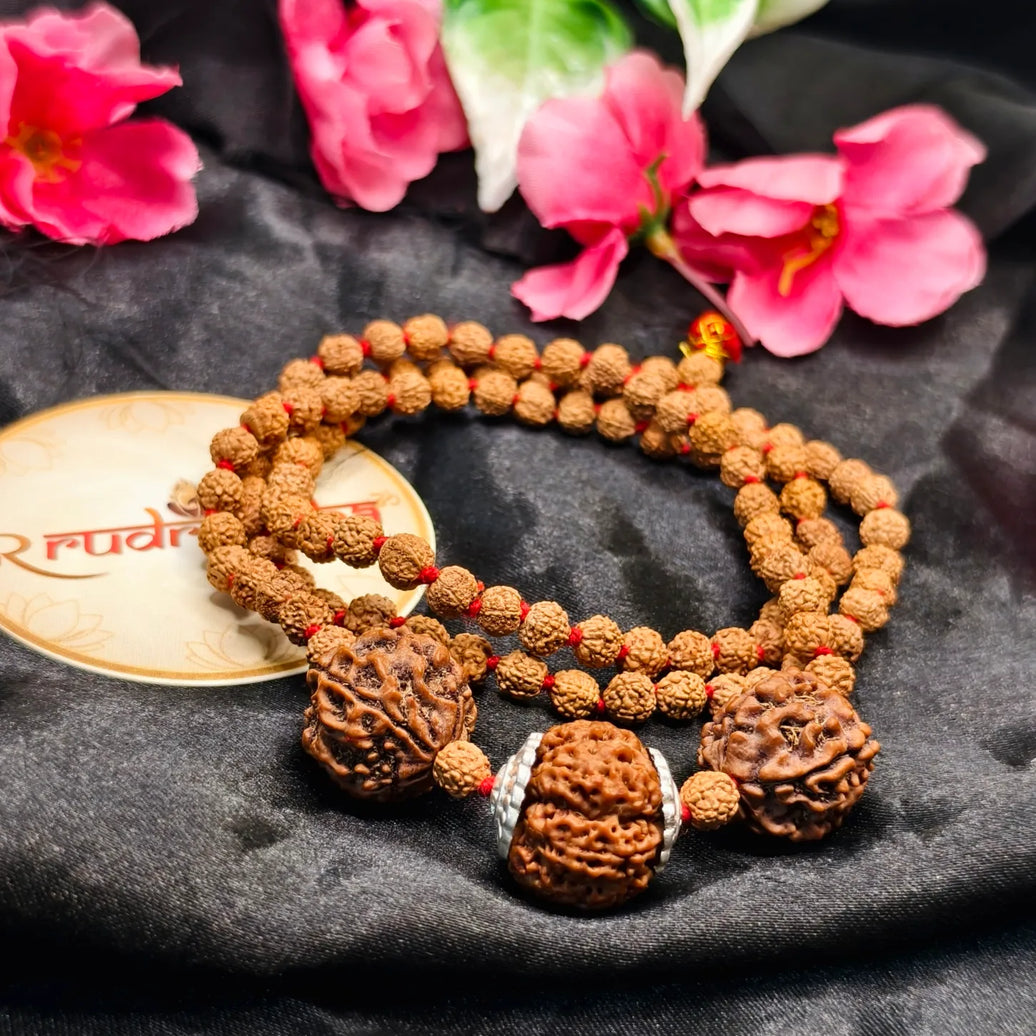
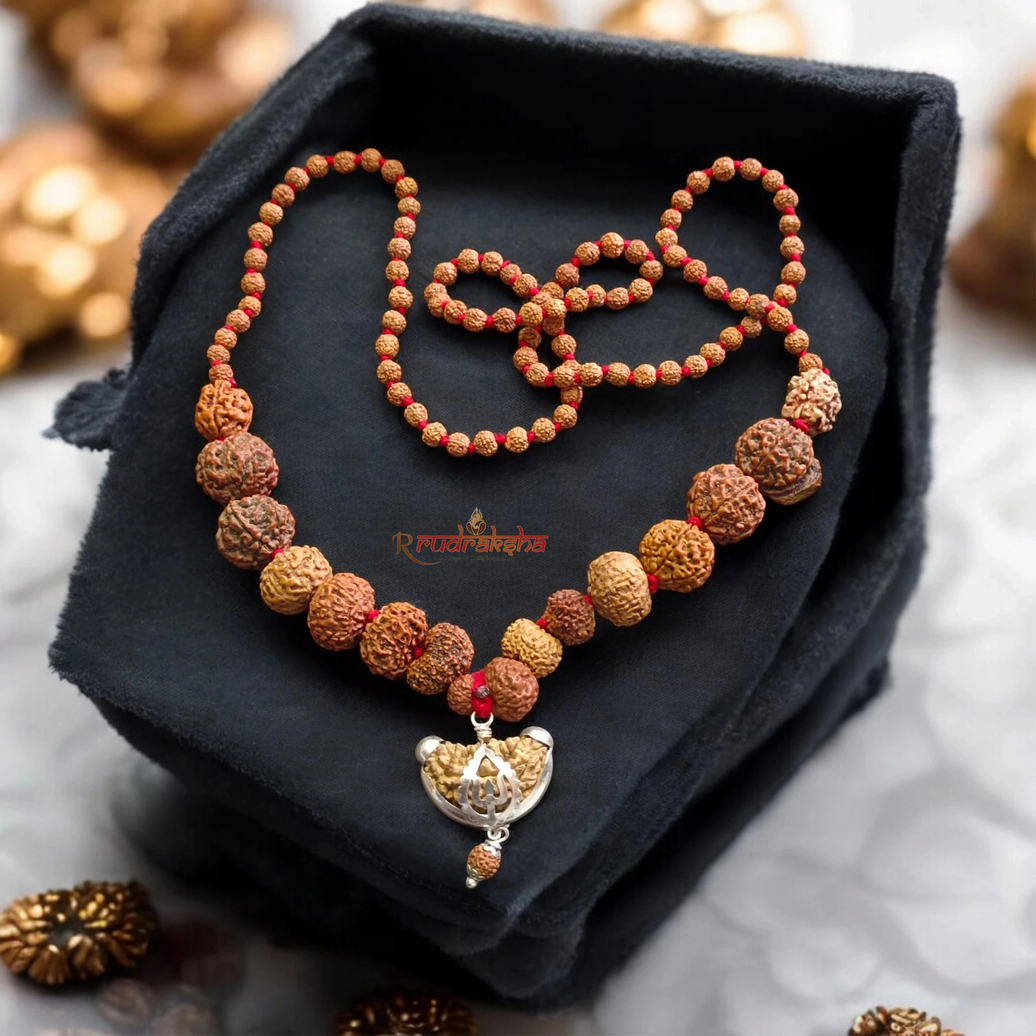
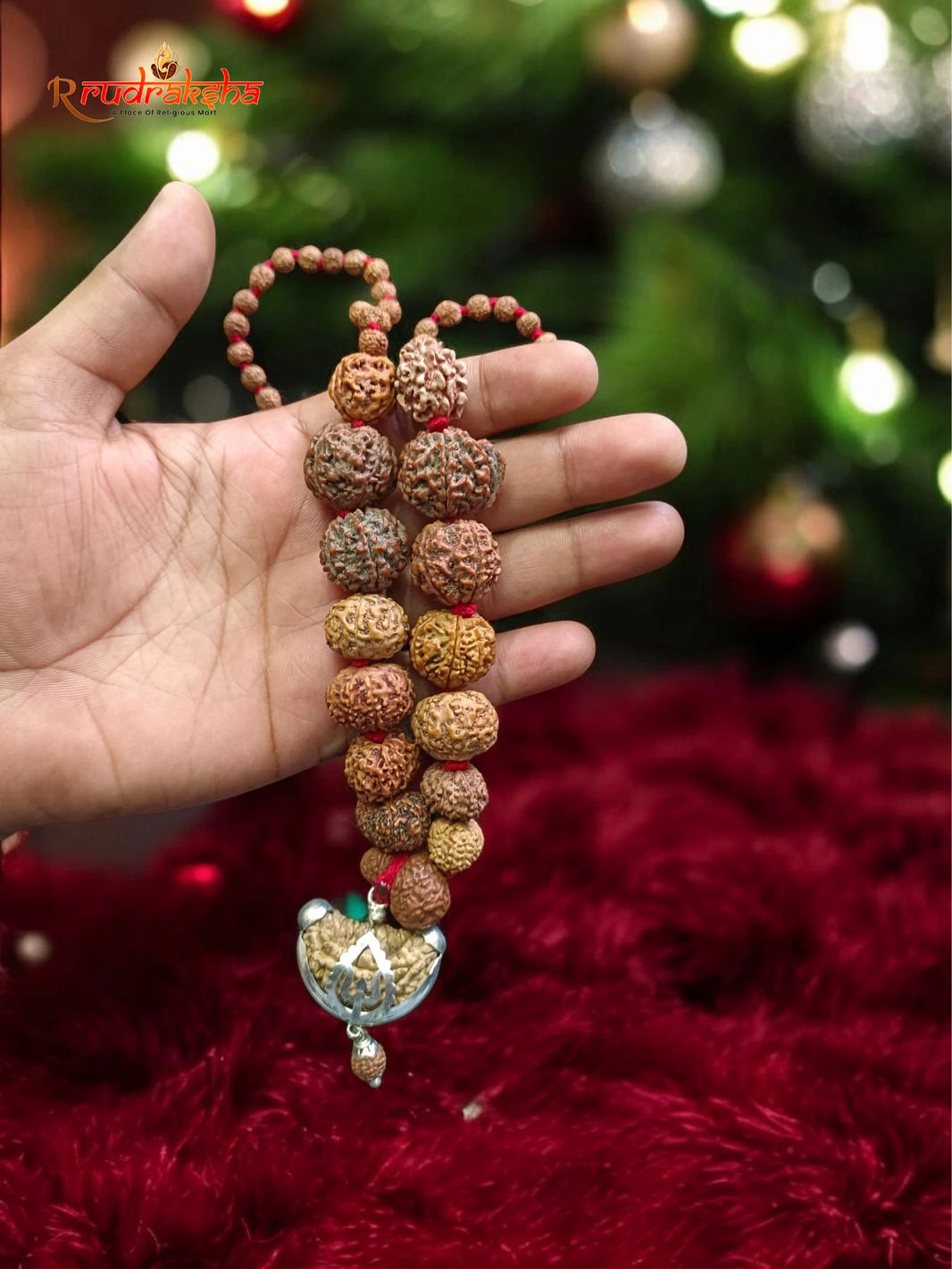
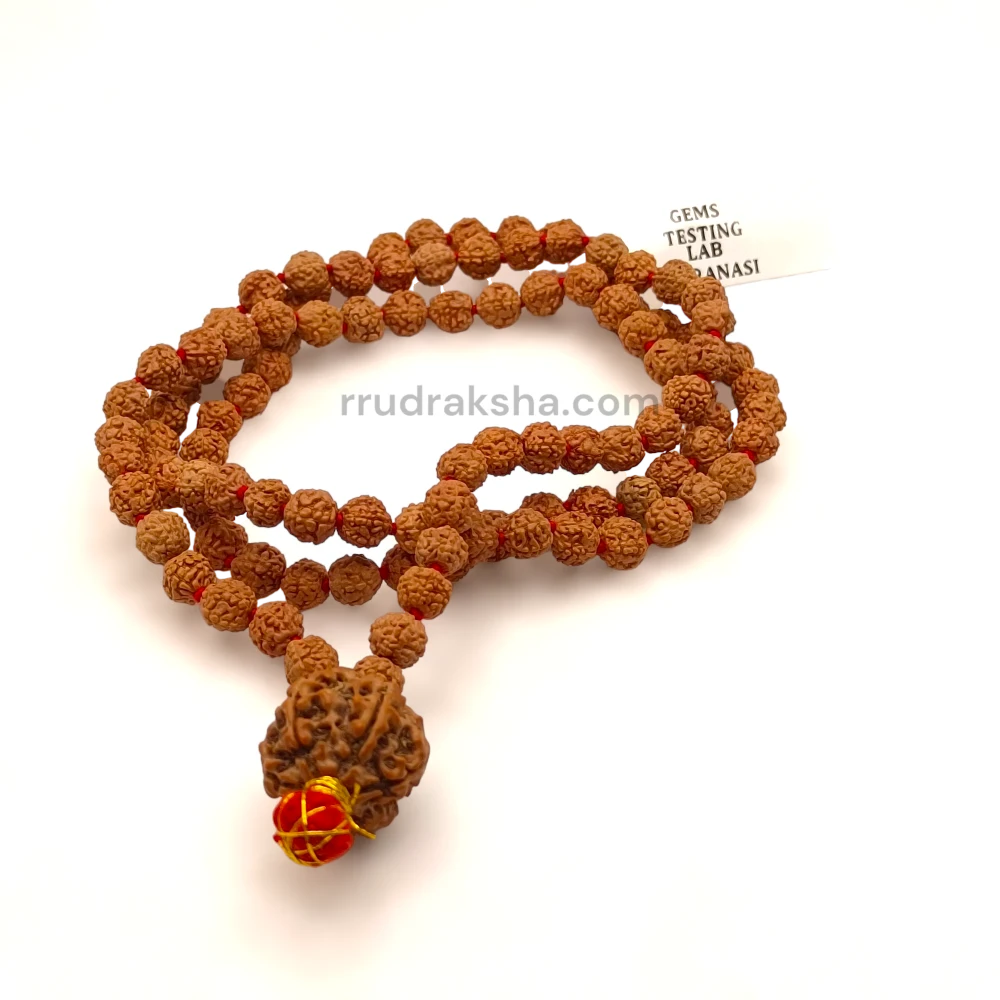
The Gauri Shankar Rudraksha is traditionally regarded as a symbol of Shiva–Shakti unity, supporting emotional balance, mental clarity, and harmonious living.
Ardhanarishvara in Shiva–Shakti Philosophy: Why This Form Is Essential 🔱
Within Shiva–Shakti philosophy, Ardhanarishvara is not an optional symbol—it is the clearest visual articulation of non-duality. While Shiva and Shakti are often worshipped as distinct forms for devotion, Ardhanarishvara reveals their inseparability at the level of truth.
This form explains why neither Shiva nor Shakti can be fully understood in isolation. Shiva without Shakti remains unexpressed awareness. Shakti without Shiva becomes unguided power. Ardhanarishvara resolves this tension by presenting both as one lived reality.
In this sense, Ardhanarishvara is philosophy made visible.
Scientific & Psychological Interpretations (Responsible Perspective) ⚖️
From a modern, non-medical perspective, Ardhanarishvara aligns with the idea that healthy systems require balance between reflection and action.
Awareness (associated with Shiva) allows observation, restraint, and understanding. Energy (associated with Shakti) enables movement, creativity, and engagement. When either dominates, imbalance arises.
Psychology recognizes similar principles in emotional regulation and mindful action. Without making medical claims, it is reasonable to say that balanced integration supports clarity and stability.
Ardhanarishvara, therefore, remains relevant not as superstition but as symbolic wisdom.
Common Misunderstandings About Ardhanarishvara ❌
Misunderstanding 1: Ardhanarishvara is only about gender equality. While gender symbolism exists, reducing the form to social commentary overlooks its metaphysical depth.
Misunderstanding 2: Shiva and Shakti are half entities. In reality, each is complete; the form represents unity, not division.
Misunderstanding 3: This concept is symbolic only. Symbolism here communicates philosophy—meaning exists beyond literal imagery.
Why Ardhanarishvara Matters to Spiritual Seekers Today 🌍
Modern life often pushes individuals toward extremes—constant activity without reflection, or introspection without engagement.
Ardhanarishvara offers a middle path. It teaches that clarity should guide action and action should express clarity.
This makes the form deeply practical. It is not about renunciation or indulgence, but integration.
For seekers, Ardhanarishvara becomes a reminder that wholeness is achieved through balance, not rejection.
Frequently Asked Questions (FAQs) ❓
1) What does Ardhanarishvara literally mean?
It means “the Lord who is half woman,” symbolizing unity of Shiva and Shakti.
2) Is Ardhanarishvara a male or female deity?
Neither exclusively. It represents a unified reality beyond gender.
3) Why is Ardhanarishvara important in Hindu philosophy?
Because it visually explains non-duality—consciousness and energy as one.
4) Does Ardhanarishvara promote gender equality?
It promotes existential unity; gender equality is a secondary interpretation.
5) How does Ardhanarishvara relate to Shiva–Shakti balance?
It shows that Shiva and Shakti are inseparable aspects of the same truth.
6) Is Ardhanarishvara worshipped as a separate deity?
Yes, in some traditions, as a unified manifestation of Shiva–Shakti.
7) What does Ardhanarishvara teach spiritually?
That wholeness arises through integration, not separation.
8) Is this concept relevant today?
Yes. It addresses imbalance, extremes, and fragmentation in modern life.
9) Does Ardhanarishvara reject devotion to Shiva or Shakti separately?
No. It complements devotion by revealing underlying unity.
10) What is the core message of Ardhanarishvara?
Awareness and energy are one reality expressed in two ways.
🕉️ Conclusion 💫Ardhanarishvara Is the Visual Language of Wholeness
Ardhanarishvara is not a symbolic compromise between two forces—it is the declaration that there are never two forces to begin with. Shiva and Shakti are distinct only in expression, not in essence.
This form teaches that balance is not achieved by choosing one side, but by integrating both. Awareness gains meaning through action, and action gains stability through awareness.
In a fragmented world, Ardhanarishvara remains a timeless reminder: wholeness is not created—it is realized.
🙏 हर हर महादेव 🙏





Leave a comment