



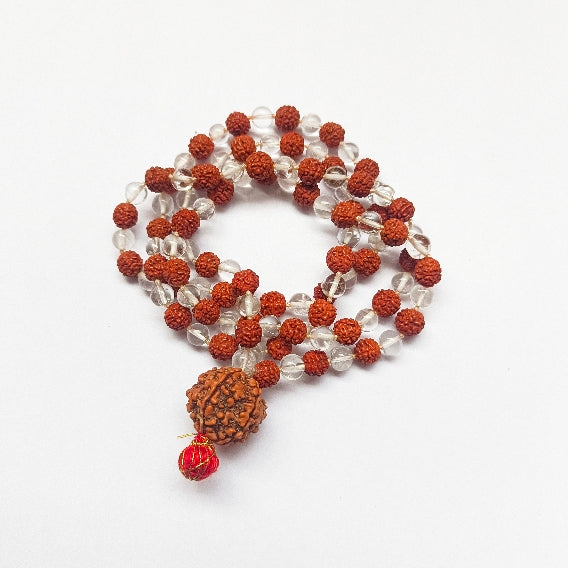

Can Anyone Wear Rudraksha? Myths, Rules & Truth Explained 📿🔱
Rudraksha occupies a unique and often misunderstood position in Hindu spiritual tradition. Revered deeply, spoken of with awe, and yet surrounded by hesitation and fear, Rudraksha is both familiar and distant to many people. While it is commonly associated with saints, yogis, and ascetics, ordinary devotees frequently find themselves asking a simple but critical question: can anyone wear Rudraksha?
This question does not arise from irreverence. In fact, it usually comes from respect mixed with uncertainty. People worry about eligibility, rules, lifestyle restrictions, gender norms, food habits, and unseen consequences. Over time, these doubts have grown louder than understanding itself.
This blog is written to bring clarity—not by dismissing tradition, but by understanding it correctly. It does not aim to promote Rudraksha as a miracle object, nor does it attempt to dilute its sacredness. Instead, it seeks to explain Rudraksha in a grounded, responsible, and tradition-aligned manner, separating genuine spiritual discipline from fear-based misinformation.
Why the Question of Eligibility Exists at All ✨
In Hindu traditions, many spiritual tools are accompanied by discipline. Mantra chanting, fasting, silence, and ritual observances all come with guidelines. Rudraksha, being deeply connected with Lord Shiva and ascetic life, naturally inherited a similar aura of seriousness.
However, over centuries, contextual guidance gradually turned into rigid rules. What was once advice for advanced practitioners slowly became universal commandments imposed on everyone, regardless of their spiritual path or stage of life.
This shift created confusion. When rules are passed down without explanation, fear replaces understanding. People stop asking why something is done and start worrying about what will happen if they do it “wrong.” Rudraksha, unfortunately, became a victim of this misunderstanding.
What Rudraksha Truly Represents in Shaiva Philosophy 🔱
To understand who can wear Rudraksha, one must first understand what Rudraksha represents.
In Shaiva philosophy, Rudraksha is not a reward, nor a protective charm. It is a symbol of restraint, awareness, and inward orientation. Lord Shiva is often depicted as detached, silent, and free from excessive identity. Rudraksha reflects this quality.
Wearing Rudraksha symbolically aligns the wearer with these principles. It is less about gaining something and more about remembering something—remembering stillness in the midst of activity, awareness in the midst of chaos.
When seen through this lens, Rudraksha stops being an exclusive object meant only for saints and becomes a reminder available to anyone willing to approach it with respect.
The Central Question Revisited: Can Anyone Wear Rudraksha❓
From a traditional, scriptural, and philosophical standpoint, Rudraksha is not restricted by gender, caste, profession, or age. Householders, students, professionals, monks, and seekers have all worn Rudraksha in different contexts throughout history.
The deciding factor has never been identity—it has always been intention.
Rudraksha is meant for those who seek stability of mind, clarity of awareness, and a conscious approach to life. These qualities are not owned by any one group of people.
Myth: Only Saints and Sadhus Are Allowed to Wear Rudraksha 🍃
This belief is widespread because visual culture reinforces it. Saints and ascetics are commonly depicted wearing Rudraksha malas, covering their bodies, symbolizing renunciation.
But symbolism should not be mistaken for exclusivity. Saints wear Rudraksha because it reflects their lifestyle—not because it grants them sainthood.
Historically, many householders following disciplined spiritual lives also wore Rudraksha, especially during mantra chanting, meditation, or vows. The presence of Rudraksha among ascetics highlights its symbolic depth, not a restriction for others.
Myth: Women Should Not Wear Rudraksha 🚫
This myth is not supported by classical spiritual philosophy.
It emerged largely from social conditioning and misinterpretation of ritual purity concepts, rather than authentic spiritual teaching. Consciousness, devotion, and discipline are not gendered qualities.
Throughout history, women saints, devotees, and practitioners have engaged deeply with Shaiva traditions. Rudraksha, as a symbol of awareness, does not discriminate.
Any hesitation around women wearing Rudraksha reflects social beliefs—not spiritual truth.
Myth: Non-Vegetarians or Modern Lifestyles Are Disqualified 🔱
This concern causes significant anxiety, especially among modern practitioners.
While some spiritual paths encourage dietary discipline, Rudraksha itself does not impose moral judgment. It is a support for awareness, not a test of perfection.
Spiritual growth is gradual. Rudraksha does not demand instant purity—it encourages refinement over time. Using it as a gatekeeping tool contradicts its purpose.
Rules, Guidelines, and the Purpose of Discipline 🌀
Many so-called “rules” associated with Rudraksha are better understood as guidelines meant to cultivate mindfulness.
Cleanliness, respect, and intentional use are not punishments. They help align the mind with the symbolic meaning of Rudraksha.
When guidelines are misunderstood as threats, spirituality turns rigid. When understood as tools, they become empowering.
Intention Over Identity 🧠
Rudraksha responds not to status, but to sincerity.
Someone wearing Rudraksha with humility and awareness benefits more than someone wearing it with arrogance or blind expectation.
This is why intention is repeatedly emphasized in spiritual traditions—it shapes experience more than external form.
The Harm of Fear-Based Spiritual Messaging
Fear has no place in genuine spirituality. When Rudraksha is portrayed as dangerous or restrictive, it pushes seekers away instead of guiding them inward. Fear-based advice disconnects people from tools meant to support balance.
True spiritual discipline is rooted in understanding, not intimidation.
Are There Situations Where Someone May Choose Not to Wear Rudraksha ❓
While Rudraksha is not restricted by gender, profession, or lifestyle, there are certain situations where an individual may consciously choose not to wear it—not out of fear, but out of personal alignment.
For example, someone who does not wish to maintain any form of spiritual discipline, mindfulness, or inner responsibility may feel disconnected from what Rudraksha represents. In such cases, wearing Rudraksha can feel superficial, like adopting a symbol without engaging with its meaning.
This does not make the person unworthy or wrong. It simply reflects honesty. Rudraksha is a reminder of awareness, and reminders only work when one is open to being reminded.
Similarly, individuals who view Rudraksha purely as a fashion accessory may want to reconsider their intention. While no harm is caused, the deeper symbolic value of Rudraksha is lost when it is reduced to decoration.
Wearing Rudraksha in Modern Life: Work, Travel, and Daily Routine 🌍
A common concern among modern practitioners is whether Rudraksha can be worn while working long hours, traveling, engaging in social life, or dealing with stress-heavy environments.
Traditional wisdom does not prohibit this. In fact, Rudraksha was historically worn by householders precisely because life was active and demanding. Its symbolic role was to anchor awareness amid movement.
Wearing Rudraksha in modern life is not about withdrawing from the world. It is about remaining inwardly balanced while participating fully in it. The bead does not demand renunciation of responsibility—it supports clarity within responsibility.
Whether one works in an office, runs a business, studies, or manages a household, Rudraksha can coexist with modern routines when approached with respect rather than rigidity.
Common Beginner Mistakes (And How to Avoid Them) ❌
Beginners often approach Rudraksha with a mix of enthusiasm and anxiety. This combination sometimes leads to avoidable mistakes.
One common mistake is overthinking rules. Excessive fear about breaking guidelines can create mental stress, which contradicts the calming intention of Rudraksha. Discipline should feel grounding, not burdensome.
Another mistake is expecting immediate or dramatic outcomes. Rudraksha supports inner alignment gradually. When worn with unrealistic expectations, disappointment replaces understanding.
Some beginners also frequently change beads, combinations, or practices, seeking quick results. Stability, not experimentation, is the foundation of meaningful spiritual practice.
Approaching Rudraksha with patience, consistency, and humility helps avoid these pitfalls.
Rudraksha and Emotional Responsibility 🧠
One of the least discussed aspects of wearing Rudraksha is emotional responsibility.
Rudraksha symbolically invites the wearer to become more aware of thoughts, reactions, and impulses. This heightened awareness can sometimes feel uncomfortable, especially for those unaccustomed to introspection.
Instead of suppressing emotions, Rudraksha encourages observation. Over time, this observation leads to greater emotional maturity and balance.
This is why wearing Rudraksha is not about becoming “special,” but about becoming more honest with oneself.
Does Rudraksha Demand Lifestyle Changes ❇️
Rudraksha does not impose sudden lifestyle transformations. It does not demand renunciation, dietary perfection, or social withdrawal.
However, many practitioners naturally experience a gradual inclination toward cleaner habits, calmer reactions, and more mindful choices. These shifts arise organically, not through force.
The bead acts as a silent reminder, not a strict enforcer. Any change that comes should feel voluntary and natural.
Respect Without Fear: The Right Relationship with Rudraksha 📿
Respecting Rudraksha does not mean living in constant anxiety.
True respect is expressed through cleanliness, care, and intentional use—not through fear of punishment or superstition.
When worn with understanding, Rudraksha becomes a companion rather than an obligation. It supports inner steadiness without demanding perfection.
Frequently Asked Questions (FAQs) ❓
1. Can children wear Rudraksha?
Yes, if approached gently and without imposing fear or pressure. It should be introduced as a symbol, not a rule.
2. Can Rudraksha be worn every day?
Yes. Daily wear is common when accompanied by respect and mindfulness.
3. Is it necessary to chant mantras while wearing Rudraksha?
Mantra chanting enhances awareness but is not mandatory. Intention remains primary.
4. What if someone feels uncomfortable after wearing Rudraksha?
Discomfort often arises from heightened awareness rather than harm. If confusion persists, one may pause and reflect calmly.
5. Can Rudraksha be worn with other spiritual symbols?
Yes, when done respectfully and without conflicting intention.
📌 Conclusion 🔚
Rudraksha Is for the Willing, Not the Fearful
The question of who can wear Rudraksha is ultimately not about eligibility, purity, or permission. It is about willingness.
Rudraksha is meant for those willing to cultivate awareness, responsibility, and inner discipline—regardless of gender, lifestyle, or background.
When fear is removed and understanding is restored, Rudraksha returns to its rightful place—not as an object of anxiety, but as a symbol of conscious living.
Approached with respect and clarity, Rudraksha becomes accessible to anyone seeking balance, stability, and inner alignment.
🙏 Har Har Mahadev 🙏





Leave a comment