





















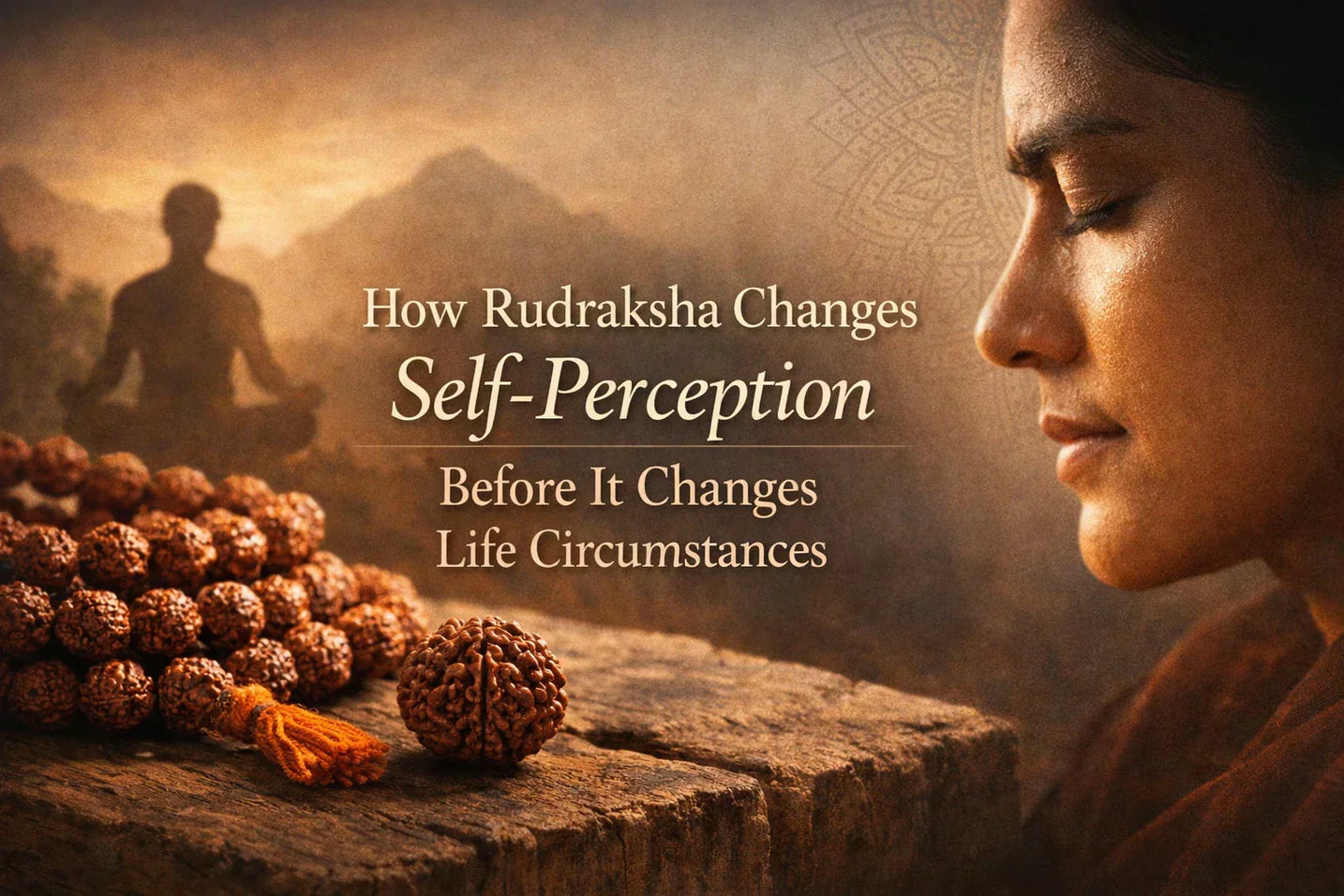
🧘 How Rudraksha Changes Self-Perception Before It Changes Life Circumstances
Most people approach Rudraksha with a very external expectation. They want something in life to change — stress to reduce, problems to resolve, circumstances to shift, or outcomes to improve. This expectation is natural, but it is also where the deepest misunderstanding begins. Rudraksha does not start its work by rearranging life situations. It begins much earlier and much closer — by altering the way a person perceives themselves, their reactions, their choices, and their inner narrative. Until this internal shift happens, any outer change remains temporary or accidental.
Self-perception is the silent lens through which life is experienced. Two people can live in identical circumstances and yet experience life completely differently because their internal perception of self is different. Rudraksha interacts with this internal lens first. It does not impose new beliefs or create artificial positivity. Instead, it slowly brings awareness to existing patterns — how one reacts under pressure, how one justifies decisions, how one avoids responsibility, and how one narrates their own identity. This shift often goes unnoticed because it does not announce itself with dramatic sensations or immediate results.
🌱 Why Inner Change Comes Before Outer Change
Life circumstances are downstream effects of internal perception. Decisions, habits, boundaries, and responses emerge from how a person sees themselves in relation to the world. Rudraksha works at this upstream level. As self-perception begins to change, small but significant internal adjustments take place — a person notices when they are overreacting, becomes aware of avoidance patterns, or recognizes moments where they previously acted unconsciously. These realizations may not feel empowering at first. In fact, they often feel confronting because they remove comforting illusions about oneself.
This stage is where many people become impatient. They are waiting for life to change while the actual change is happening internally. Rudraksha does not bypass this stage because bypassing it would only reinforce the same patterns under a different label. Instead, it stabilizes awareness around self-observation. Over time, this changes how a person relates to challenges. Instead of blaming circumstances or waiting for relief, there is a gradual shift toward responsibility, clarity, and grounded decision-making. Outer change follows later, not because Rudraksha forces it, but because perception has matured.
🧩 The Silent Shift in Identity
Identity is not just who a person thinks they are; it is how they habitually respond to life. Rudraksha quietly brings attention to this habitual identity. Situations that once triggered automatic reactions begin to feel different, not because the situation has changed, but because the internal response has shifted. This is often misinterpreted as stagnation because the external environment remains the same for a while. However, internally, a reorientation is happening — one that replaces impulse with awareness and reaction with reflection.
This silent shift is subtle but powerful. A person may start noticing their own contradictions, inconsistencies, or emotional patterns with greater honesty. This can feel uncomfortable because self-perception is no longer filtered through denial or justification. Rudraksha does not judge these realizations; it simply makes them visible. Over time, this visibility creates alignment between intention and action. When identity begins to align internally, external life slowly reorganizes itself without force or struggle.
🔍 Why Many People Miss This Phase
The reason many people feel that nothing is changing is because they are measuring progress only through visible results. Self-perception changes quietly. It does not demand attention. It shows itself in small moments — a pause before reacting, a different choice made under pressure, or a subtle shift in priorities. These moments are easy to overlook, but they form the foundation for sustainable change. Without this foundation, even dramatic external improvements fail to last.
Rudraksha operates patiently. It does not reward impatience or expectation. It aligns the wearer with their own internal truth first. Only when this alignment stabilizes does life begin to respond differently. Understanding this sequence — perception before circumstance — is essential for anyone seeking long-term transformation rather than short-term relief.
🧭 How Self-Perception Shapes Daily Decisions
Self-perception does not operate at the level of grand life events; it expresses itself quietly through everyday decisions. The tone in which a person speaks, the boundaries they allow to be crossed, the choices they postpone, and the responsibilities they accept or avoid are all guided by how they perceive themselves. When Rudraksha begins influencing self-perception, these daily micro-decisions start to shift. A person may find themselves less willing to justify unhealthy habits, more aware of internal resistance, or more conscious of where they compromise their own values. These changes are not dramatic, but they are foundational.
This is where Rudraksha works differently from motivational or external tools. Instead of pushing a person toward action, it makes inaction visible. It highlights hesitation, avoidance, and internal conflict without forcing immediate correction. This visibility often feels uncomfortable because it removes excuses. A person starts noticing not just what they do, but why they do it. Over time, this awareness subtly reshapes decision-making. Choices become less reactive and more intentional, even if life circumstances have not yet visibly changed.
⏳ Why Life Circumstances Lag Behind Inner Change
Outer life does not respond instantly to inner change because circumstances are built on accumulated patterns. Relationships, work situations, financial realities, and personal habits are all the result of long-term behavior shaped by earlier self-perception. When Rudraksha initiates an internal shift, it does not erase these structures overnight. Instead, it alters how a person engages with them. This gap between inner clarity and outer reality can feel frustrating, especially for those expecting immediate results.
However, this lag is not a flaw in the process; it is evidence of its depth. If circumstances changed without internal alignment, the same patterns would recreate the same challenges under different conditions. Rudraksha ensures that perception stabilizes before circumstances rearrange themselves. As perception matures, actions become consistent, boundaries strengthen, and decisions gain clarity. Gradually, external life begins to reflect these changes, not because it is being forced, but because the internal reference point has shifted.
🧠 Awareness of Reaction Versus Control of Reaction
One of the earliest signs of changing self-perception is awareness of reaction without immediate control over it. A person may still react emotionally, but now they notice the reaction clearly. This awareness can feel unsettling because it exposes patterns without yet providing mastery over them. Many people misinterpret this phase as regression, believing they are becoming more reactive. In reality, the reaction was always present; what has changed is the ability to see it.
Rudraksha supports this stage by strengthening observation rather than suppression. Suppression creates temporary calm but long-term imbalance. Observation creates discomfort initially but leads to integration. As awareness deepens, reactions gradually lose their unconscious grip. The individual does not become emotionless; instead, they become less identified with emotional impulses. This shift in identification is a profound change in self-perception, even though it may not immediately alter life circumstances.
🔄 Why Many People Abandon Rudraksha Too Early
Because self-perception changes quietly and circumstances change slowly, many people conclude that nothing is happening and abandon the process prematurely. They mistake the absence of dramatic external shifts for lack of progress. In reality, they are often standing at the threshold of meaningful internal alignment. The phase where self-perception is reorganizing but life has not yet responded is psychologically demanding. It requires patience and a willingness to stay present without immediate reward.
Rudraksha does not create dependency on itself; it creates self-accountability. This accountability can feel heavy at first because it removes the comfort of blaming external factors. Those who stay with this process long enough begin to notice a deeper sense of agency. Life may still present challenges, but the way those challenges are approached changes fundamentally. This shift marks the beginning of true transformation rather than temporary relief.
🤝 How Changing Self-Perception Reshapes Relationships
Relationships are one of the first areas where changes in self-perception quietly begin to surface. When a person’s internal lens starts shifting, they naturally become more aware of how they participate in relationships rather than focusing only on how others behave. Rudraksha supports this internal recalibration by making patterns visible—where one over-gives, where one avoids confrontation, where one seeks validation, or where one suppresses discomfort to maintain harmony. These realizations are rarely pleasant, because they challenge the familiar identity a person has built within their relationships.
As self-perception matures, interactions start changing in subtle ways. A person may become less reactive to emotional triggers, less inclined to seek approval, or more comfortable expressing boundaries without guilt. This does not always improve relationships immediately. In fact, it can initially create friction, because relationships are accustomed to the old patterns. However, this friction is part of the rebalancing process. Rudraksha does not aim to preserve comfort-based relationships; it supports alignment-based ones. Over time, relationships either adjust to this new clarity or naturally reconfigure themselves.
💼 The Impact on Work, Responsibility, and Daily Structure
Work life is another area where shifts in self-perception become evident before any external success or recognition appears. As awareness increases, people often notice where they have been operating on autopilot—avoiding responsibility, overextending themselves, or defining their worth purely through productivity. Rudraksha does not push ambition or detachment; it brings clarity around intention. This clarity can initially feel destabilizing, because it questions long-held assumptions about success, effort, and self-worth.
With time, this internal clarity influences how work is approached. Decisions become less impulsive and more intentional. There is a gradual movement away from reactive busyness toward purposeful action. External results may not change immediately, but the quality of engagement does. A person begins to take ownership of their role rather than seeking constant validation or escape. This shift in responsibility is a direct outcome of changing self-perception, and it lays the groundwork for sustainable external progress.
🧠 Why External Change Becomes Inevitable
When self-perception changes consistently over time, external change becomes inevitable, even if it is not actively pursued. Life circumstances are shaped by repeated choices, and repeated choices are shaped by how a person sees themselves. As Rudraksha stabilizes this internal lens, actions align more closely with values, boundaries become clearer, and decision-making becomes more coherent. These aligned actions gradually alter the environment a person lives in.
This process is slow by design. Sudden external change without internal alignment often collapses under pressure. Rudraksha avoids this by ensuring that perception is steady before circumstances shift. When external change finally becomes visible, it feels natural rather than forced. Opportunities align with capacity, challenges are met with composure, and progress feels grounded rather than chaotic. This is the quiet effectiveness of perception-led transformation.
🔄 Becoming the Change Instead of Waiting for It
One of the most significant shifts in self-perception is the movement away from waiting for change toward becoming it. Instead of expecting life to improve first, a person begins to embody the qualities they once hoped circumstances would provide—clarity, stability, and responsibility. Rudraksha facilitates this transition by continuously reflecting inner patterns back to the wearer, encouraging self-honesty rather than external dependence.
This does not mean life becomes effortless. Challenges continue to arise, but they are approached from a different internal position. The sense of helplessness gradually dissolves, replaced by a grounded understanding of agency. When this stage is reached, external circumstances start responding organically. What changes is not just what happens in life, but how life is lived. This is the deeper sequence Rudraksha follows—self-perception first, circumstances later.
❓ Frequently Asked Questions (FAQs)
Does Rudraksha directly change life situations like career, money, or relationships?
Rudraksha does not directly manipulate life circumstances. Its primary influence is internal. By changing self-perception, awareness, and decision-making patterns, it indirectly reshapes how a person engages with life. Circumstances change as a consequence of sustained internal alignment, not as an immediate intervention.
Why do inner changes feel more noticeable than outer changes at first?
Inner changes occur at the level of perception and awareness, which are immediate and continuous. External circumstances, however, are built over time through repeated actions and choices. Because Rudraksha works upstream at the level of perception, internal shifts are felt long before their external effects become visible.
Is it normal to feel more self-aware but not more successful initially?
Yes. Increased self-awareness often precedes tangible success. This phase reflects a recalibration of identity and responsibility. Success that emerges after this recalibration tends to be more stable and sustainable, rather than reactive or accidental.
Can changing self-perception feel uncomfortable or confronting?
It often does. When self-perception shifts, old narratives, habits, and justifications become visible. This honesty can feel uncomfortable, but it is a necessary stage of internal alignment. Rudraksha does not create discomfort; it reveals existing patterns that were previously unconscious.
How long does it take for life circumstances to reflect internal changes?
There is no fixed timeline. The speed of external change depends on consistency of awareness, quality of decisions, and willingness to act from the new perception. Rudraksha supports this process, but it does not bypass personal responsibility or effort.
🧘 Final Conclusion ✨
Perception Is the Root of Transformation
Rudraksha does not operate at the surface level of life. It works quietly, patiently, and deeply at the level of self-perception. Before circumstances shift, before outcomes improve, and before visible success appears, the internal lens through which life is experienced begins to reorganize. This reorganization is subtle and often misunderstood, because it does not deliver immediate rewards or dramatic change.
As self-perception evolves, reactions soften, decisions gain clarity, and responsibility becomes internal rather than externalized. Life circumstances eventually respond to this shift, not because they are being forced, but because actions are now aligned with awareness. This sequence—perception first, circumstance later—is what makes transformation sustainable rather than temporary.
Understanding this process changes the relationship with Rudraksha entirely. Instead of expecting it to fix life from the outside, it is recognized as a mirror that reveals how life is being lived from within. Those who allow this inner work to stabilize often find that when change finally arrives, it feels natural, grounded, and lasting.
🙏 हर हर महादेव 🙏





Leave a comment