



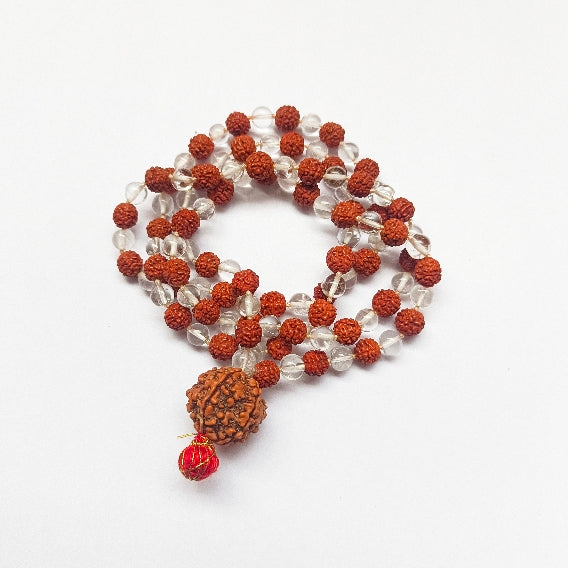

🔱 Rudraksha in Real Life: What Happens During Intimacy, Exercise, Travel & Alcohol Use
Rudraksha is usually discussed in controlled environments — meditation rooms, temples, or moments of silence. But real life rarely offers such conditions. Life unfolds through relationships, physical exertion, travel stress, social settings, and unpredictable routines.
This gap between ideal spiritual scenarios and actual lived experience is where confusion begins. People are left wondering whether Rudraksha can remain effective when life becomes intense, physical, or socially complex.
Traditional understanding never separated spirituality from daily living. Rudraksha was not created for isolation. It was created for continuity — to remain steady even when life is active.
🌿 Rudraksha Was Never Designed for Ideal Conditions Only
One of the most common modern misconceptions is that Rudraksha functions only when life is calm, disciplined, and perfectly structured. Historically, this assumption does not hold.
Rudraksha has been worn across vastly different lifestyles — ascetics, householders, warriors, teachers, and travelers. These lives involved physical movement, emotional engagement, responsibility, and unpredictability.
If Rudraksha were disrupted by ordinary human activity, it would not have survived centuries of continuous use. Its purpose was never to avoid life, but to support steadiness within it.
🤍 Intimacy & Rudraksha: Separating Reality from Fear
Intimacy is often treated with unnecessary fear in spiritual discussions — either as something that must be suppressed or as an activity that automatically weakens spiritual tools. Neither interpretation reflects traditional logic.
Rudraksha does not react to moral labels. It responds to the state of the nervous system. Natural intimacy, when experienced without compulsion, secrecy, or emotional extremes, does not disrupt this balance.
What creates disturbance is not intimacy itself, but loss of regulation — guilt, obsession, emotional dependency, or psychological conflict. These states destabilize the mind, not the Rudraksha.
This is why classical teachings emphasized inner discipline rather than avoidance. Rudraksha supports awareness; it does not demand withdrawal from human connection.
🏃 Physical Training & Exercise: Movement Is Not the Enemy
Physical activity is often misunderstood as agitation. In reality, disciplined movement has always been considered grounding. Traditional systems viewed strength, stamina, and bodily awareness as supports — not obstacles — to mental steadiness.
Exercise improves circulation, regulates stress response, and enhances body awareness. These effects align naturally with the stabilizing purpose of Rudraksha rather than opposing it.
The only concern arises when physical activity becomes extreme or chaotic — driven by aggression, exhaustion, or loss of bodily awareness. In such cases, the issue is imbalance of routine, not incompatibility with Rudraksha.
When movement is structured and intentional, Rudraksha continues to function as it always has — as a steady companion rather than a fragile object.
✈️ Travel, Disruption & Routine Shock
Travel is one of the most underestimated stressors on the nervous system. Irregular sleep, unfamiliar food, crowded environments, time-zone shifts, and constant movement quietly disrupt internal rhythm. This is precisely why many people feel mentally scattered during long journeys, even when travel is enjoyable.
Traditional understanding never suggested removing spiritual tools during travel. In fact, continuity during disruption was considered essential. Rudraksha was historically worn by pilgrims, traders, and wandering scholars precisely because it provided a stable reference point when routine dissolved.
The key factor is not location, but consistency. When daily habits collapse, the mind seeks anchors. A Rudraksha worn during travel does not “protect” in a dramatic sense — it simply reinforces familiarity, helping the nervous system remain oriented amid change.
Problems arise only when travel turns chaotic — excessive stimulation, lack of rest, or emotional overload. In such cases, discomfort is not caused by the Rudraksha, but by the absence of grounding habits. The bead does not resist movement; it reflects how well the system adapts to movement.
🍷 Alcohol & Rudraksha: What Actually Changes
Alcohol is one of the most sensitive topics surrounding Rudraksha, largely because it is often discussed in moral terms rather than physiological ones. Traditional systems did not frame alcohol as “forbidden” in absolute terms — they framed it as destabilizing when consumed without awareness.
Alcohol directly affects the nervous system by lowering inhibition, dulling perception, and weakening self-regulation. These effects oppose the stabilizing intention behind Rudraksha, but they do not damage the bead itself.
Occasional, moderate consumption does not nullify Rudraksha’s role. However, habitual or excessive use creates internal inconsistency. When awareness repeatedly dissolves, the stabilizing influence of any disciplined tool naturally diminishes.
This is why traditional guidance emphasized reduction rather than prohibition. The issue is not chemical purity; it is coherence. Rudraksha functions best when the nervous system remains regulated enough to receive its stabilizing reference.
🧠 What Actually Weakens Rudraksha’s Effectiveness
Across all real-life scenarios — intimacy, exercise, travel, or social settings — one pattern remains consistent. Rudraksha does not weaken due to activity. It weakens when awareness becomes fragmented.
Compulsion, emotional extremes, sleep deprivation, constant stimulation, and inconsistent routine gradually erode internal steadiness. When this happens, people often blame the object instead of examining lifestyle drift.
Traditional wisdom never treated Rudraksha as a shield against imbalance. It was treated as a mirror. When life becomes chaotic, the bead does not fail — it reflects the loss of rhythm.
🔱 The Core Truth: Rudraksha Is Built for Living, Not Isolation
Rudraksha was never meant to exist only in silence. It was meant to travel through life — through work, relationships, movement, fatigue, and responsibility.
What determines compatibility is not the situation, but the quality of engagement. When actions are conscious, regulated, and consistent, Rudraksha remains aligned. When life becomes reactive, scattered, or compulsive, no tool can compensate.
This is the real boundary — not between sacred and ordinary life, but between awareness and distraction.
❓ Frequently Asked Questions (FAQs)
Can Rudraksha be worn during intimacy?
Yes. Rudraksha does not interfere with intimacy. Traditional texts never classified human closeness as impure. Issues arise only when activity becomes compulsive or emotionally chaotic, not because of intimacy itself.
Is it safe to wear Rudraksha while exercising or going to the gym?
Yes, Rudraksha can be worn during exercise. Physical movement does not disturb it. However, excessive strain, sweat buildup, or impact may cause physical wear to the thread or beads, so secure tying and basic care are advised.
Should Rudraksha be removed while traveling?
No. Traditionally, Rudraksha was worn during long journeys and pilgrimages. Travel itself does not create imbalance. In fact, continuity during disrupted routine often supports mental steadiness.
Does alcohol damage Rudraksha?
Alcohol does not damage Rudraksha physically. The concern is internal coherence. Frequent intoxication weakens self-regulation, which reduces the stabilizing role of any disciplined practice, including Rudraksha.
Does Rudraksha lose its power in daily life situations?
No. Rudraksha does not lose effectiveness due to daily activities. It reflects internal consistency. When routine, awareness, and discipline weaken, people often misinterpret this as loss of effect.
Is Rudraksha meant only for meditation or spiritual isolation?
No. Rudraksha was historically worn by householders, travelers, students, and professionals. It was designed for lived life, not withdrawal from it.
When should Rudraksha actually be removed?
Rudraksha may be removed temporarily during bathing with harsh chemicals, medical procedures, or situations where physical damage is likely. Removal is about care, not purity.
What is the biggest mistake people make with Rudraksha?
Treating it as a protective charm instead of a stabilizing discipline. Rudraksha supports steadiness, but it cannot compensate for chronic imbalance or avoidance of responsibility.
🌱 Conclusion 🧭
Truth Over Fear
Fear-based rules surrounding Rudraksha often arise from misunderstanding rather than tradition. Intimacy does not break it. Exercise does not disturb it. Travel does not weaken it. Alcohol does not damage it.
What matters is internal consistency. Rudraksha supports steadiness — it does not replace it.
When worn with awareness, it integrates seamlessly into real life. When life becomes unregulated, the solution is not removal, but recalibration. Rudraksha was never designed to escape the world. It was designed to remain steady within it.





Leave a comment