






✈️ Rudraksha for People Who Travel Constantly: Stability in a Life That Never Stays Still
For many people today, travel is no longer an occasional event. It is a lifestyle. Airports replace offices, hotel rooms replace homes, and schedules change faster than the body can adapt. While this mobility brings opportunity, it also creates a subtle but continuous strain on the nervous system.
In such a life, spiritual practices are often questioned. Some abandon them completely, believing that spirituality requires stillness. Others cling to tools like Rudraksha hoping they will neutralize exhaustion, stress, and overload instantly.
Both approaches miss the point. Rudraksha was never meant to compensate for chaos, nor was it designed only for static lives. It responds to awareness, regulation, and honesty — qualities that become even more important when life is constantly in motion.
🌍 Why Constant Movement Affects the Inner System
The human system is deeply rhythmic. Sleep, digestion, emotional processing, and focus depend on repetition and familiarity. When locations change frequently, these rhythms are repeatedly interrupted.
Each new place demands adjustment — new sounds, new lighting, new people, new expectations. Even when travel is routine, the nervous system does not fully relax. It stays alert, scanning, adapting.
This state is not stress in the dramatic sense. It is low-grade, continuous activation. Over time, it creates fatigue that is not always visible but deeply felt.
🧠 What Rudraksha Actually Does in a Mobile Lifestyle
Rudraksha does not suppress sensation. It sharpens awareness and supports regulation. In stable environments, this feels calming. In unstable environments, it reveals instability more clearly.
This is why many frequent travelers report mixed experiences. The same bead that feels grounding at home may feel heavy, alerting, or neutral while traveling.
This is not a contradiction. It is feedback. Rudraksha mirrors the state of the system rather than masking it.
🏢 Airports, Hotels & Shared Spaces: The Hidden Load
High-traffic environments carry constant sensory input — movement, announcements, crowds, emotional tension, urgency. Even when the mind is focused on tasks, the body absorbs this stimulation.
Hotels and transit spaces are shared environments. They lack personal energetic boundaries. Over time, this creates a sense of depletion that rest alone does not always resolve.
Rudraksha, by increasing bodily awareness, often makes this depletion more noticeable. What feels like discomfort is often clarity.
⚖️ Grounding vs Exhaustion: A Critical Distinction
Many travelers confuse grounding with tiredness. Grounding brings weight, presence, and awareness. Exhaustion brings irritability, dullness, and withdrawal.
When a traveler is already fatigued, grounding can initially feel uncomfortable because it removes dissociation. This leads to the assumption that Rudraksha is “too strong” or unsuitable.
In reality, the discomfort often comes from accumulated fatigue being felt fully for the first time.
📿 Wearing Rudraksha Intelligently While Traveling
For people who travel frequently, consistency must be flexible. Wearing Rudraksha should adapt to energy levels, sleep quality, and environmental intensity.
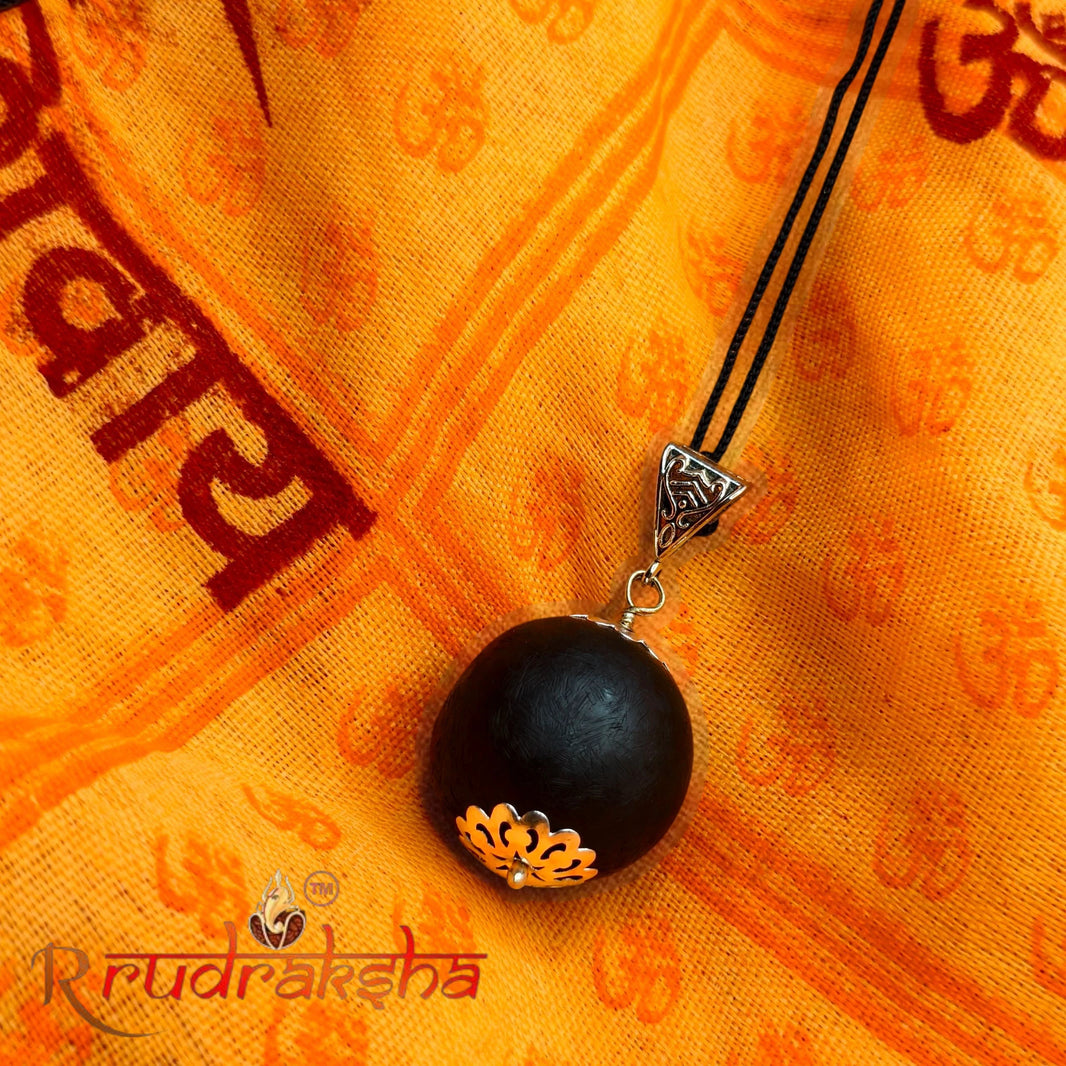
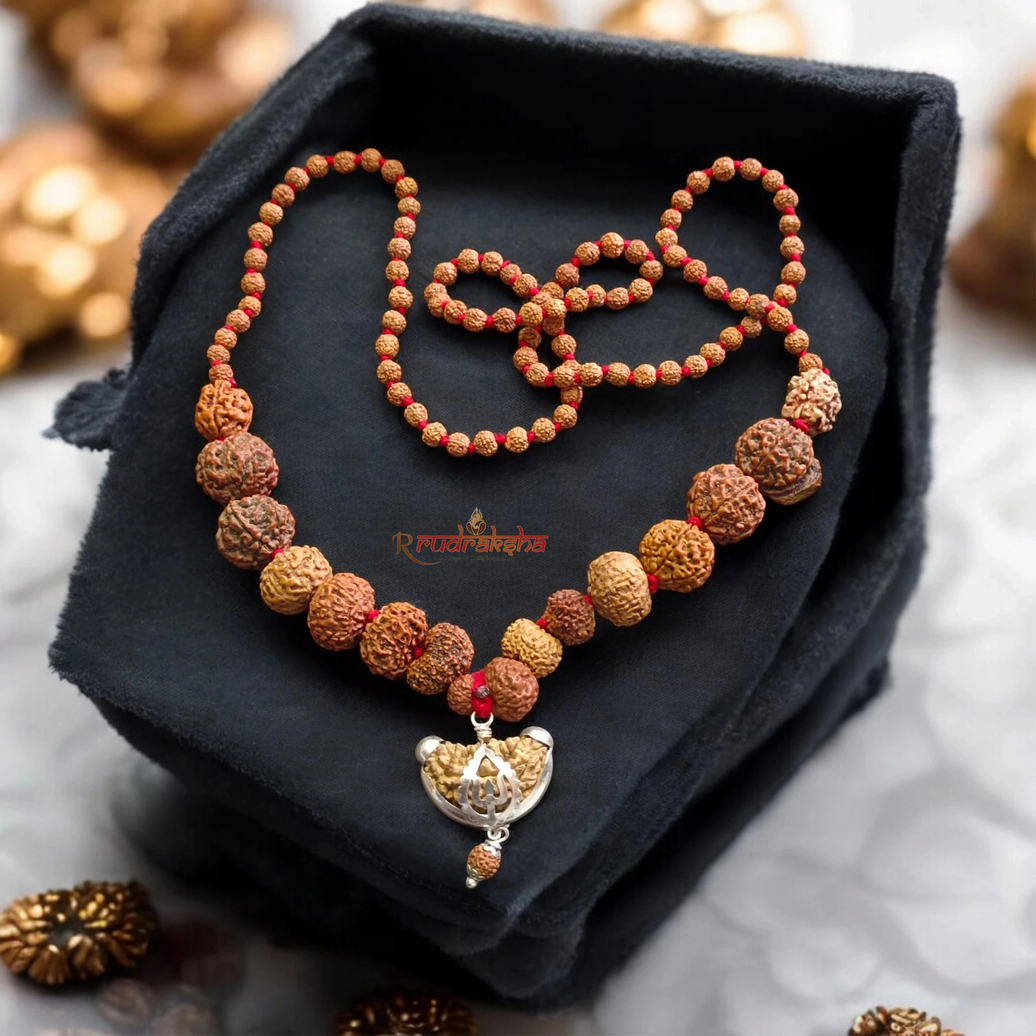
Neck placement offers strong grounding and continuous sensory input. This may be supportive during calm days but overwhelming during long transit, meetings, or crowded exposure.
Wrist or pocket placement reduces intensity and allows the body to regulate gradually. This is not dilution of practice; it is intelligent pacing.
🕰️ When Removing Rudraksha Is the Right Choice
There are phases during travel when removing Rudraksha temporarily supports recovery. Extreme fatigue, illness, emotional overload, or severe sleep disruption are such phases.
Removing the bead does not undo progress. It prevents overload. Many travelers find that resuming after rest restores clarity more effectively than forcing continuity.
Spiritual maturity is reflected in timing, not endurance.
🧑💼 Different Travelers, Different Needs
Business travelers face decision fatigue and constant performance pressure. For them, lighter grounding often supports clarity better than intensity.
Pilgrims experience emotional openness and devotional focus, but also physical strain and crowd exposure. Balance becomes essential.
Flight crew and transport workers live with chronic schedule disruption. Their nervous systems benefit most from gentle, consistent regulation rather than deep inward practices during duty cycles.
🌿 When Travel Becomes the Practice
Travel reveals patterns that routine hides — impatience, control, emotional reactivity, avoidance. Rudraksha does not protect from these patterns. It brings them into awareness.
When observed honestly, travel becomes part of sadhana. The bead supports awareness, not escape.
In this way, Rudraksha does not conflict with a mobile life. It asks for a more conscious relationship with it.
🧭 Stability Is Internal, Not Geographical
One of the biggest misunderstandings frequent travelers carry is the belief that stability comes from location. In reality, stability comes from regulation. A person can feel unsettled in their own home and calm in a moving train, depending on how regulated their nervous system is.
Rudraksha supports this internal regulation. It does not anchor the wearer to a place; it anchors awareness to the body. This is why location changes alone do not determine whether Rudraksha “works.” The determining factor is how well the wearer can remain internally present while external conditions shift.
For travelers who learn this distinction, Rudraksha becomes a portable anchor rather than a fragile practice dependent on routine.
🧠 Travel, Hyper-Stimulation & Attention Fragmentation
Modern travel environments are not just physically demanding; they are cognitively invasive. Screens, notifications, announcements, social interactions, deadlines, and unfamiliar cues fragment attention continuously.
This fragmentation prevents the mind from settling into a coherent rhythm. Even during rest, attention remains partially dispersed. Over time, this creates a background sense of restlessness that many travelers normalize without realizing its impact.
Rudraksha often makes this fragmentation visible. It draws attention back to the body, exposing how scattered the mind has become. This can feel uncomfortable initially, but it is also the first step toward restoration.
⚙️ Why Productivity-Oriented Travel Clashes with Inner Regulation
Many frequent travelers operate in performance-driven environments. Productivity, output, responsiveness, and optimization dominate daily life. While effective professionally, this orientation keeps the nervous system in a state of controlled urgency.
Rudraksha does not align naturally with urgency. It aligns with steadiness. When worn continuously in performance-heavy contexts, the mismatch becomes apparent.
This does not mean Rudraksha resists productivity. It reveals the cost of constant urgency and invites recalibration rather than collapse.
🔄 Adapting Spiritual Practice Without Diluting It
A common fear among travelers is that adjusting spiritual practice means weakening it. In reality, adaptability is a sign of maturity, not compromise.
Reducing intensity, changing placement, or pausing during demanding phases preserves long-term relationship with the practice. Rigidity often leads to abandonment, while responsiveness sustains continuity.
Rudraksha responds best to sincerity, not endurance tests.
🌙 Nights in Transit: Why Evening Sensitivity Increases
Evenings during travel often feel heavier than mornings. Fatigue accumulates, sensory exposure peaks, and emotional regulation weakens.
Many travelers report increased sensitivity to Rudraksha at night, especially in unfamiliar sleeping environments. This sensitivity is not a warning; it is the nervous system asking for rest.
Removing Rudraksha before sleep while traveling often improves recovery without diminishing the overall practice.
🛑 The Cost of Forcing Spiritual Continuity
Forcing spiritual practices during extreme fatigue or stress often backfires. Instead of grounding, it creates resistance.
Travel exposes this clearly. When the body is asking for rest, forcing awareness feels like pressure. This leads to frustration and misinterpretation.
Rudraksha is not meant to override bodily intelligence. It works best when aligned with it.
🧘 Returning Home: Re-Entry Is a Phase, Not an Instant Reset
Returning home after long periods of travel is not an instant reset. The nervous system takes time to unwind from constant alertness.
Many people mistakenly intensify spiritual practice immediately upon returning, hoping to compensate for time spent traveling. This often leads to overwhelm.
Gradual re-engagement restores steadiness more effectively than sudden intensity.
🌿 When Rudraksha Becomes a Companion, Not a Tool
For travelers who persist with awareness, Rudraksha eventually stops feeling like a tool that must “do something.” It becomes a companion that reflects inner state honestly.
In moments of calm, it feels quiet. In moments of overload, it feels grounding. In moments of fatigue, it asks for rest.
This relationship transforms travel from disruption into refinement.
❓ Frequently Asked Questions (FAQs)
Can I wear Rudraksha while traveling by flight or train?
Yes. There is no restriction on wearing Rudraksha during air or train travel. However, frequent travelers may experience Rudraksha differently due to fatigue, sensory overload, and disrupted routines. Adjusting placement or duration of wear often helps maintain balance.
Why does Rudraksha feel heavier when I am traveling?
Heaviness usually indicates grounding rather than negativity. During travel, the nervous system stays alert due to constant adaptation. Rudraksha makes this state more noticeable, which can feel heavy if the body is already fatigued.
Should I remove Rudraksha during sleep while traveling?
Many travelers benefit from removing Rudraksha during sleep when traveling, especially after long days or poor rest. This allows the nervous system to recover without additional sensory input.
Is it wrong to stop wearing Rudraksha temporarily during travel?
No. Temporarily pausing Rudraksha during extreme exhaustion, illness, or emotional overload is a sign of awareness, not spiritual failure. Rudraksha supports regulation, not force.
Which placement works best for frequent travelers?
Neck placement provides strong grounding and may feel intense in crowded environments. Wrist or pocket placement often suits frequent travelers better during transit days, meetings, or high-interaction schedules.
Can advanced or high-intensity Rudraksha be worn while traveling?
High-intensity Rudraksha generally requires stability and routine. Constant travel may reduce compatibility. Many experienced seekers consciously reduce intensity during travel and resume deeper practices once stability returns.
Does traveling reduce the spiritual effectiveness of Rudraksha?
No. Travel does not reduce Rudraksha’s effectiveness. It changes the context. Rudraksha reflects the state of the nervous system rather than shielding it from instability.
🧘 Final Conclusion ✨
Travel Tests Awareness, Not Spirituality
A life of constant movement does not make Rudraksha irrelevant. It makes awareness essential. Travel places the nervous system under continuous adaptation, revealing fatigue, restlessness, and emotional reactivity that routine life often hides.
Rudraksha does not promise comfort in chaos. It offers regulation through awareness. When worn with rigidity, it may feel demanding. When worn with intelligence and flexibility, it becomes a steady companion amid uncertainty.
For frequent travelers, the purpose of Rudraksha is not intensity or constant sensation. It is inner availability — the ability to remain present, grounded, and honest while locations, schedules, and environments keep changing.
When this understanding is embraced, travel no longer weakens spiritual practice. It deepens it. Rudraksha stops being something you wear and becomes something you listen to.
🙏 हर हर महादेव 🙏





Leave a comment