



















Why Shiva Is Incomplete Without Shakti: The Deep Spiritual Logic Explained 🔱🌺
One of the most profound statements in Sanatan Dharma is often expressed in a single line:
“Shiva without Shakti is Shava.”
This statement is not meant to challenge Shiva’s divinity, nor does it elevate Shakti above him. Instead, it reveals a core spiritual logic that explains how existence itself functions. Consciousness alone does not create. Energy alone cannot sustain direction. Life emerges only when both unite.
The idea that Shiva is incomplete without Shakti is not mythology in isolation—it is philosophy expressed through symbolism. In this guide, we will explore why Shiva needs Shakti, what this incompleteness truly means, how mythology explains it, and why this balance is still relevant in modern spiritual and psychological life. All explanations are belief-based, responsible, and free from exaggerated claims.
Understanding the Statement: “Shiva Without Shakti Is Shava” 🔱
The phrase “Shiva without Shakti is Shava” uses symbolism rather than literal meaning. The word Shava means lifeless—not dead in a physical sense, but inactive in function.
Shiva represents pure consciousness: awareness without movement, desire, or action. In this state, Shiva is complete in stillness but does not participate in creation.
Shakti represents energy: movement, vibration, intention, and expression. When Shakti unites with Shiva, consciousness becomes active, creative, and experiential.
This teaching explains that awareness alone cannot manifest the universe, and energy alone cannot guide it. Both are essential.
Who Is Shiva Without Shakti? 🌺
Without Shakti, Shiva remains the eternal witness. He is formless, timeless, and beyond action. This is often described as the state of absolute stillness.
In yogic philosophy, this state is liberation—pure awareness resting in itself. However, liberation alone does not explain creation.
There is no time, no space, no movement in this condition. Nothing arises, nothing dissolves. Shiva alone represents potential consciousness, not expressed reality.
This is why creation does not begin with Shiva acting independently. Creation begins when Shakti activates awareness.
Who Is Shakti Without Shiva? 🌼
Shakti without Shiva represents raw energy without awareness. She is movement, power, creativity, and force—but without direction.
Energy without consciousness does not know when to stop, where to flow, or how to sustain balance. It becomes excessive, chaotic, or destructive.
This is why Shakti is never presented as separate from Shiva in deeper philosophy. Her power gains intelligence only when anchored in awareness.
Symbolically, Shakti needs Shiva as much as Shiva needs Shakti.
The Mythological Expression of Shiva Needing Shakti 📖
Hindu mythology expresses philosophy through stories rather than abstract theory. The repeated theme of Shakti awakening Shiva is symbolic, not romantic.
Parvati’s tapasya is not about winning Shiva—it represents disciplined energy aligning with pure consciousness. Shiva’s acceptance represents awareness recognizing its expressive power.
Similarly, stories where Shakti moves creation forward while Shiva remains still reinforce the same message: consciousness alone does not act.
Mythology becomes a teaching tool—helping seekers understand balance through narrative.
Why Creation Requires Both Shiva and Shakti 🌌
Creation is not an act of desire; it is an act of expression. For expression to exist, awareness must be energized.
Shiva provides the silent foundation upon which reality rests. Shakti provides the movement through which reality appears.
This is why Hindu philosophy does not see creation as a one-time event. It is a continuous dance—awareness expressing itself through energy. This dynamic explains birth, growth, transformation, and dissolution.
Ardhanarishvara: The Visual Proof That Shiva Is Never Alone 🌓🔱
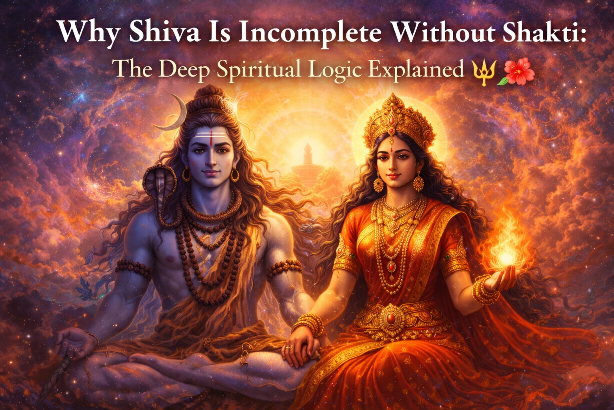
The form of Ardhanarishvara—half Shiva and half Shakti—is not symbolic of gender equality alone. It represents existential completeness.
This form teaches that awareness and energy are not two separate realities. They are one truth appearing as two aspects.
Ardhanarishvara shows that Shiva is never truly separate from Shakti. His completeness is revealed through her presence. Division is conceptual. Unity is reality.
Bhairav’s Role: Why Power Needs Discipline in Shiva–Shakti Balance 🖤
In the Shiva–Shakti framework, Bhairav represents discipline, boundaries, and conscious regulation. If Shiva is awareness and Shakti is energy, Bhairav ensures that this energy does not become uncontrolled and that awareness does not drift into detachment.
Bhairav appears wherever Shakti becomes intense—especially at Shakti Peeths—because power without discipline can destabilize creation. His role is not destructive; it is corrective. He protects sacred spaces and ensures that energy remains purposeful.
Philosophically, Bhairav completes the Shiva–Shakti dynamic by adding structure. Awareness (Shiva) + Energy (Shakti) + Discipline (Bhairav) creates sustainable balance.
Why Imbalance Happens When Shiva or Shakti Is Ignored ⚖️
When Shiva is ignored and only Shakti dominates, life becomes driven by constant action, desire, and intensity. This often leads to burnout, emotional volatility, and loss of direction.
When Shakti is suppressed and only Shiva is emphasized, life becomes stagnant. Awareness exists, but expression disappears. This can result in detachment without growth.
Hindu philosophy does not support extremes. It teaches integration. True spiritual maturity comes when awareness guides energy and energy expresses awareness.
Shiva–Shakti in the Human Mind: A Psychological Perspective 🧠
From a psychological point of view, Shiva represents observation, reflection, and self-awareness. Shakti represents motivation, emotion, and action.
Healthy mental functioning requires both. Reflection without motivation leads to passivity. Motivation without reflection leads to impulsive behavior.
Practices that emphasize mindful action align naturally with this philosophy. Without making medical claims, it is reasonable to say that balance between awareness and action supports emotional stability and clarity.
Why Shiva Is Not Superior to Shakti (And Vice Versa) 🌺
A common misunderstanding is to rank Shiva above Shakti or Shakti above Shiva. Hindu philosophy rejects this hierarchy.
Shiva and Shakti are equal, inseparable, and mutually dependent. One does not exist meaningfully without the other.
This equality is central to Shakta and Shaiva traditions alike. Where one is worshipped, the other is implicitly present. This understanding removes conflict and emphasizes unity.
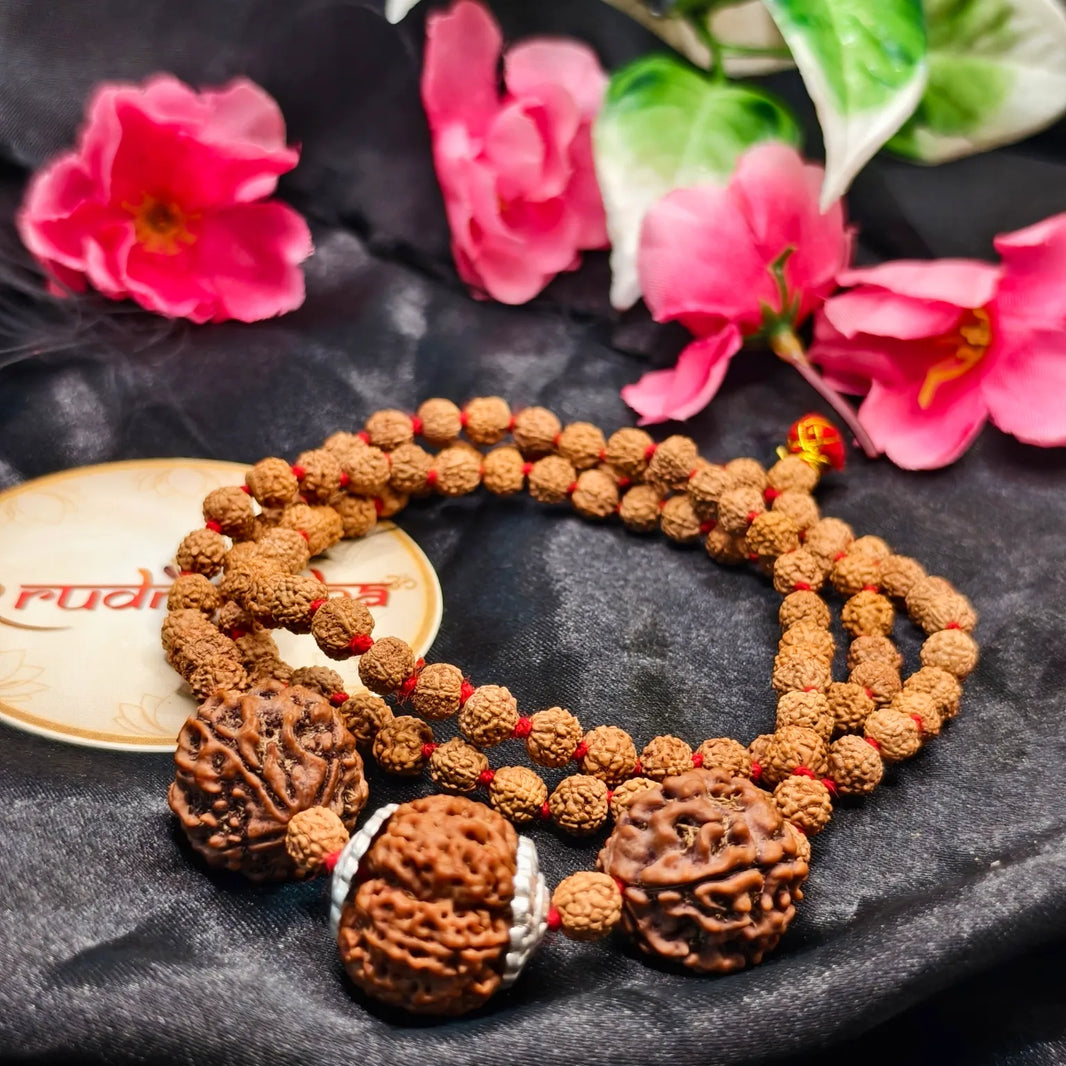
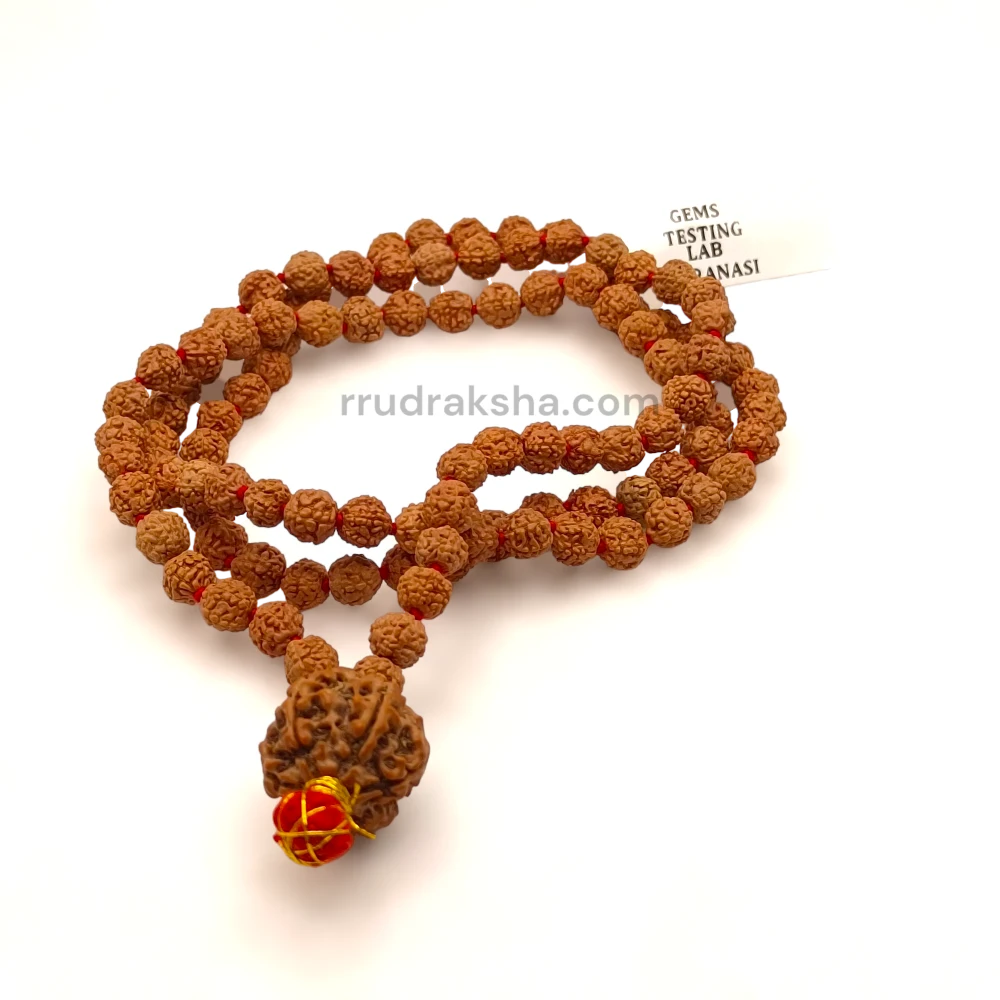
The Gauri Shankar Rudraksha is traditionally regarded as a living symbol of Shiva and Shakti together—representing equality, unity, and balanced consciousness.
Why This Philosophy Still Matters in Modern Life 🌍
Modern life often glorifies constant activity while undervaluing awareness. Alternatively, some spiritual paths promote withdrawal without engagement.
Shiva–Shakti philosophy offers a middle path. It teaches that life should be lived consciously—not compulsively and not passively.
This balance is especially relevant in today’s fast-paced world, where stress and distraction are common.
Frequently Asked Questions (FAQs) ❓
1) What does “Shiva without Shakti is Shava” really mean?
It means consciousness without energy cannot act or create.
2) Is Shiva incomplete without Shakti?
Philosophically, yes—awareness alone cannot express reality.
3) Is Shakti incomplete without Shiva?
Yes—energy without awareness lacks direction and balance.
4) Does this mean Shiva depends on Shakti?
They are mutually dependent aspects of one reality.
5) What role does Bhairav play?
Bhairav represents discipline that regulates power.
6) Is this concept only symbolic?
No—it reflects a philosophical model of awareness and energy.
7) Can beginners understand this philosophy?
Yes. At its core, it is about balance between awareness and action.
8) Does this philosophy reject worldly life?
No. It encourages conscious engagement, not withdrawal.
9) Why is Ardhanarishvara important here?
It visually expresses the unity of Shiva and Shakti.
10) How does this apply to daily life?
It helps balance reflection with action.
11) Is this philosophy religious or universal?
It is both—rooted in Hindu thought but universally applicable.
12) Why is balance emphasized so much?
Because imbalance leads to chaos or stagnation.
13) Does Shiva act at all?
Shiva acts through Shakti, not independently.
14) Why is Shakti often portrayed as active?
Because energy manifests movement and creation.
15) What is the ultimate lesson of this concept?
Wholeness arises through integration, not separation.
🌱 Conclusion 🔚
Shiva Is Complete Only When Shakti Is Present
The statement “Shiva is incomplete without Shakti” is not a limitation—it is a revelation. It explains that awareness finds meaning only when it expresses itself through energy, and energy finds direction only when guided by awareness.
Together, Shiva and Shakti form the living logic of existence. Their union explains creation, balance, transformation, and harmony—not just cosmically, but within every human life.
Understanding this relationship shifts spirituality from belief to insight. Balance becomes not a goal, but a natural outcome.
🙏 हर हर महादेव 🙏





Leave a comment