


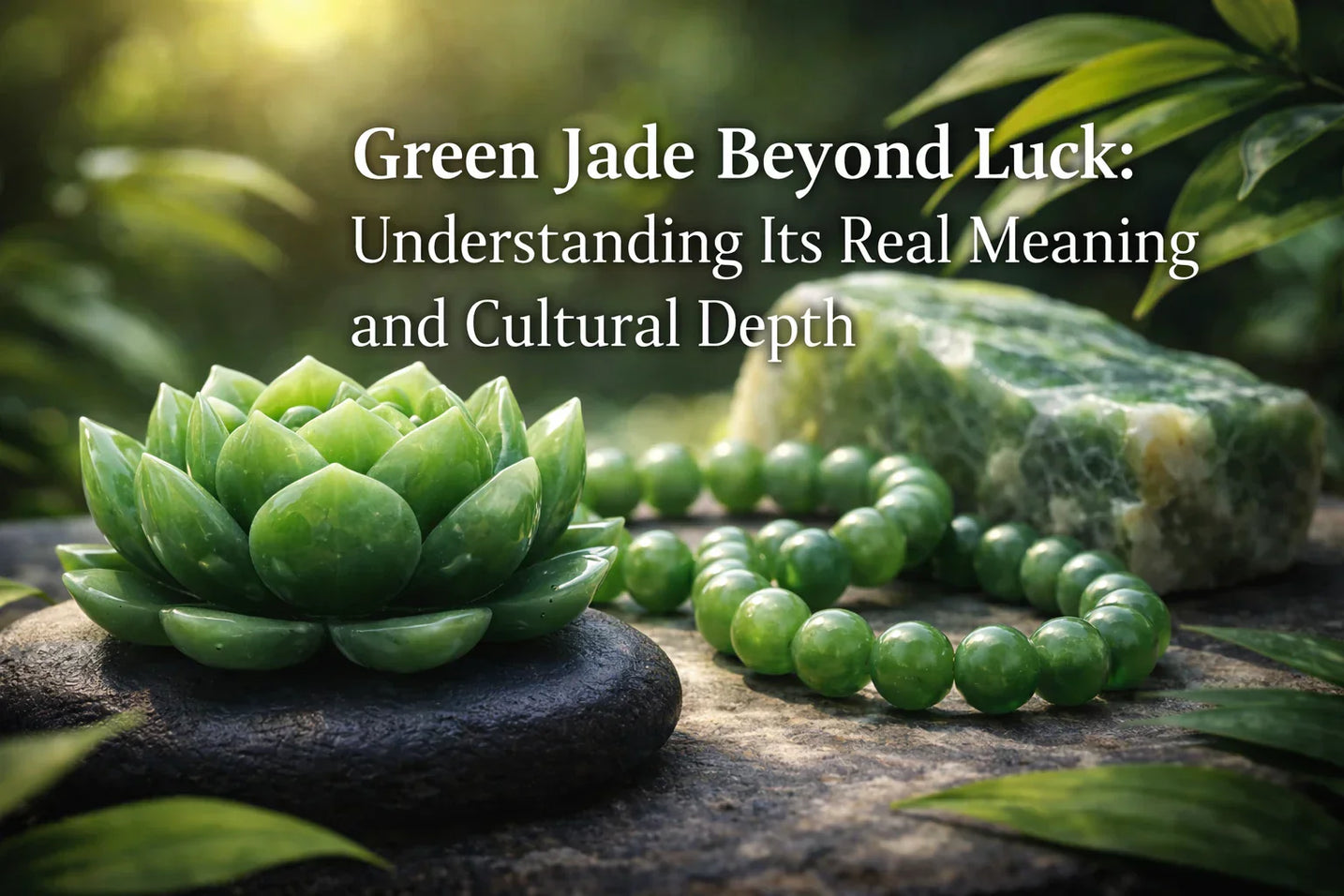
🟢 Green Jade Beyond Luck: Understanding Its Real Meaning and Cultural Depth
Green Jade is often introduced in modern conversations as a “lucky stone,” a simplified label that barely scratches the surface of its historical and cultural significance. Across civilizations, jade was never treated as a quick-result charm or a symbol of instant fortune. Instead, it was regarded as a stone of balance, restraint, ethical conduct, and continuity — qualities that develop slowly and shape character over time.
Understanding Green Jade beyond surface-level associations requires stepping away from modern manifestation narratives and returning to the traditions that valued jade as a companion to disciplined living. In these traditions, jade was worn, carried, or preserved not to attract sudden outcomes, but to cultivate steadiness in thought, behavior, and decision-making. This is why many traditional users preferred a Green Jade Mala for daily balance, allowing the stone to remain part of everyday life rather than an occasional object of focus.
This distinction is important today, as many people approach Green Jade with expectations shaped by marketing rather than heritage. When these expectations are unmet, confusion follows — not because the stone lacks value, but because its purpose has been misunderstood. Exploring authentic Green Jade Gemstones rooted in cultural tradition helps realign expectations with the stone’s original role as a symbol of continuity rather than instant change.
🌏 Green Jade in Ancient Civilizations
Green Jade holds a unique position among gemstones due to its deep integration into ancient societies. Unlike decorative stones that were primarily valued for appearance, jade was woven into moral philosophy, governance, ritual, and daily life. Its significance extended far beyond ornamentation.
In ancient Chinese civilization, jade was considered a symbol of virtue rather than wealth. Confucian philosophy associated jade with qualities such as integrity, wisdom, loyalty, and humility. The stone was believed to reflect the moral character of the wearer, not by changing fate, but by reminding the individual to act with restraint and clarity. Jade objects were often buried with the dead, signifying continuity of values beyond physical life. This emphasis on continuity is why traditional practices often favored a Green Jade mala used for long-term discipline, reflecting steadiness rather than display.
Similarly, in Mesoamerican cultures, jade was regarded as a sacred material connected to life force, fertility, and renewal. Rather than being traded casually, jade artifacts were reserved for ceremonial use and leadership roles. Possession of jade signified responsibility, not privilege — a reminder that authority must be exercised with balance and care. In modern contexts, this perspective aligns with choosing authentic Green Jade Gemstones rooted in traditional heritage rather than trend-driven alternatives.
Across cultures, a common theme emerges: Green Jade was never about acquiring more, but about becoming steadier. Its cultural role emphasized alignment between inner values and outward action, making it a stone associated with long-term character rather than short-term gain.
🧭 The Symbolism of Green Jade: Balance Over Fortune
The symbolism of Green Jade begins with its color. Traditionally associated with growth, renewal, and harmony, green represents continuity rather than expansion. Unlike colors linked with intensity or dominance, green signifies equilibrium — the ability to sustain rather than accelerate.
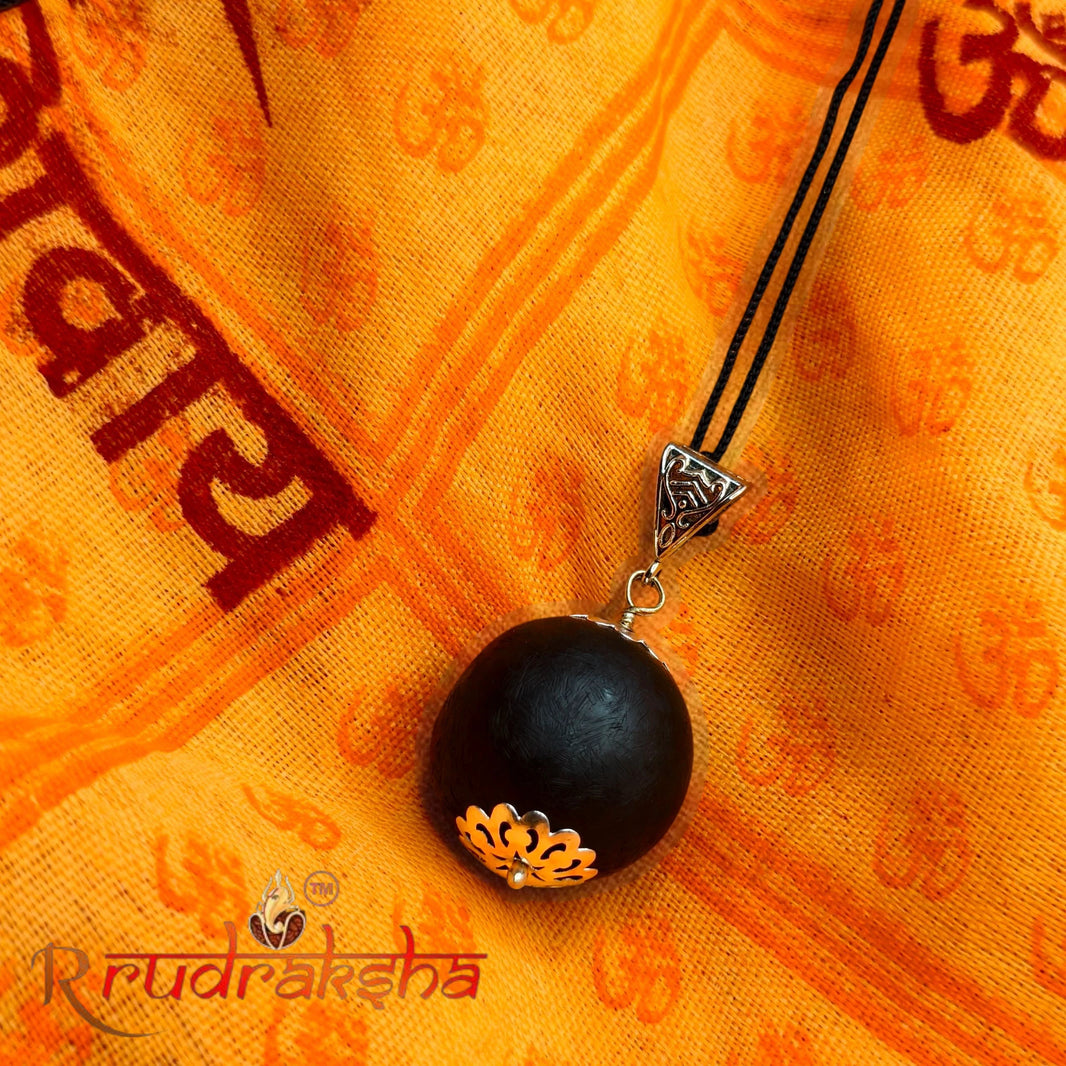
This symbolism explains why Green Jade has long been associated with patience and emotional regulation. Rather than amplifying desire or ambition, jade was believed to temper excess. It encouraged thoughtful action, ethical restraint, and measured response. In this context, some individuals prefer keeping a Green Jade pendant worn close to the heart, not for stimulation, but as a subtle reminder of emotional composure and balance during daily interactions.
When viewed through this lens, the idea of Green Jade as a “luck stone” becomes incomplete. Luck implies randomness or sudden advantage, whereas jade’s traditional symbolism emphasizes consistency and reliability. This is why discerning users often focus on certified Green Jade Stones verified for authenticity, ensuring the stone’s value aligns with heritage rather than marketing narratives.
This perspective remains relevant today. Individuals drawn to Green Jade often report a sense of calm or neutrality rather than excitement or stimulation. This is not a flaw — it reflects the stone’s historical role as a quiet stabilizer rather than an energetic catalyst.
🧠 Why Modern Interpretations Often Miss the Point
Modern Gemstones narratives frequently focus on immediate outcomes: attraction, manifestation, or transformation. While such interpretations are appealing, they often conflict with the foundational philosophy behind stones like Green Jade. When jade is approached with expectations of rapid change, its subtler influence can easily be overlooked.
Traditional use of jade emphasized long-term association. The stone was worn consistently, often for years, allowing its symbolic presence to reinforce disciplined habits and emotional steadiness. There was no urgency attached to results. Jade was valued precisely because it did not provoke dramatic shifts, but instead supported gradual alignment through continuity.
This difference in perspective explains why Green Jade may feel “neutral” to some wearers. Neutrality, in traditional terms, is not absence of effect — it is absence of disturbance. Jade’s role has always been to reduce internal volatility, not to create heightened states.
Recognizing this helps reset expectations. Green Jade does not promise luck; it supports balance. It does not amplify desire; it refines intention. Its real meaning lies not in what it brings, but in how it shapes awareness over time.
⚖️ Green Jade vs “Wealth Stones”: Understanding the Difference
Green Jade is often grouped with so-called “wealth stones,” yet this classification oversimplifies its traditional role. Unlike stones that are symbolically associated with ambition, expansion, or material acceleration, Green Jade has historically been valued for its stabilizing influence. Its purpose was not to increase desire, but to regulate it.
In traditional understanding, prosperity was never separated from conduct. Wealth gained without balance was considered unstable, and ambition without restraint was viewed as a source of long-term difficulty. Green Jade aligned with this worldview by symbolizing ethical accumulation rather than rapid gain. It supported clarity in decision-making, patience in action, and moderation in expectation — qualities often discussed in traditional Gemstones Philosophies rather than modern wealth narratives.
This distinction is important because many modern interpretations assume that all green stones function similarly. In reality, Green Jade’s influence is inward-facing. It shapes how choices are made, how pressure is handled, and how responsibility is carried. Any external benefit that follows is considered a consequence of inner alignment rather than a direct outcome of the stone itself.
Understanding this difference prevents unrealistic expectations. Green Jade does not replace effort or strategy. It complements them by encouraging steadiness, reducing impulsive decisions, and supporting consistency over time.
♎ Emotional Balance, Patience, and Inner Regulation
One of the most enduring associations of Green Jade across cultures is emotional balance. Rather than amplifying emotion, jade has traditionally been linked with emotional regulation — the capacity to remain composed without suppression and open without excess. This quality made it particularly valued in roles that demanded calm judgment and interpersonal sensitivity.
Patience, in this context, is not passive waiting. It reflects the ability to remain engaged without agitation, to respond thoughtfully rather than react immediately. Green Jade was understood as a companion to this state, reinforcing steadiness rather than intensity — a distinction often emphasized in the Historical Understanding of gemstones and their cultural role rather than modern emotional narratives.
When emotional balance is lacking, decision-making often becomes distorted. Fear, urgency, or overconfidence can dominate choices, leading to inconsistency. Traditional systems viewed jade as a reminder of measured response, encouraging individuals to pause before acting and to observe emotion without being governed by it.
This explains why Green Jade is often described as subtle. Its influence does not announce itself through sensation or stimulation. Instead, it supports an internal environment where emotions can move without overwhelming awareness, allowing clarity to remain intact even under pressure.
⏳ Why Green Jade Is Traditionally Associated with Long-Term Use
Unlike stones that are worn for specific rituals or short-term intentions, Green Jade has historically been associated with continuous, long-term use. This reflects its philosophical role: gradual refinement rather than immediate transformation. Jade was often worn daily, becoming part of one’s routine rather than a tool reserved for special occasions.
Long-term association allows the symbolic qualities of jade to integrate into daily life. Over time, it becomes less an object and more a reference point — a quiet reminder of balance, restraint, and ethical clarity. This continuity mirrors how character itself develops: through repetition, discipline, and consistency. For this reason, many traditional users preferred a handcrafted Green Jade piece suited for everyday wear, emphasizing presence over performance.
Traditional teachings emphasize that stability cannot be rushed. Just as emotional maturity and discernment develop over years, the role of Green Jade unfolds gradually. Expecting immediate results not only misrepresents the stone’s purpose, but also conflicts with the very qualities it symbolizes.
For this reason, Green Jade has often been favored by individuals seeking steadiness rather than change, alignment rather than acceleration. Its value lies not in dramatic effect, but in its capacity to support sustained clarity over time.
🧩 Who Traditionally Resonates with Green Jade
Historically, Green Jade has been associated with individuals whose roles require patience, responsibility, and long-term perspective. Scholars, administrators, counselors, and those involved in governance or education often favored jade for its symbolic alignment with thoughtful leadership.
Rather than attracting those seeking excitement or rapid movement, jade has traditionally resonated with individuals drawn to stability. Its presence supports those who value consistency, ethical conduct, and measured progress. This does not mean jade is exclusive to any profession, but it explains why it is often preferred by those navigating sustained responsibility.
In contemporary life, this resonance continues. Green Jade is often chosen by individuals who prioritize emotional steadiness, balanced relationships, and clarity under pressure. Its appeal lies in its ability to support composure without dulling sensitivity — a balance that remains relevant across contexts.
Understanding who Green Jade is for helps avoid misalignment. When approached with the right mindset, its role becomes clear. When approached with expectations of quick change, it is often misunderstood. Aligning intention with tradition allows its meaning to unfold naturally.
🔍 Real vs Fake Green Jade: Why Authenticity Matters
One of the most common sources of confusion around Green Jade lies in authenticity. The global popularity of jade has led to widespread imitation, treatment, and mislabeling, making it difficult for buyers to distinguish genuine material from substitutes. Unlike many gemstones, jade’s value is not determined by brilliance or sparkle, but by texture, density, and structural integrity.
Traditionally, authentic Green Jade was recognized through tactile and visual familiarity rather than laboratory testing alone. Genuine jade tends to feel dense and cool to the touch, warming slowly when held. Its surface is smooth but not glassy, and light penetration appears soft and diffused rather than sharp or reflective. These qualities reflect jade’s tightly interlocking crystal structure, which contributes to its durability and symbolic association with resilience.
Imitations often rely on surface appearance while lacking internal consistency. Dyed stones, glass composites, or treated materials may display uniform color but feel lighter, warmer, or overly glossy. While certification can help verify material type, traditional understanding emphasizes that authenticity also involves how the stone behaves over time — a distinction explained in detail through lab-certified gemstone verification standards rather than visual appeal alone.
Understanding authenticity is important not only for value, but for alignment. When Green Jade is approached as a long-term companion, material integrity matters. A stone chosen for stability and continuity should itself embody those qualities.
🪨 Nephrite vs Jadeite: Two Forms, One Philosophy
Green Jade is not a single mineral, but a term encompassing two distinct materials: nephrite and jadeite. Both have been valued historically, yet they differ in composition, texture, and cultural context. Understanding this distinction helps clarify why jade varies so widely in appearance and pricing.
Nephrite, historically more common, is known for its fibrous structure and exceptional toughness. It was the jade of ancient China, used in tools, ornaments, and ritual objects. Its color range tends toward softer greens, often with a muted or earthy tone. Nephrite’s value lies in its durability and understated presence rather than vivid coloration.
Jadeite, rarer and often more vibrant, gained prominence later, particularly in regions with access to Burmese jadeite deposits. Its crystalline structure allows for brighter greens and greater translucency. While jadeite is often more expensive, traditional philosophy does not elevate it above nephrite in meaning. This perspective aligns with the historical understanding of gemstones and their cultural role, where symbolism outweighed material hierarchy.
The key takeaway is that Green Jade’s significance does not depend on rarity alone. Whether nephrite or jadeite, its value remains rooted in balance, restraint, and continuity — qualities that transcend material distinction.
🧿 How Green Jade Is Traditionally Worn
Historically, Green Jade has been worn in forms that encourage constant, unobtrusive presence. Bracelets, Pendant, and small talismans were favored over large or elaborate displays. This reflects jade’s role as a steady companion rather than a focal point of attention.
Wearing Green Jade close to the body was believed to support continuity of awareness throughout daily activity. Rather than being activated through ritual, jade was allowed to integrate naturally through proximity and time. The intention was not to amplify sensation, but to reinforce calm engagement.
Traditional systems also emphasize consistency over placement. Whether worn on the wrist or near the heart, jade’s influence was understood to emerge through sustained association rather than specific positioning. This approach aligns with its broader philosophy: steadiness over strategy, integration over technique.
When worn with this understanding, Green Jade becomes part of routine rather than performance. Its presence is felt not through intensity, but through familiarity — a quality that mirrors its symbolic role in emotional and ethical balance.
🛠️ Care, Continuity, and Respectful Use
Caring for Green Jade has traditionally been less about maintenance and more about respect. Jade is exceptionally durable, yet it has always been treated with consideration rather than neglect. Simple cleaning with water and gentle handling were considered sufficient, reflecting the belief that jade does not require constant intervention.
Because jade is associated with long-term use, it was often kept close even when not worn. Storing it thoughtfully, avoiding unnecessary exposure to harsh chemicals, and handling it calmly were all seen as extensions of the same values jade represents.
This approach reinforces an important principle: Green Jade is not a consumable object. It is a companion meant to age alongside the wearer, accumulating personal history rather than being replaced or upgraded. Respectful use aligns with its symbolic emphasis on continuity and balance.
🌿 Green Jade in Daily Life: Integration Without Dependence
Green Jade has traditionally been valued not for isolated spiritual practices, but for its ability to integrate quietly into everyday life. Its presence is meant to support steadiness during routine activities rather than create moments of heightened experience. This approach reflects the broader philosophy surrounding jade — awareness does not need to be intensified to be meaningful.
When integrated into daily life, Green Jade supports consistency in behavior and emotional regulation. Challenges are approached with patience rather than urgency, and decisions are made with greater composure. The stone does not remove difficulty; it supports the mindset required to respond thoughtfully instead of reactively.
This is why Green Jade has often been worn in simple forms that allow constant contact without distraction. Many individuals prefer Bracelets aligned with everyday routines, especially during work, travel, or ordinary interaction. Over time, this quiet continuity reinforces steadiness without dependence.
🧑💼 Why Green Jade Resonates with Professionals and Long-Term Thinkers
Historically, Green Jade has been associated with individuals who operate within systems requiring responsibility, judgment, and long-term perspective. Scholars, administrators, educators, and leaders valued jade not for immediate gain, but for its alignment with ethical clarity and composed decision-making.
In modern contexts, this resonance remains relevant. Green Jade is often chosen by individuals navigating sustained pressure rather than acute stress. Its symbolic role supports calm focus, emotional neutrality, and the ability to remain grounded while managing complex responsibilities.
Rather than amplifying ambition, jade tempers it. This makes it particularly suitable for those who seek sustainable progress rather than short-lived momentum. Its presence supports reflection, moderation, and clarity — qualities essential for leadership and long-term growth.
❓ Frequently Asked Questions (FAQs)
Is Green Jade really a luck stone?
Traditionally, Green Jade is not considered a luck stone. It symbolizes balance, ethical conduct, and emotional steadiness rather than sudden fortune or chance outcomes.
Why does Green Jade feel subtle compared to other stones?
Green Jade supports regulation and stability, not stimulation. Its influence is gradual and often felt through changes in behavior rather than sensation.
Can Green Jade be worn daily?
Yes. Green Jade has historically been associated with long-term, consistent wear rather than occasional use.
Is expensive Green Jade always better?
Not necessarily. Traditional value emphasizes integrity, durability, and purpose over price or visual intensity.
Does Green Jade require activation or rituals?
Traditional systems do not emphasize activation. Green Jade is integrated through continuity and mindful use.
Who should consider wearing Green Jade?
Those seeking emotional balance, patience, and long-term clarity rather than quick transformation often resonate most with Green Jade.
🟩 Conclusion ✨
Green Jade as a Stone of Balance, Not Promise
Green Jade’s true value lies beyond simplified labels of luck or attraction. Across cultures, it has represented steadiness, ethical conduct, and continuity — qualities that cannot be rushed or manufactured. Its influence unfolds gradually, mirroring the way clarity, patience, and emotional maturity develop over time.
When approached with realistic expectations, Green Jade serves as a quiet companion rather than a solution. It does not replace effort, strategy, or responsibility. Instead, it supports the inner conditions required to engage with life thoughtfully and consistently.
Understanding Green Jade beyond modern marketing allows its cultural depth to be appreciated fully. In this light, jade remains relevant not because it promises change, but because it supports balance — a quality that remains essential across time and context.
🙏 हर हर महादेव 🙏





Leave a comment