







💎 Sphatika Crystal vs Other Crystals: Why Sphatik Is Truly Different
Crystals have become increasingly popular in recent years. From rose quartz to amethyst, black tourmaline to clear quartz, people are drawn to crystals for calmness, focus, protection, and emotional balance. Amid this growing interest, one crystal has always held a unique position in Indian spiritual traditions but is often misunderstood in modern crystal culture — Sphatika.
At first glance, Sphatika may appear similar to clear quartz. Many even assume it is just another name for quartz. This assumption leads to confusion, incorrect comparisons, and sometimes unrealistic expectations. To truly understand why Sphatika is different, we must look beyond surface appearance and explore structure, usage, intention, and long-term interaction with the human system.
Sphatika is not just a crystal. It is a discipline of clarity.
🧠 The Modern Crystal Boom and the Confusion Around Sphatika
Modern crystal culture often focuses on quick benefits — instant calm, instant positivity, instant energy cleansing. Crystals are frequently chosen based on color, zodiac associations, or trending recommendations. While this approach may feel accessible, it oversimplifies how crystals actually interact with the human system.
Sphatika does not fit neatly into this trend-driven framework. It does not promise dramatic emotional waves or instant mood shifts. Instead, it works quietly, steadily, and over time. This subtle nature is precisely why it is often underestimated or incorrectly compared with other crystals.
What works quietly often lasts longer than what works dramatically.
💠 What Exactly Is Sphatika?
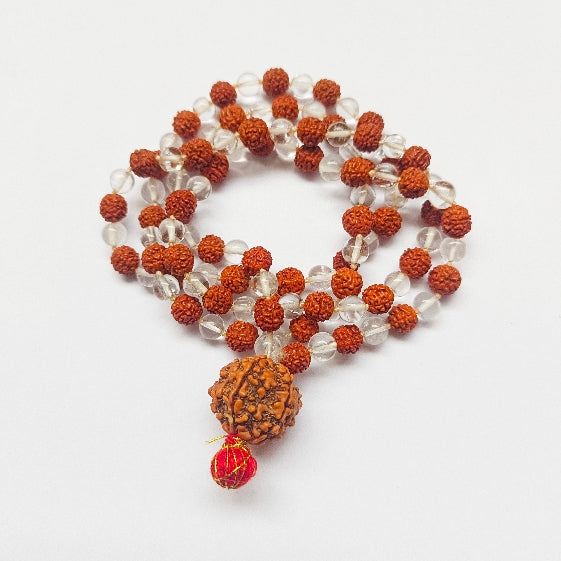
Sphatika, also known as crystal quartz in its purest transparent form, has been used in Indian spiritual practices for centuries. Unlike decorative or colored crystals, Sphatika has traditionally been valued for its neutrality, clarity, and ability to amplify awareness rather than emotion.
In classical usage, Sphatika malas were used for mantra japa, meditation, and breath awareness. The intention was never to stimulate feelings but to support focus, discipline, and mental stillness.
This historical usage already sets Sphatika apart from most modern crystal practices.
Sphatika does not add something new — it refines what is already present.
🔍 Structural Difference: Sphatika vs Other Crystals
One of the most important differences between Sphatika and other crystals lies in structural consistency. Sphatika, when pure and untreated, has a highly stable internal structure. This stability allows it to interact with the human system without creating emotional spikes or energetic imbalance.
Many popular crystals, especially colored ones, are chosen for their emotional symbolism — love, courage, protection, grounding. These qualities can feel supportive, but they may also amplify certain emotional states.
Sphatika, in contrast, does not amplify emotion. It amplifies awareness.
Where other crystals color experience, Sphatika clarifies it.
🌈 Sphatika vs Colored Crystals: Emotional Influence vs Neutral Clarity
Colored crystals such as rose quartz or amethyst are often associated with specific emotional outcomes — love, calmness, intuition. While these associations can be comforting, they also direct the mind toward a desired emotional state.
Sphatika does not direct. It reflects. This means it does not push the mind toward happiness or calmness. Instead, it helps the mind see its current state more clearly.
For individuals seeking emotional honesty rather than emotional escape, this difference is crucial.
Clarity comes before comfort.
🧠 How the Human Nervous System Responds to Sphatika
The human nervous system is sensitive to consistency. Sudden stimulation or emotional amplification can feel pleasant initially but may lead to dependency or imbalance over time.
Sphatika supports nervous system stability by maintaining neutrality. It does not excite or suppress. It allows the system to regulate itself.
This is why Sphatika is often recommended for meditation, breath work, and mantra repetition — practices that require steadiness rather than intensity.
Stability supports depth. Intensity often distracts.
🔬 Sphatika vs Clear Quartz: Why They Are Not the Same in Practice
One of the most common misunderstandings about Sphatika is that it is simply another name for clear quartz. From a geological perspective, this comparison may appear reasonable. However, from a practical, experiential, and traditional standpoint, the two are not used in the same way.
Modern crystal culture treats clear quartz as a programmable crystal — something that can be charged with intentions, emotions, or goals. This approach often involves visualization, affirmations, and emotional focus.
Sphatika, on the other hand, has traditionally been used without emotional programming. Its role is not to carry intention but to support clarity and discipline. This distinction fundamentally changes how the mind interacts with it.
Clear quartz responds to intention. Sphatika responds to awareness.
🌿 Sphatika vs Rose Quartz: Emotional Comfort vs Emotional Honesty
Rose quartz is widely associated with love, emotional healing, and softness. Many people are drawn to it during periods of emotional vulnerability or relationship challenges.
While rose quartz can feel comforting, it often works by soothing emotions rather than examining them. This is not inherently negative, but it serves a different purpose.
Sphatika does not offer emotional cushioning. It encourages emotional honesty. It helps the mind observe emotions without amplifying or suppressing them.
Comfort can heal temporarily. Clarity heals sustainably.
🔮 Sphatika vs Amethyst: Intuition vs Stillness
Amethyst is often chosen for intuition, imagination, and inner exploration. It can enhance dream recall, visualization, and emotional sensitivity.
For individuals seeking creative inspiration or emotional depth, amethyst may feel supportive. However, for those prone to overthinking or emotional intensity, it can sometimes increase mental activity.
Sphatika supports stillness rather than imagination. It helps quiet mental noise without pushing the mind into abstraction.
Imagination expands the mind. Stillness steadies it.
⚫ Sphatika vs Black Crystals: Grounding vs Neutral Balance
Black crystals such as black tourmaline or obsidian are commonly used for grounding and protection. They often create a sense of heaviness or anchoring, which can be beneficial during chaotic periods.
However, this grounding effect may feel restrictive for some individuals, especially those seeking lightness and clarity.
Sphatika does not ground by weight. It balances by neutrality. It neither pulls energy downward nor pushes it upward.
Balance does not always require heaviness.
🌡️ Body Heat and Cooling Observations with Sphatika
One of the most commonly reported experiences with Sphatika is a subtle cooling or calming sensation. This is not dramatic or immediate but develops gradually with consistent use.
Unlike crystals that stimulate emotional warmth or intensity, Sphatika tends to reduce internal agitation. Many users report feeling mentally cooler rather than emotionally excited.
This observation makes Sphatika particularly suitable for individuals who experience excessive mental heat, restlessness, or agitation.
Cooling the mind often brings clarity naturally.
🧠 Long-Term Effects: Why Sphatika Works Slowly but Deeply
Sphatika is not designed for instant transformation. Its effects unfold gradually, often becoming noticeable only in hindsight.
Over time, users report improved focus during meditation, reduced mental distraction, and a more stable emotional baseline.
Because Sphatika does not create dependency on sensation, its benefits tend to sustain even when attention shifts elsewhere.
What changes slowly often lasts longer.
👤 Who Should Choose Sphatika Over Other Crystals?
Sphatika is especially suitable for individuals who seek clarity over emotional stimulation. Those engaged in meditation, breath work, mantra practice, or mental discipline often benefit the most.
People who feel overwhelmed by emotional highs and lows may also find Sphatika supportive due to its neutral influence.
It is less suited for those seeking emotional amplification or symbolic comfort.
Sphatika supports those who value awareness over emotion.
🔍 Authenticity Matters: Real vs Treated Sphatika
As with Rudraksha, the authenticity of Sphatika plays a crucial role. Artificially treated or synthetic crystals may look visually appealing but lack consistency in interaction.
Pure, untreated Sphatika tends to have a more stable and predictable influence on the system.
This is why sourcing and verification matter when choosing Sphatika.
Authenticity supports consistency.
❓ Frequently Asked Questions (FAQs)
Is Sphatika the same as clear quartz?
Although Sphatika and clear quartz may appear similar, their traditional usage and interaction with the human system differ. Clear quartz is often used for intention programming and emotional amplification, while Sphatika is used for clarity, neutrality, and mental discipline.
Can Sphatika be worn daily like other crystals?
Yes. Sphatika can be worn daily, especially by individuals seeking mental calmness and clarity. Its neutral nature makes it suitable for consistent use without overstimulation.
Does Sphatika have a cooling effect on the body?
Many users observe a subtle cooling or calming effect, particularly on mental agitation. This effect is gradual and should not be confused with a physical temperature change.
Is Sphatika better than other crystals?
Sphatika is not better or worse; it is different. It is ideal for those who value clarity, focus, and neutrality rather than emotional stimulation or symbolic comfort.
Can Sphatika be combined with Rudraksha?
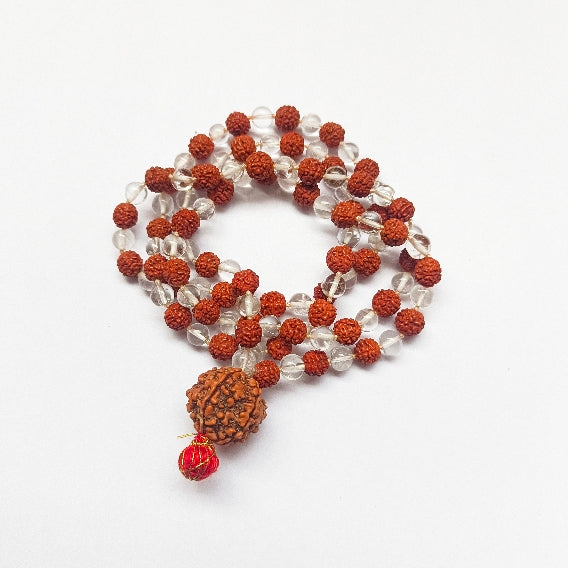
Yes. Sphatika and Rudraksha are often used together because they complement each other well. Sphatika supports clarity and calmness, while Rudraksha supports stability and regulation.
How long does it take to notice effects from Sphatika?
Sphatika works gradually. Many people notice subtle changes over weeks or months, often as improved focus, reduced mental noise, or a calmer emotional baseline.
Does bead size matter in Sphatika malas?
Bead size affects comfort more than effectiveness. Larger beads may feel heavier, while smaller beads are easier to wear daily. Consistency matters more than size.
🌟 Final Conclusion 🌟
Why Sphatika Stands Apart
In a world where crystals are often chosen for quick emotional comfort or symbolic meaning, Sphatika occupies a quieter and more disciplined space. It does not promise dramatic sensations, instant positivity, or emotional escape. Instead, it offers clarity.
Unlike many crystals that amplify emotion, Sphatika refines awareness. It supports mental steadiness, emotional honesty, and long-term balance. This makes it especially valuable for meditation, breath work, and individuals seeking depth rather than distraction.
When compared with other crystals — whether colored stones, grounding black crystals, or intention-driven quartz — Sphatika remains unique in its neutrality. It neither pushes nor pulls the mind. It allows the system to settle naturally.
Choosing Sphatika is not about following trends. It is about choosing clarity over intensity, stability over stimulation, and long-term balance over short-term sensation.
Sphatika does not change who you are. It helps you see clearly what already exists.
🙏 हर हर महादेव 🙏





Leave a comment