


🧿 Rudraksha Mala vs Rudraksha Bracelet: Which Is Better for You?
One of the most practical yet confusing decisions for anyone interested in Rudraksha is choosing between a Rudraksha mala and a Rudraksha bracelet. Both are made from the same sacred seed, both are worn close to the body, and both are believed to support balance and awareness. Yet, the experience of wearing them can feel very different.
Most online articles reduce this choice to convenience or fashion. Some suggest malas are only for spiritual people, while bracelets are for daily wear. Others claim malas are more powerful simply because they have more beads. These explanations sound confident, but they rarely explain how the human system actually responds to each form.
The real difference between a Rudraksha mala and a Rudraksha bracelet is not about rules. It is about interaction, placement, lifestyle, and how awareness is trained over time.
🧠 Understanding Rudraksha Beyond Form and Appearance
Before comparing mala and bracelet, it is important to understand one fundamental point: Rudraksha does not work because of how it looks. It works because of how it interacts with the human system over sustained periods.
Whether worn around the neck, on the wrist, or used during meditation, Rudraksha influences awareness and emotional regulation gradually. The form in which it is worn determines how continuously and in what context this interaction takes place.
This is why two people wearing the same Rudraksha can have very different experiences. The body, mind, and daily environment shape the outcome.
Form changes experience, not energy itself.
📿 What Is a Rudraksha Mala and How Is It Traditionally Used?
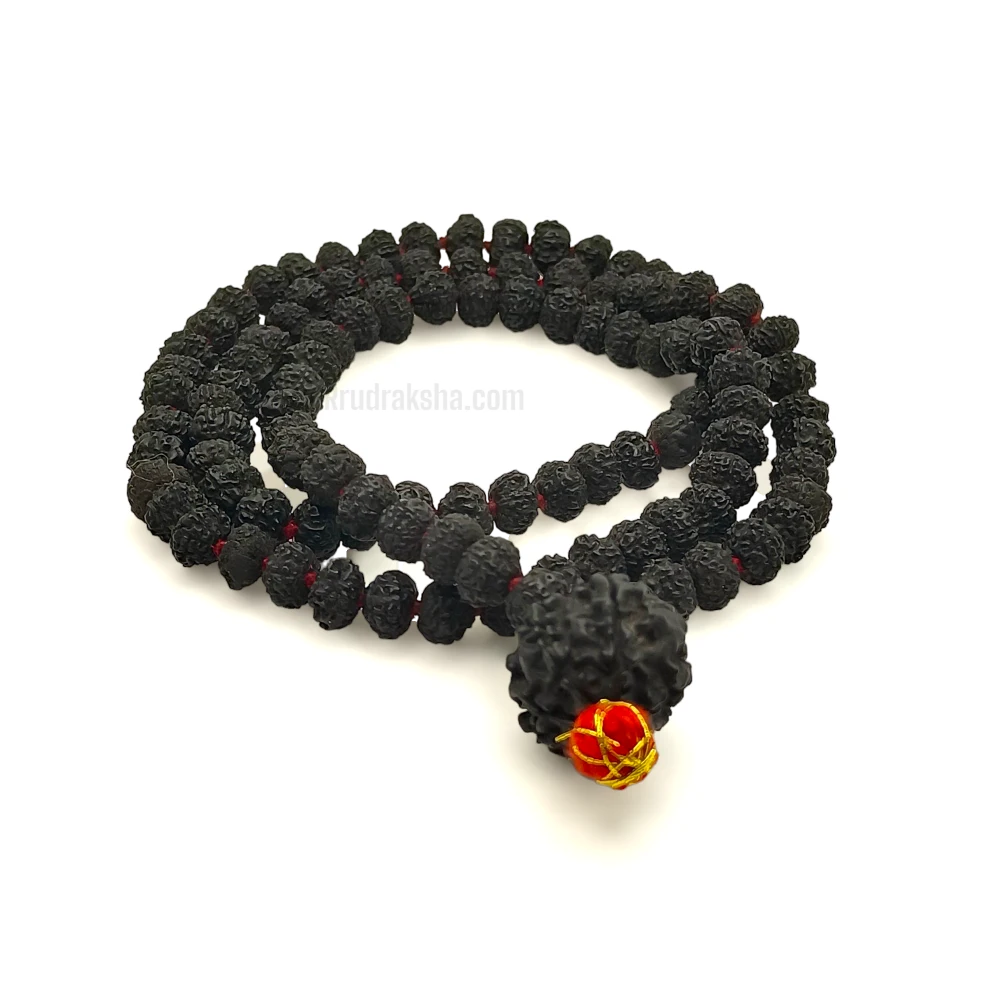
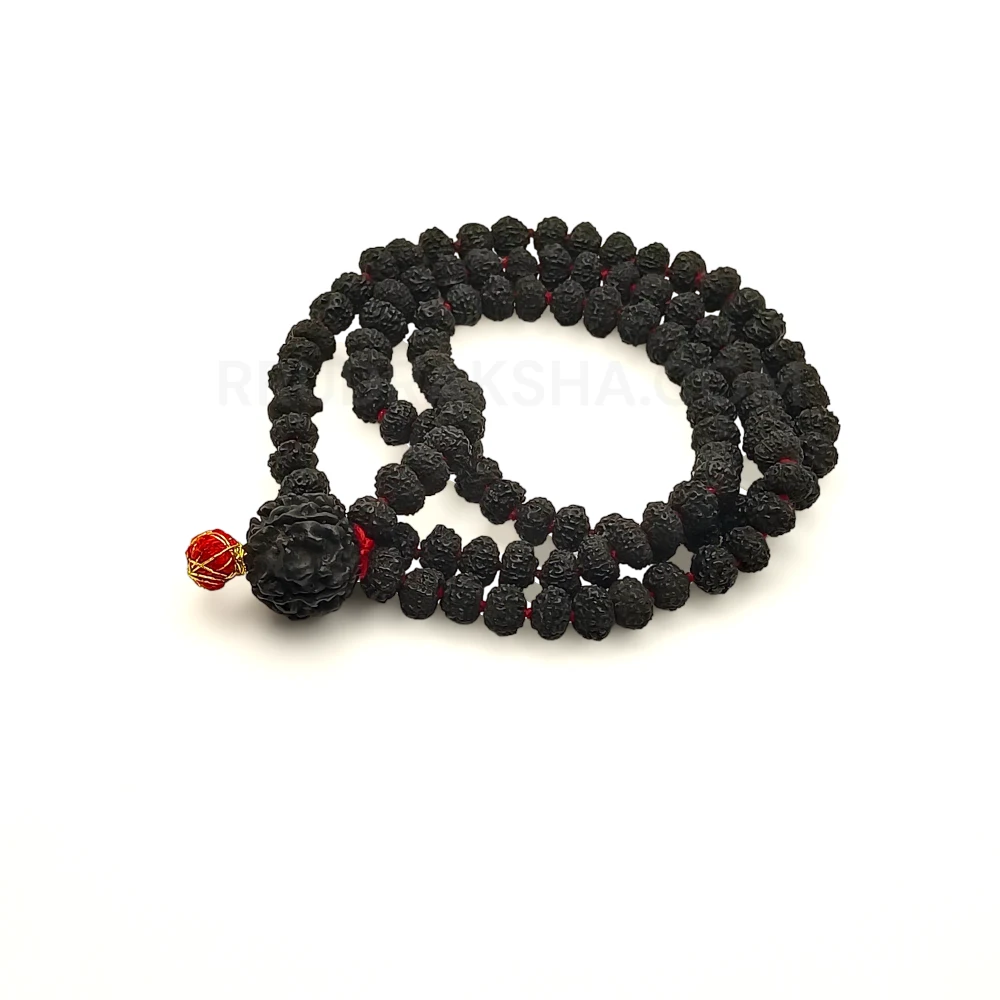
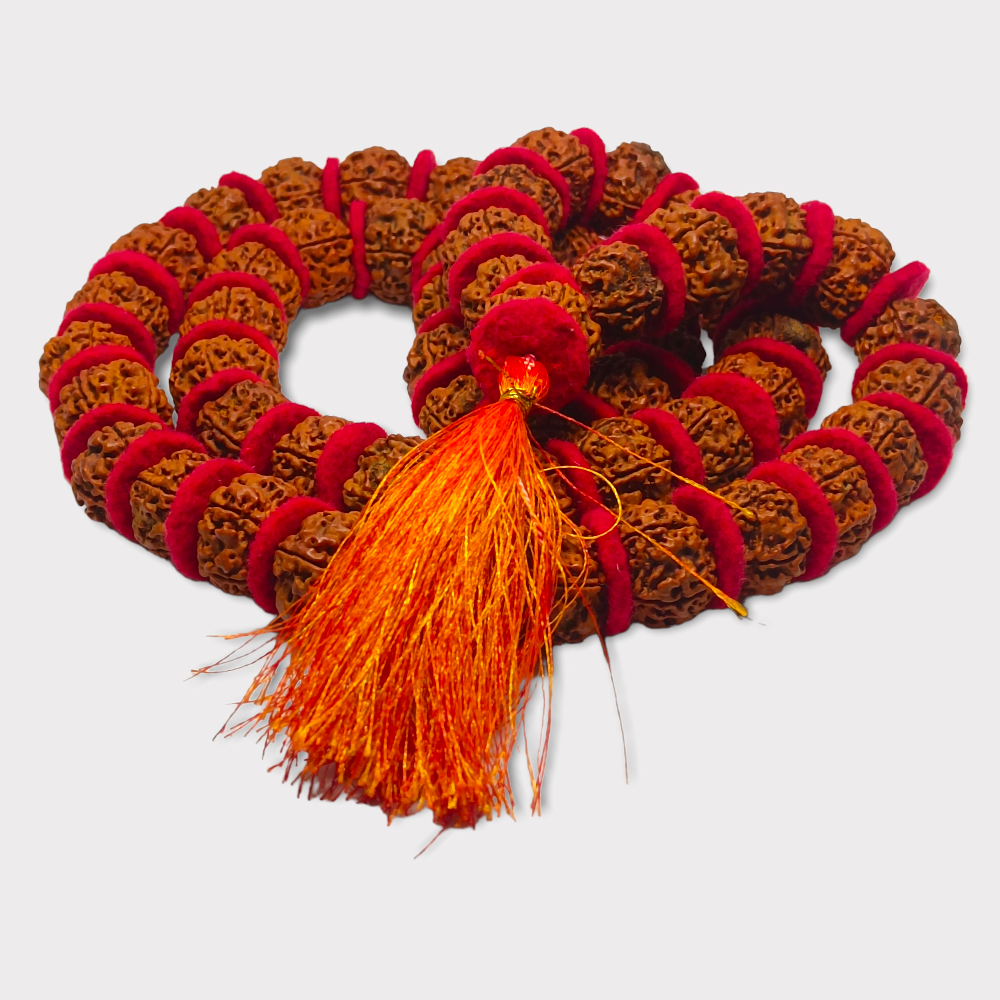
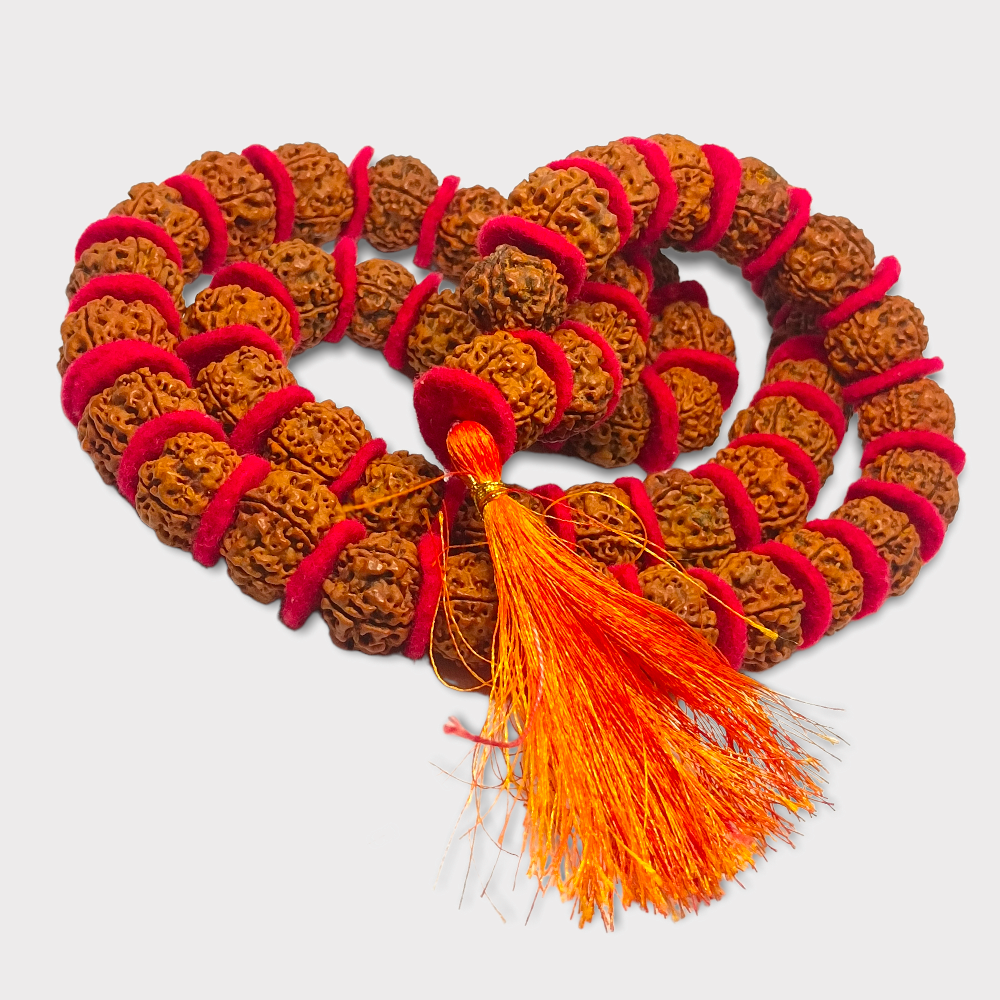
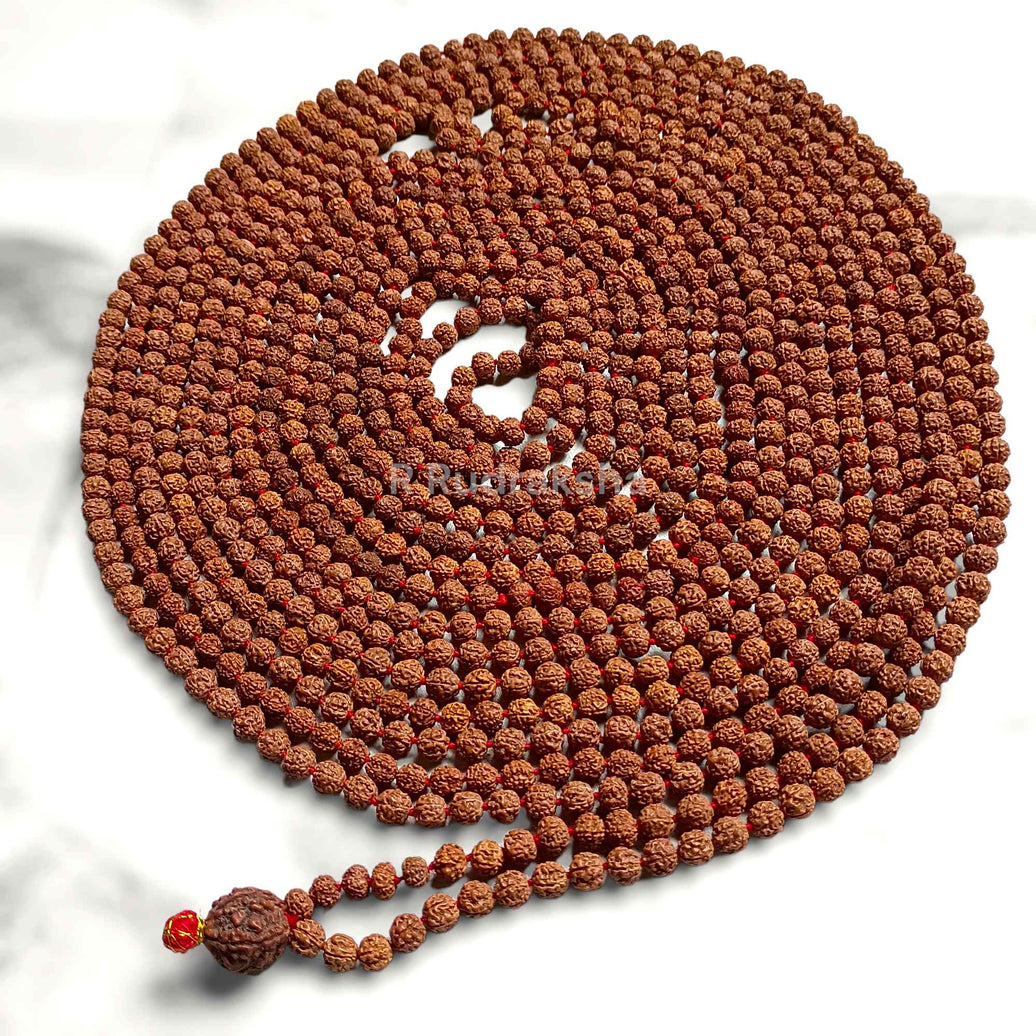
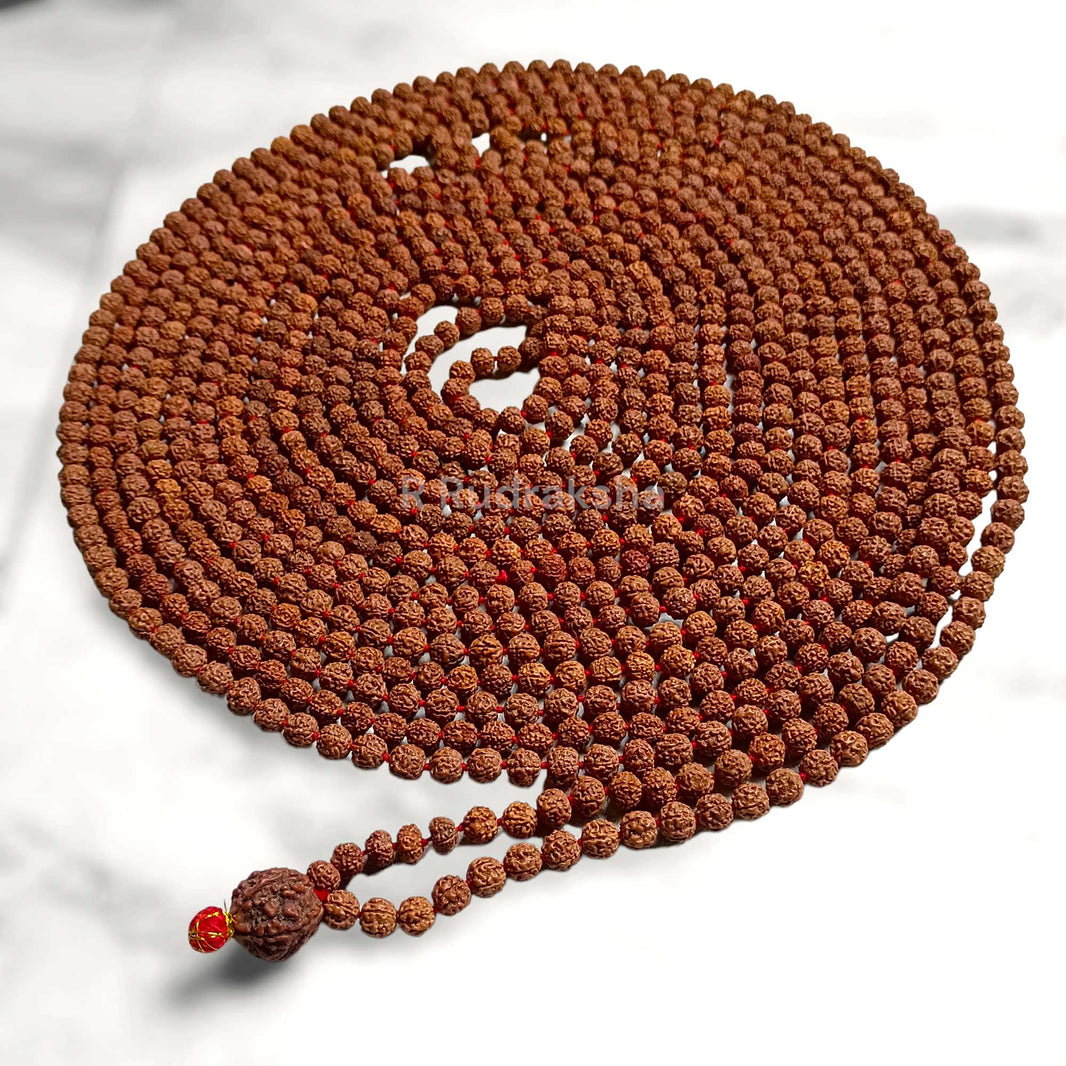
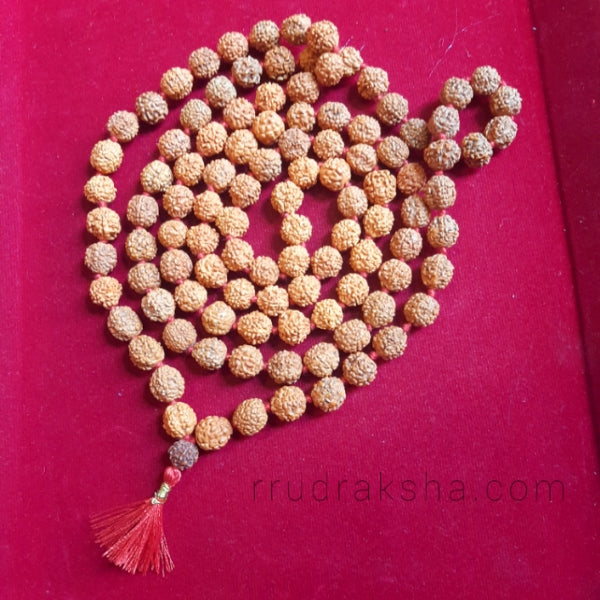
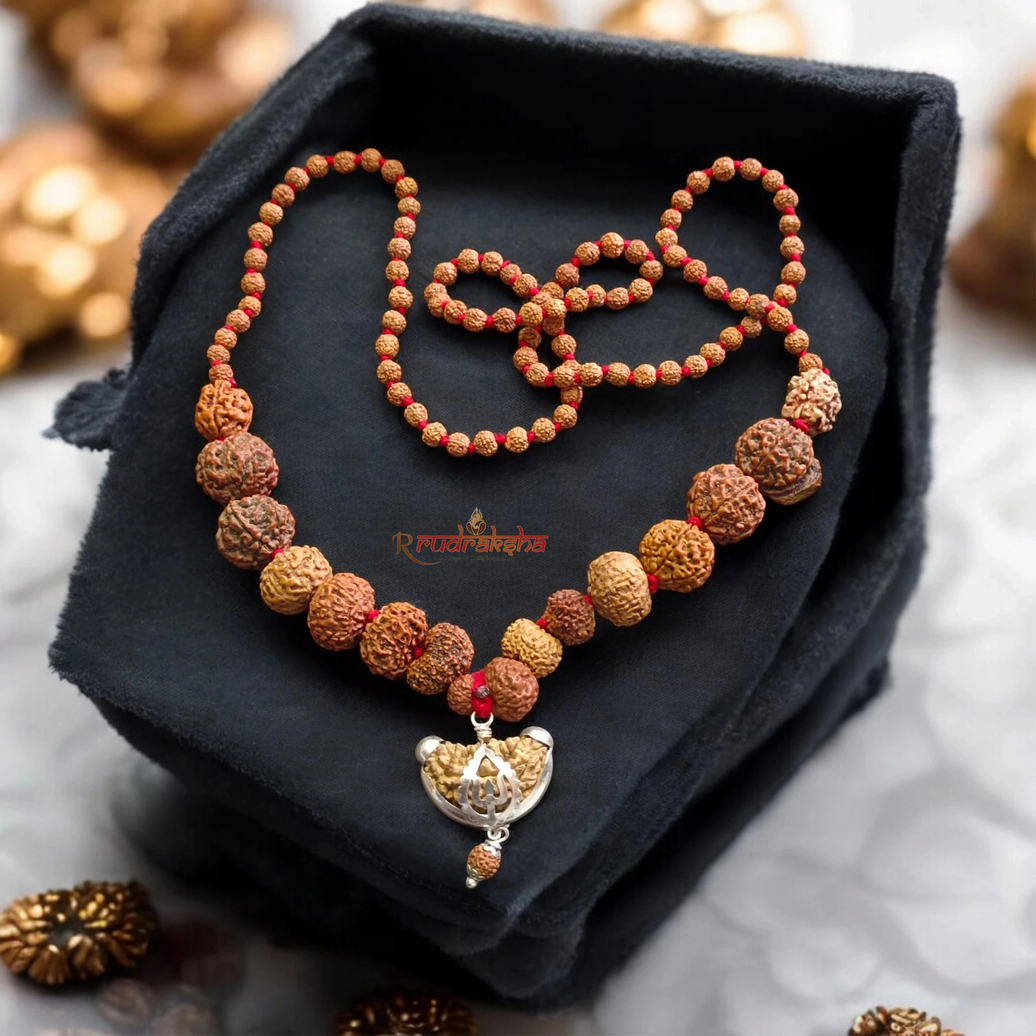
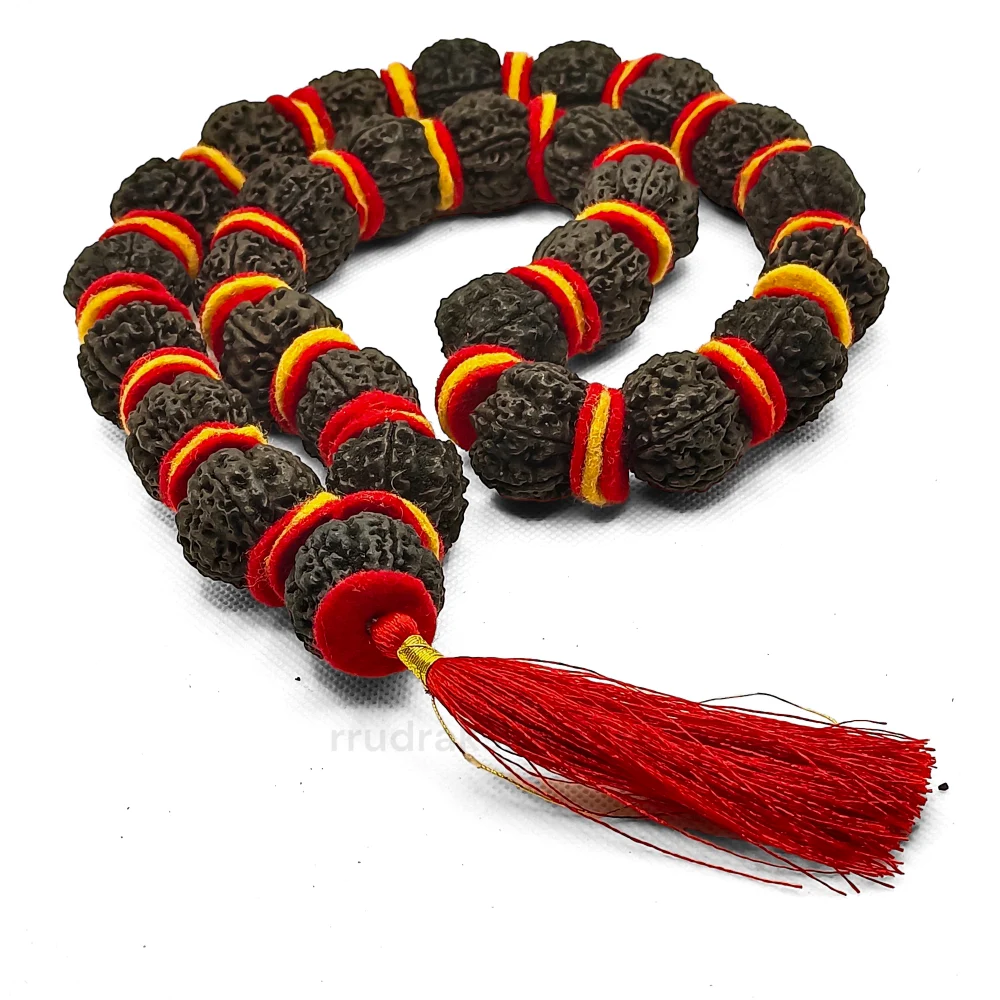
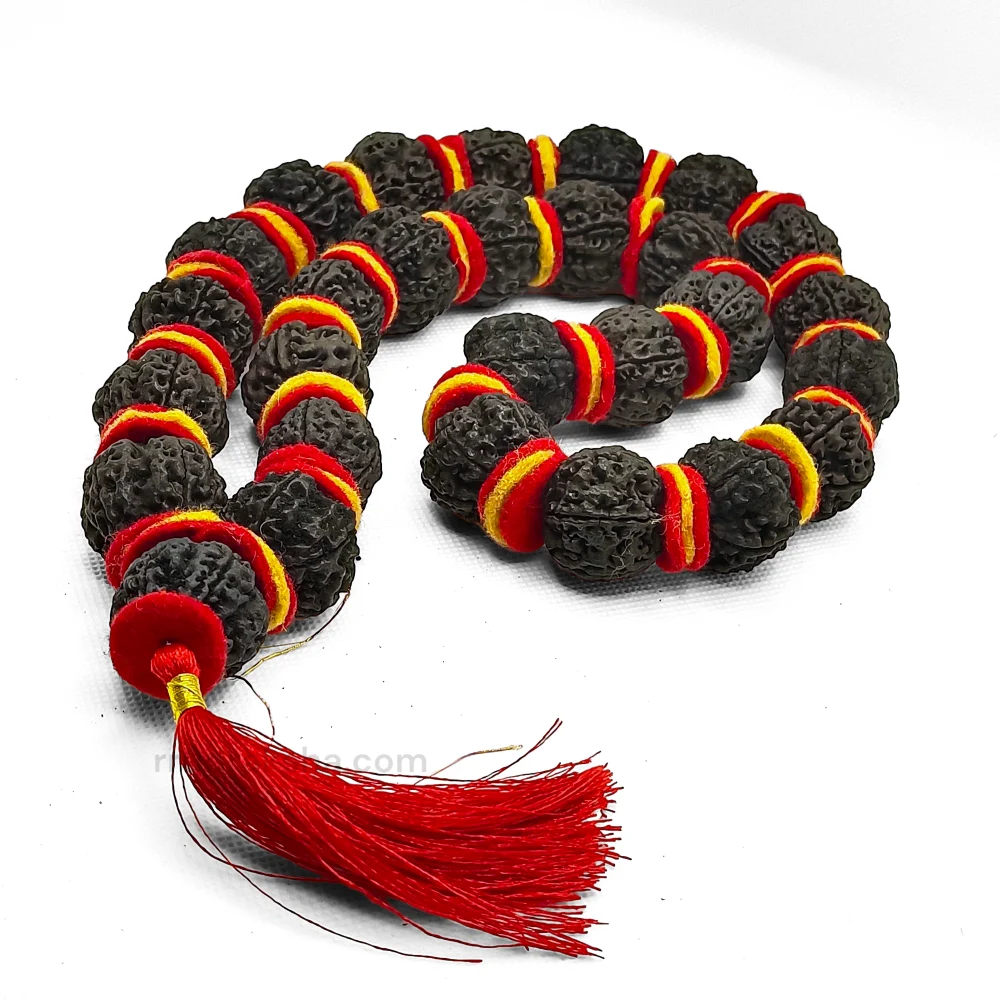
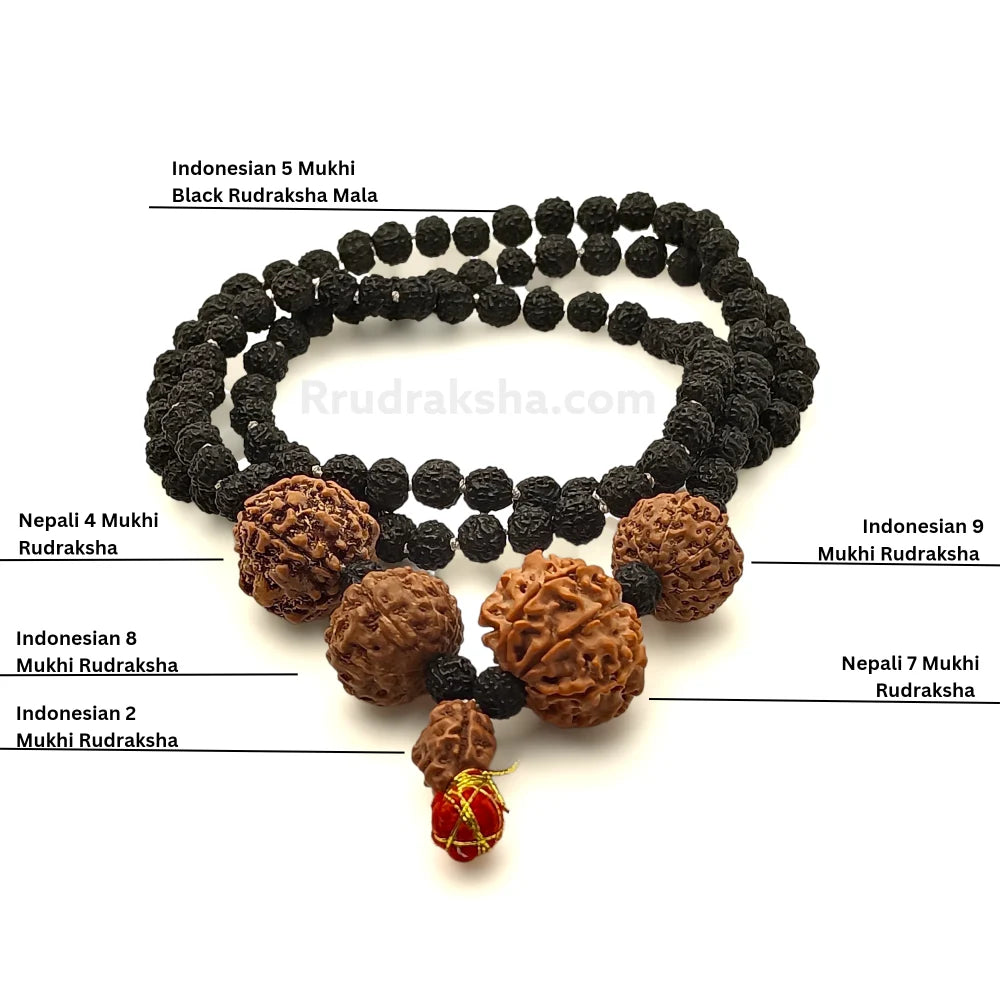
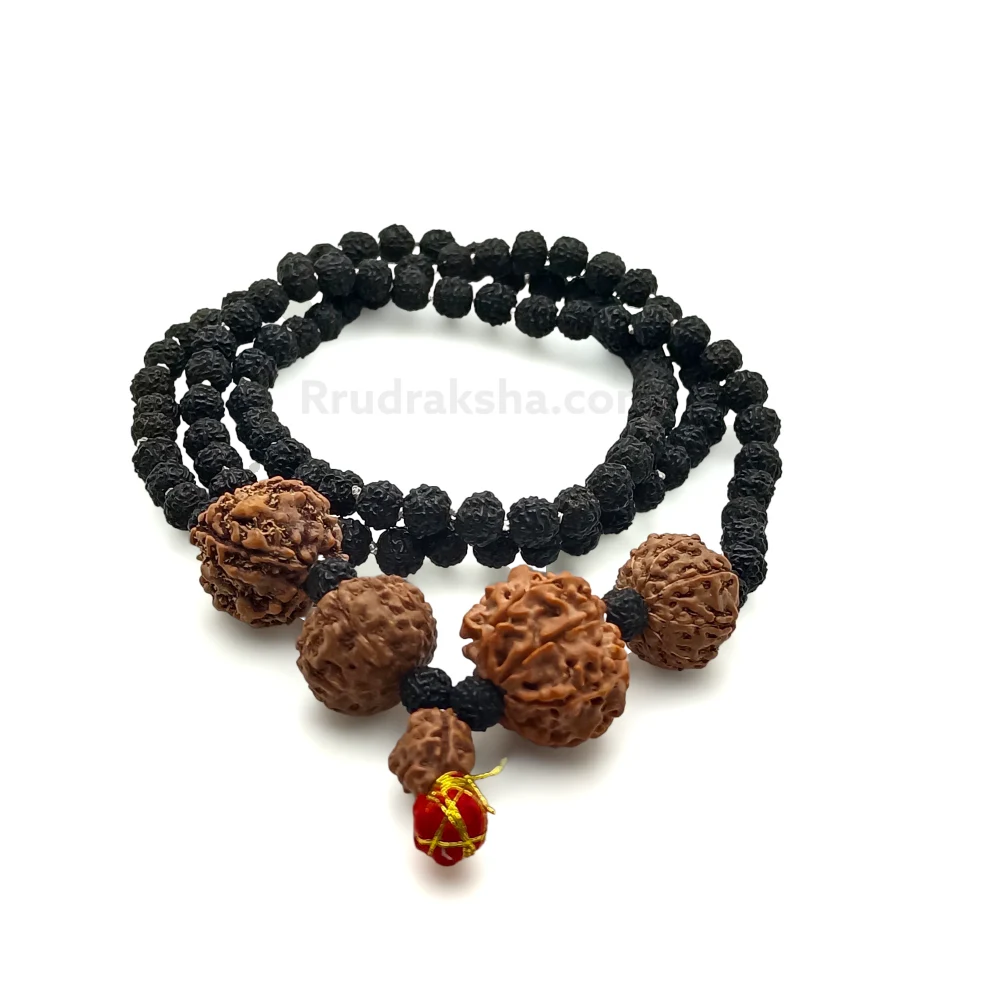
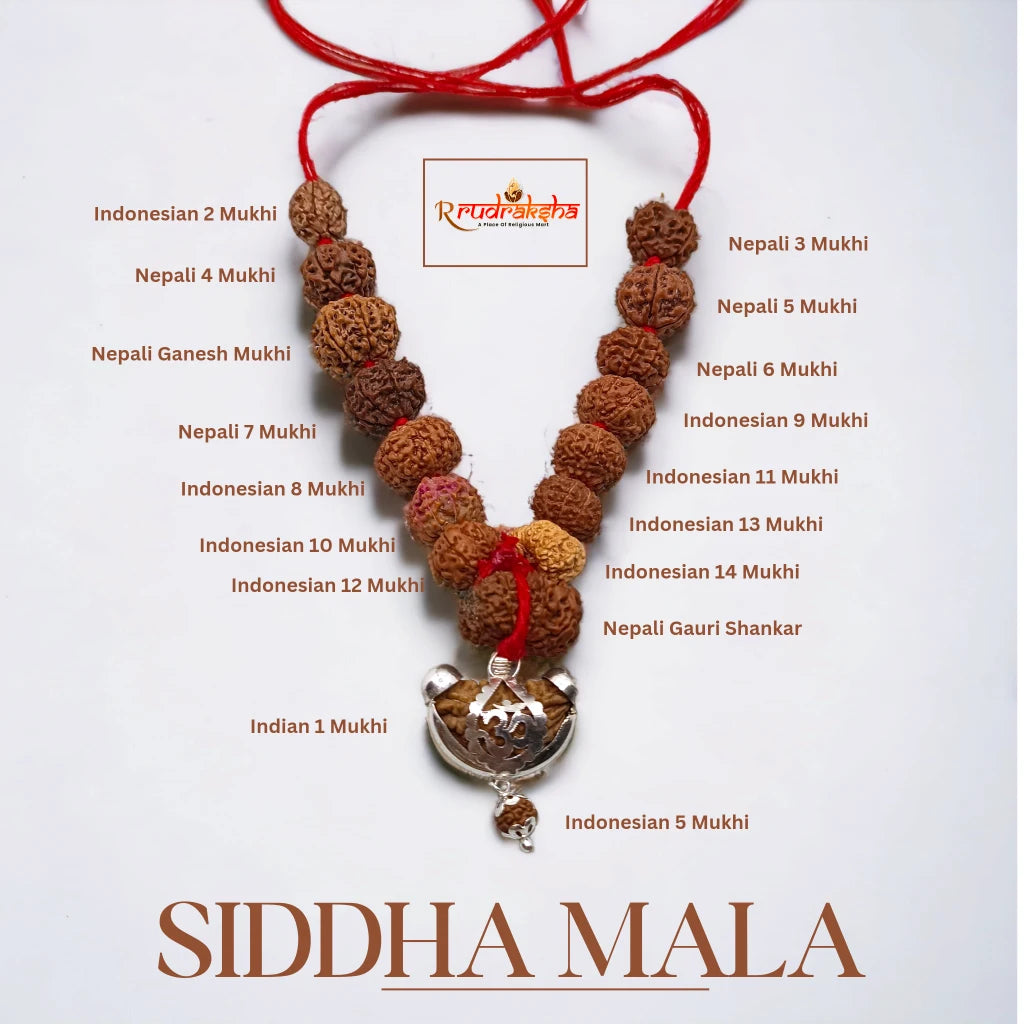
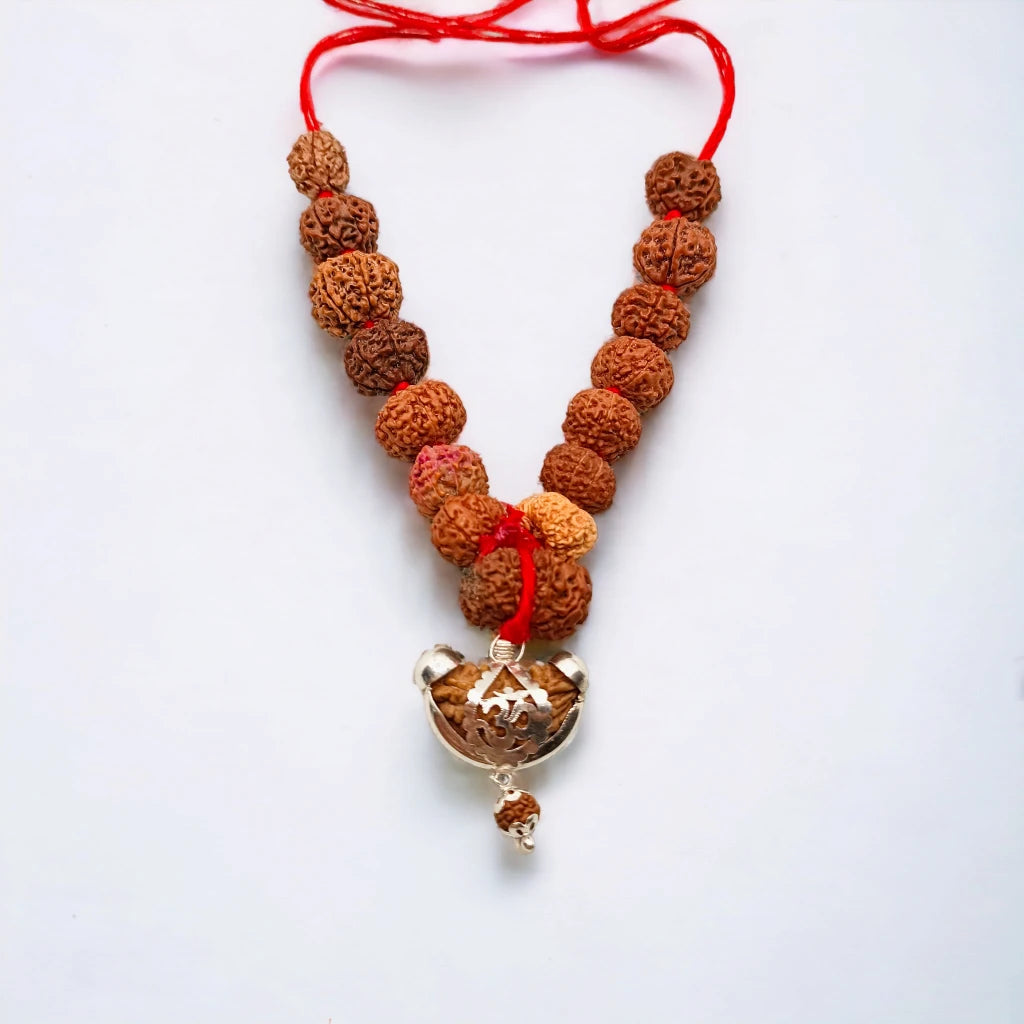
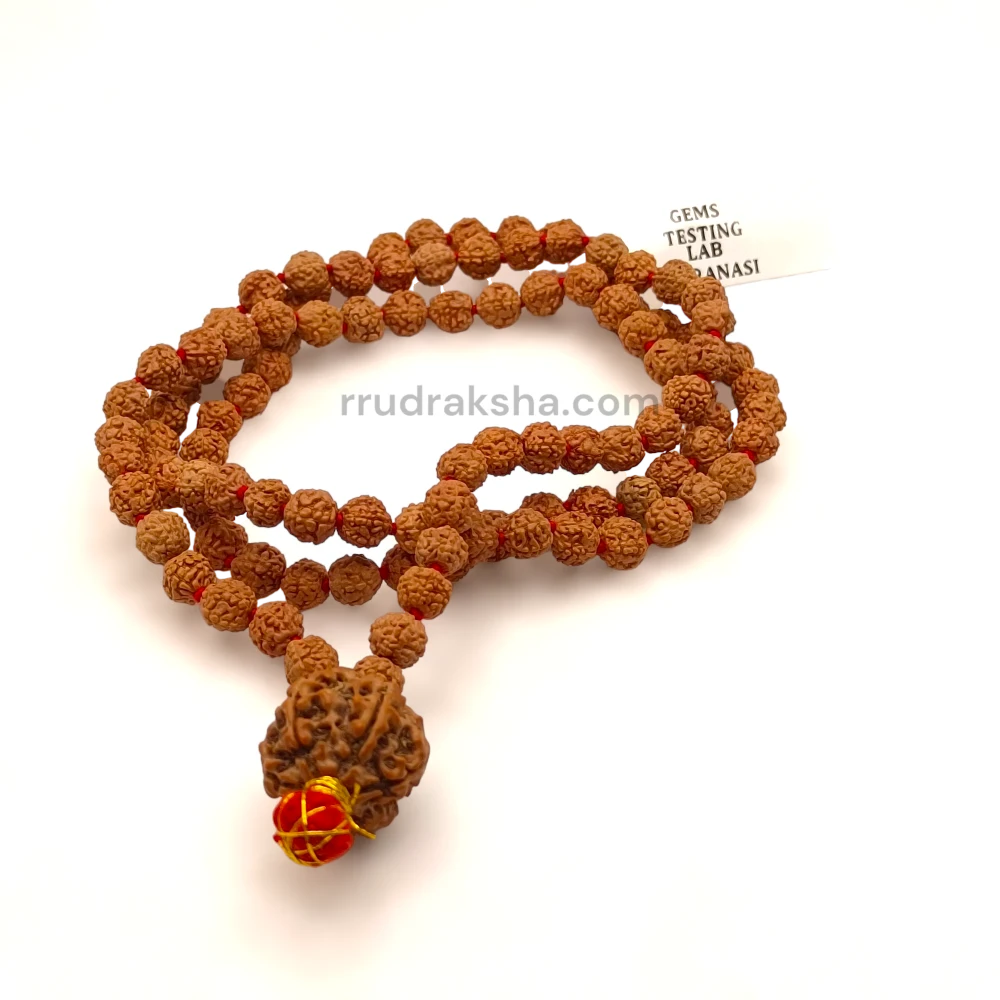
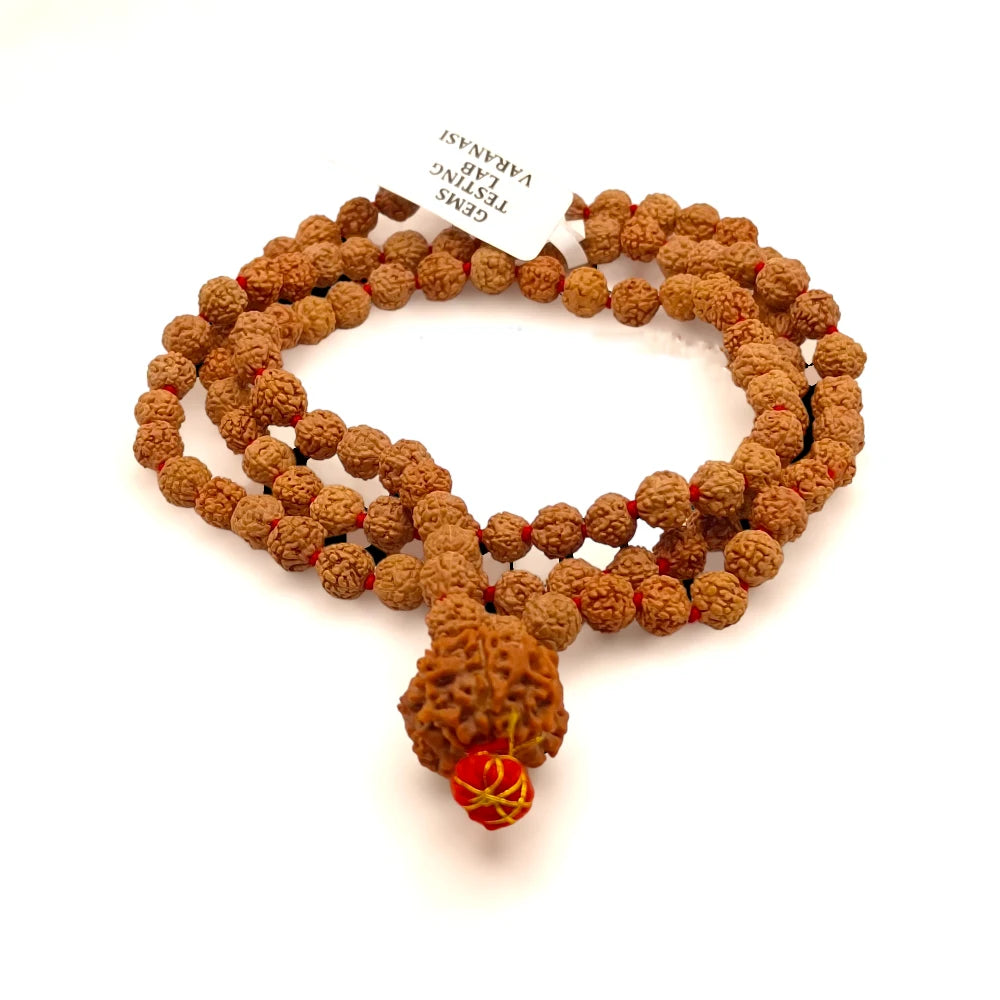
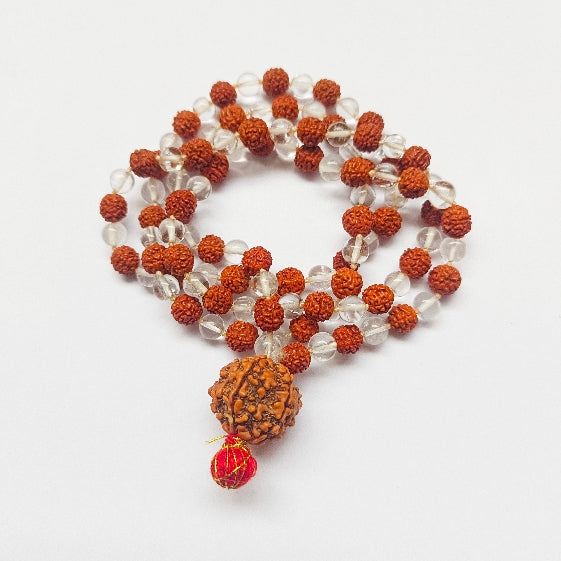
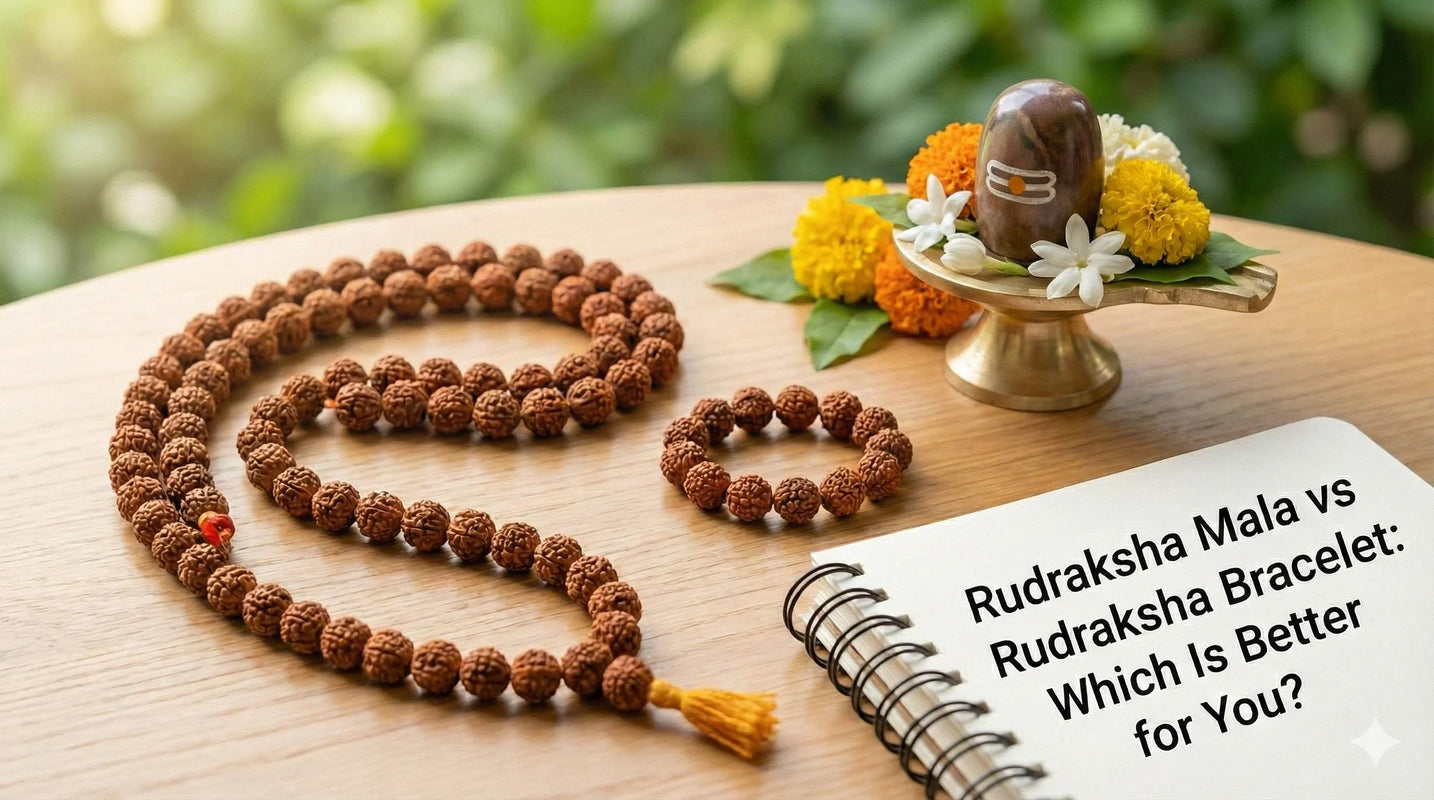
A Rudraksha mala is traditionally a string of Rudraksha beads, often used for meditation, japa, and contemplative practices. Malas are usually longer, worn around the neck or held in the hand during focused practices.
Historically, malas were not worn as accessories. They were tools for sustained attention, counting repetitions, and maintaining awareness during inward practices. Because of this, malas often carry a sense of ritual and intention.
When worn around the neck, a mala remains close to the heart and chest area, influencing posture, breath awareness, and inward focus.
A mala encourages inward orientation and continuity of awareness.
🧿 What Is a Rudraksha Bracelet and Why Is It Popular Today?
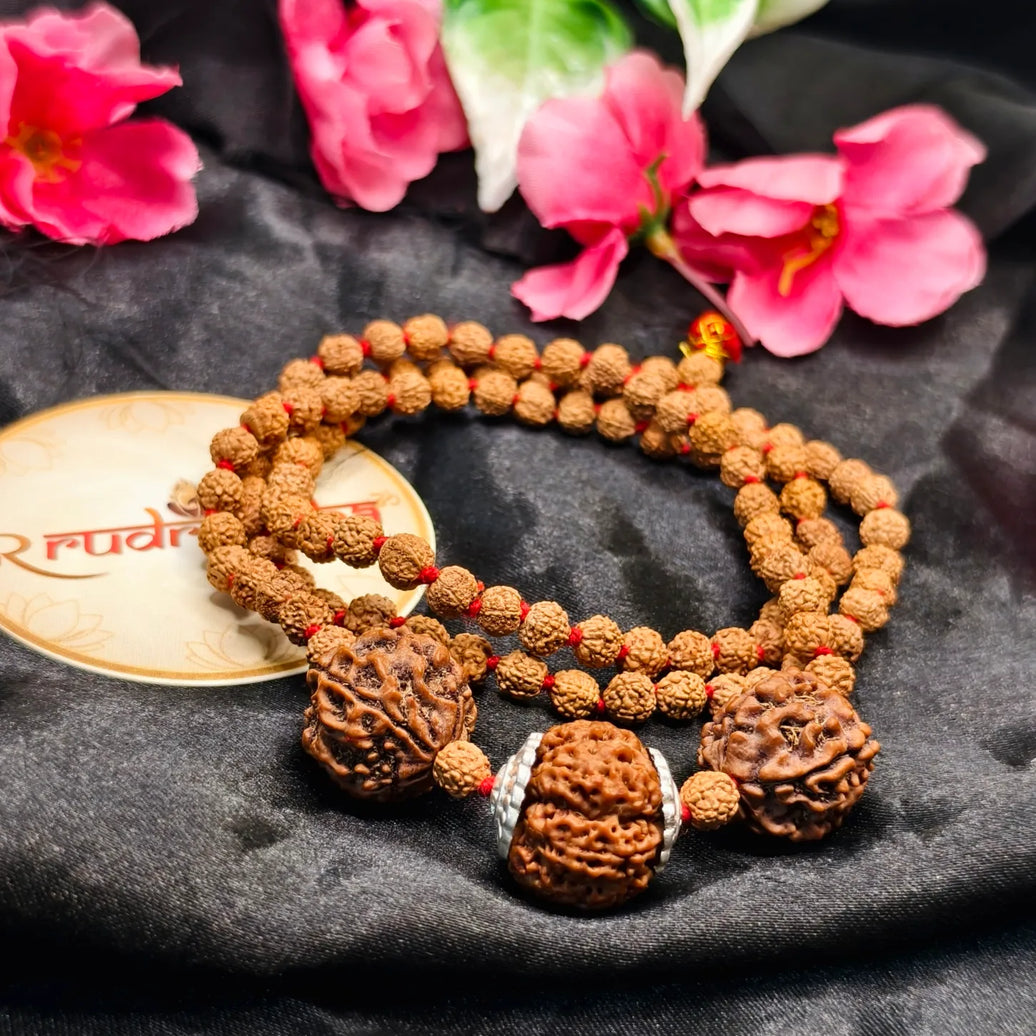
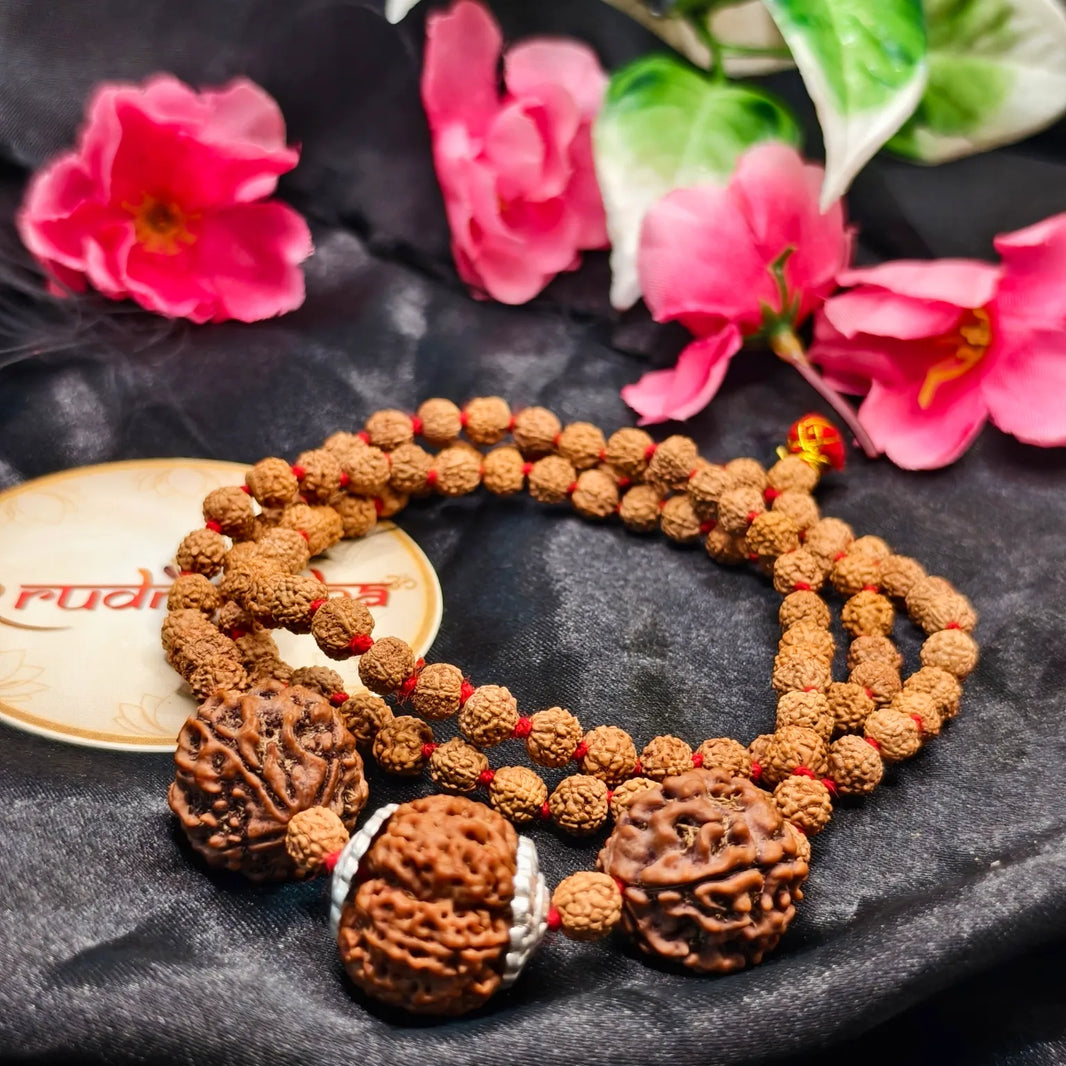
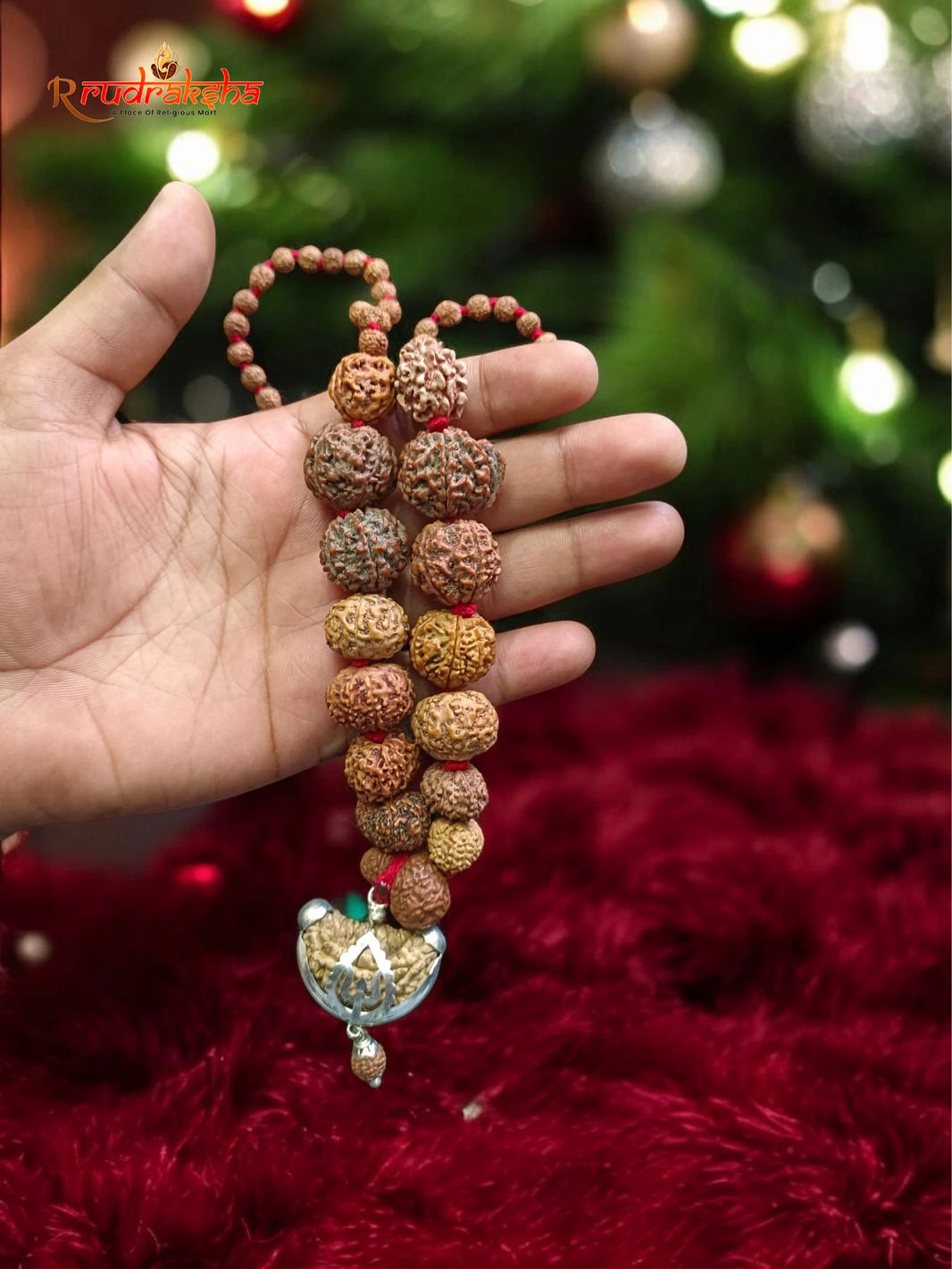
A Rudraksha bracelet is a more compact form, worn on the wrist. Its popularity has increased significantly in modern times because it fits easily into daily life without drawing attention.
Bracelets allow Rudraksha to remain in constant contact with the body during work, travel, conversations, and routine activities. This makes them especially appealing to people with busy lifestyles.
Unlike malas, bracelets are rarely associated with ritual. They function more as continuous companions rather than practice-specific tools.
A bracelet supports regulation during action rather than during stillness.
⚖️ Placement Matters: Neck vs Wrist Interaction
The placement of Rudraksha plays a subtle but important role. When worn as a mala, Rudraksha rests near the chest and heart region. This placement often enhances introspection, breath awareness, and emotional observation.
When worn as a bracelet, Rudraksha stays on the wrist, a highly active area involved in movement and interaction. This placement tends to support awareness during action and decision-making.
Neither placement is superior. Each supports a different aspect of daily experience.
Where Rudraksha rests influences how awareness is trained.
🌍 Lifestyle and the Choice Between Mala and Bracelet
Lifestyle is one of the most overlooked factors in choosing between a mala and a bracelet. A person who spends significant time in meditation, solitude, or contemplative work may naturally resonate more with a mala.
On the other hand, individuals engaged in fast-paced environments, professional settings, and constant interaction often find bracelets easier to integrate consistently.
Consistency matters more than form. A bracelet worn daily often produces more benefit than a mala worn occasionally.
The best choice is the one you will actually wear consistently.
🧠 How the Human System Responds to a Mala vs a Bracelet
Although both a Rudraksha mala and a Rudraksha bracelet are made from the same sacred seed, the human system does not respond to them in identical ways. This difference is not mystical; it is contextual. The body and mind respond based on placement, duration of contact, and the environment in which the Rudraksha is worn.
A mala, especially when worn around the neck, tends to influence inward orientation. The chest and heart region are closely linked to breath patterns and emotional processing. When Rudraksha rests here, many individuals experience greater self-observation, slower emotional reactions, and a natural pull toward introspection.
A bracelet, on the other hand, remains in constant motion. The wrist is involved in action, communication, and decision-making. Rudraksha worn here interacts with the system during activity rather than stillness.
The same Rudraksha supports different dimensions of awareness depending on where it is worn.
📿 Rudraksha Mala and the Depth of Meditation
For centuries, Rudraksha malas have been associated with meditation and japa. This association exists because a mala naturally supports rhythm, repetition, and continuity of attention.
During meditation, the mind often fluctuates between focus and distraction. Holding or wearing a mala provides a gentle anchor for awareness. The tactile presence of the beads keeps the practitioner connected to the present moment without force.
Many people find that a mala deepens meditation not by creating silence, but by reducing mental wandering.
A mala supports depth by stabilizing attention, not by suppressing thought.
🧿 Rudraksha Bracelet and Daily Life Regulation
A Rudraksha bracelet excels in environments where meditation alone cannot reach — workplaces, social interactions, travel, and high-pressure situations.
Because it is worn continuously and unobtrusively, a bracelet allows Rudraksha to interact with the nervous system during moments of stress, urgency, and emotional challenge.
Over time, this constant exposure helps reduce impulsive reactions and mental noise during real-life situations.
A bracelet trains awareness in action rather than in silence.
⚖️ Bead Count Myth: More Beads Does Not Mean More Power
One of the most common misconceptions is that a Rudraksha mala is more powerful simply because it contains more beads. This belief often leads people to overlook bracelets as inferior or less effective.
In reality, effectiveness does not scale linearly with bead count. Wearing too many beads without proper integration can overwhelm sensitive systems or create distraction.
Consistency, authenticity, and comfort play a far greater role than quantity.
More beads increase presence, not necessarily benefit.
🌿 Comfort and Consistency: The Hidden Factors
A Rudraksha that is uncomfortable will not be worn consistently. A mala that feels heavy, restrictive, or socially inconvenient may be removed frequently.
A bracelet, because of its simplicity, often wins in terms of daily consistency. This makes it especially suitable for beginners or those with demanding lifestyles.
Comfort allows the nervous system to relax into the experience rather than resist it.
The best spiritual tool is the one your body accepts naturally.
🧠 Emotional Regulation: Mala vs Bracelet Over Time
Over long-term use, differences between a mala and a bracelet become more noticeable. Malas tend to support emotional insight and introspection, helping individuals understand their emotional patterns.
Bracelets tend to support emotional regulation during interaction, reducing emotional spillover into speech and action.
Neither replaces the other. They address different layers of emotional experience.
Insight and regulation are complementary, not competing.
🌍 Social and Professional Contexts
In social and professional environments, discretion matters. A visible mala may draw attention or questions that some individuals prefer to avoid.
A bracelet offers subtlety. It allows the wearer to maintain personal practice without external commentary.
This subtlety often contributes to greater consistency and comfort.
Spiritual tools work best when they do not create social friction.
🧘 Can You Use Both a Mala and a Bracelet?
Many experienced users eventually integrate both forms. A bracelet supports daily regulation, while a mala supports meditation and deeper inward work.
This combination allows awareness cultivated in meditation to carry into daily action.
However, this approach should be adopted gradually to allow the system to adapt comfortably.
Integration often delivers the most balanced results.
❓ Frequently Asked Questions: (FAQs)
Is a Rudraksha mala more powerful than a Rudraksha bracelet?
Power is not determined by size or bead count. A Rudraksha mala and a bracelet serve different purposes. A mala supports inward focus and meditation depth, while a bracelet supports awareness and regulation during daily activities. Effectiveness depends on how consistently and comfortably it is used.
Can beginners start with a Rudraksha bracelet?
Yes. Many beginners find bracelets easier to integrate into daily life. Because bracelets are lightweight and discreet, they allow gradual adaptation without overwhelming the system.
Is it necessary to chant mantras when wearing a mala or bracelet?
Mantra chanting can deepen focus, but it is not mandatory. Authentic Rudraksha works through consistent interaction with the body and mind. Awareness and comfort matter more than rituals.
Can I wear a Rudraksha bracelet at work or in public places?
Yes. A bracelet is designed for daily wear and is suitable for professional and social environments. Its subtle form allows personal practice without attracting unnecessary attention.
Why do some people feel stronger effects with a mala?
Meditation reduces external distractions, making inner changes more noticeable. This can make the effects of a mala feel stronger during focused practice, even though regulation may be equally effective with a bracelet in daily life.
Can I wear both a mala and a bracelet together?
Yes, many experienced users do. A bracelet supports daily regulation, while a mala supports meditation and inward awareness. This combination helps integrate inner clarity with external action.
Does bead size matter when choosing between a mala and bracelet?
Bead size affects comfort more than effectiveness. Larger beads may feel heavier and are often preferred for malas, while smaller beads are more practical for bracelets.
🌟 Final Conclusion 🌟
Which Is Better for You?
The question of whether a Rudraksha mala or a Rudraksha bracelet is better has no universal answer. Each serves a distinct purpose, shaped by placement, lifestyle, and intention.
A Rudraksha mala supports inward focus, meditation depth, and emotional insight. It is well suited for those who value structured spiritual practices and reflective time. A Rudraksha bracelet supports stability, awareness, and emotional regulation in daily life, making it ideal for modern routines and continuous engagement.
For many individuals, the most balanced approach emerges through integration — using a bracelet for daily life and a mala for meditation. What matters most is not tradition or appearance, but comfort, authenticity, and consistency.
Rudraksha does not demand a choice between life and practice. It supports harmony between both.
🙏 हर हर महादेव 🙏





Leave a comment