

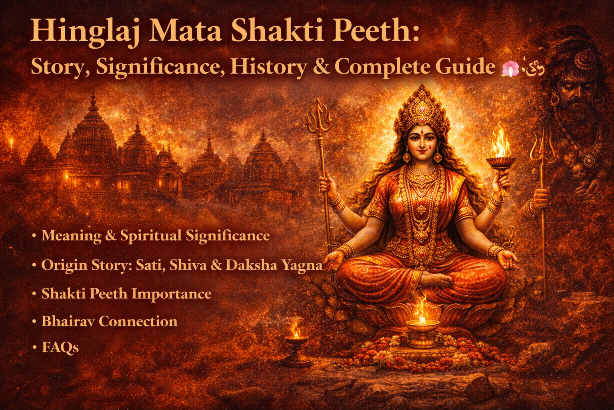
Hinglaj Mata Shakti Peeth: Story, Significance, History & Complete Guide 🌺🕉️
Among the sacred Shakti Peeths, some temples are known for their massive popularity, while others carry a mysterious spiritual aura—respected deeply by devotees yet spoken about with a sense of sacred distance. Hinglaj Mata is one such Shakti Peeth. 🌺🕉️
For many devotees, Hinglaj Mata is not just a Devi temple name. It represents a timeless Shakta tradition of protection, strength, and spiritual endurance. In Shakti worship, Hinglaj is remembered as a powerful seat of the Divine Mother—where faith is not expressed through comfort alone, but through deep surrender and spiritual seriousness.
In this complete guide, we will explore Hinglaj Mata Shakti Peeth meaning, its mythological origin story connected to the Shakti Peeth tradition, spiritual symbolism, cultural importance, Bhairav connection, and a detailed FAQ section optimized for Google search intent. This blog is written in a responsible tone, with belief-based wording, and avoids exaggerated claims—making it beginner-friendly while still offering advanced depth.
What is Hinglaj Mata Shakti Peeth? (Simple Meaning) 🌺
Hinglaj Mata Shakti Peeth is a revered Devi worship center associated with Shakta tradition and the sacred concept of Shakti Peeths. Hinglaj Mata is worshipped as the Divine Mother who protects devotees, strengthens faith, and represents Shakti in a powerful, grounded form.
The name “Hinglaj” is deeply respected in devotional tradition. For many worshippers, Hinglaj symbolizes the Devi who remains steady and protective even in the most challenging spiritual landscapes. It is often described as a Shakti Peeth that represents endurance, surrender, and inner strength.
For beginners, the easiest way to understand Hinglaj Mata is this: she is worshipped as a protective and powerful form of Devi Shakti, and her Shakti Peeth identity connects her to the larger sacred story of Shiva and Sati.
Why Hinglaj Mata is Considered a Shakti Peeth 🕉️
In Shakti Peeth tradition, Shakti Peeths are sacred places connected to the mythological story of Sati and Shiva. According to belief-based narratives, these locations formed after the events of Daksha Yagna, Sati’s sacrifice, Shiva’s cosmic grief, and Vishnu’s intervention to restore cosmic balance.
Where parts of Sati’s body or ornaments fell, those places became powerful centers of Devi worship known as Shakti Peeths. Hinglaj Mata is widely respected as one of these sacred Shakti Peeths in traditional devotional geography.
Although lists may vary slightly across sources, Hinglaj Mata’s spiritual identity remains strong in Shakta tradition. Devotees regard it as a powerful seat of Shakti—a place where faith feels intense, disciplined, and deeply rooted in tradition.
The Mythological Story Behind Hinglaj Mata Shakti Peeth 📖
To understand Hinglaj Mata’s Shakti Peeth identity, it is important to revisit the larger Shakti Peeth origin story. This myth begins with the story of Daksha Yagna, where Shiva was insulted due to Daksha’s ego, and Sati faced humiliation.
In belief-based tradition, Sati sacrificed herself into the yagna fire after the disrespect continued. Shiva, overwhelmed by grief, carried Sati’s body and entered the cosmic state of Rudra Tandava, threatening universal balance.
To protect creation, Vishnu intervened and, in devotional mythology, separated Sati’s body. The sacred locations where parts of her body or ornaments fell became known as Shakti Peeths.
Hinglaj Mata is remembered as one of these sacred centers. While the story has different regional retellings, the spiritual message remains steady: Shakti does not vanish with tragedy. Shakti spreads across existence as sacred presence, giving devotees places to connect with the Divine Mother through worship and surrender.
Spiritual Significance of Hinglaj Mata Shakti Peeth ✨
Hinglaj Mata is spiritually significant because she represents Devi Shakti as protection and endurance. Unlike some Devi forms that emphasize intense transformation, Hinglaj is often associated with steady, grounded spiritual strength.
In belief-based devotion, many devotees connect with Hinglaj Mata when they seek inner courage, stability, and protection. Hinglaj worship is often described as serious and disciplined, because the Devi is seen as a powerful force that demands respect, sincerity, and humility from the devotee.
Hinglaj Mata also represents spiritual trust. The devotee learns to surrender not because life is easy, but because faith becomes stronger than uncertainty. That is why Hinglaj is remembered as a Shakti Peeth of endurance—where the devotee’s inner strength becomes the real blessing.
Hinglaj Mata as the Divine Mother: Protection Through Strength 🕉️
Many devotees experience Hinglaj Mata as a motherly force that protects through strength. This is an important spiritual understanding. Not all protection feels soft. Some protection feels like firmness. Some feels like discipline. Some feels like the inner courage to face challenges rather than avoid them.
Hinglaj Mata symbolizes that protective strength. She is worshipped as a Devi form who does not only comfort the devotee, but also strengthens the devotee’s spirit. This belief-based understanding is why Hinglaj Mata has remained highly revered in Shakti traditions for generations.
History & Cultural Importance of Hinglaj Mata 🛕
Hinglaj Mata holds deep cultural importance because it has been preserved through regional devotion and ancient Shakta tradition. Over centuries, the name Hinglaj became associated with powerful Devi worship identity and sacred geography connected to Shakti Peeth tradition.
For devotees, the cultural power of Hinglaj is not dependent on popularity alone—it is dependent on faith. This temple’s story and tradition continue through devotion, oral narratives, and spiritual respect passed through generations.
This makes Hinglaj Mata one of the most unique Shakti Peeths: its significance is deeply rooted in spiritual identity and belief-based tradition.
Bhairav Connection in Hinglaj Mata Shakti Tradition 🔱🖤
In Shakti Peeth traditions, Bhairav is often worshipped as the guardian energy connected with Devi. Bhairav represents discipline, protection, and spiritual seriousness. Devi represents Shakti, power, and transformation. Together, they symbolize balance.
In Hinglaj Mata worship, Bhairav symbolism aligns strongly with the temple’s spiritual identity: faith must be sincere, devotion must be disciplined, and spiritual power must be approached with humility.
Deeper Symbolism of Hinglaj Mata: Faith That Survives Every Storm 🕉️
Hinglaj Mata is not only known as a Shakti Peeth because of mythology. She is revered because of what she represents spiritually: a form of Devi Shakti that teaches the devotee how to stay strong, steady, and faithful even when life feels uncertain.
Many Devi temples are associated with comfort, beauty, and blessings. Hinglaj Mata devotion, however, is often described as a form of worship that builds endurance. In belief-based spiritual understanding, Hinglaj is the Devi who strengthens the soul. She is the Divine Mother who does not only remove fear—she transforms the devotee into someone who can face fear without breaking.
This makes Hinglaj Mata worship deeply mature. It is devotion that is not dependent on ease. It is devotion that survives challenges. In a world where faith often becomes temporary, Hinglaj symbolizes faith that remains permanent.
What Hinglaj Mata Represents Spiritually (Belief-Based Meaning) ✨
In belief-based devotional understanding, Hinglaj Mata represents protection, spiritual stability, and inner courage. She is worshipped as the Shakti that helps the devotee remain grounded during uncertainty.
Some devotees connect with Hinglaj Mata during phases when the mind feels unstable or emotionally weak. Others connect with her when they feel spiritually disconnected. Hinglaj worship is often associated with rebuilding strength—like a spiritual reset that brings the devotee back to courage and clarity.
Hinglaj Mata also represents discipline. The Shakti here is not casual. It inspires seriousness, humility, and respect. This is why many devotees describe Hinglaj as a temple of inner strength rather than outer comfort.
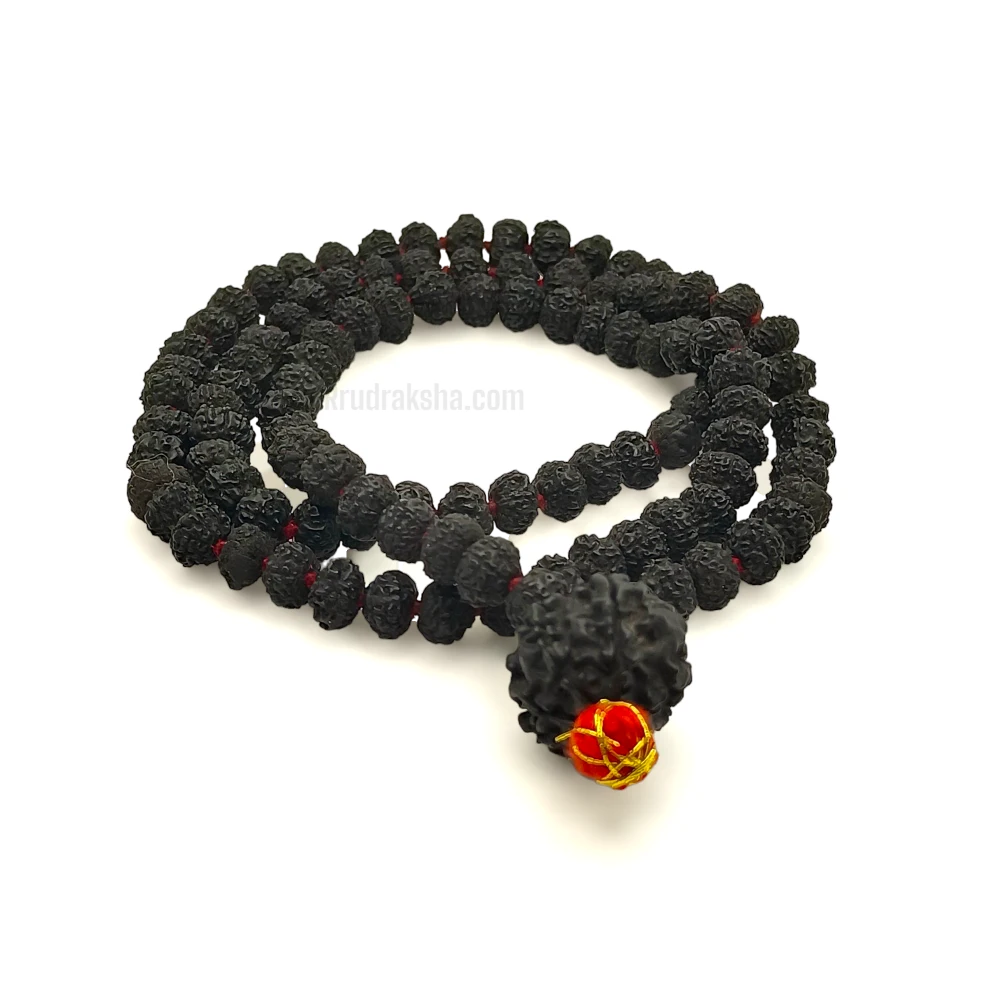
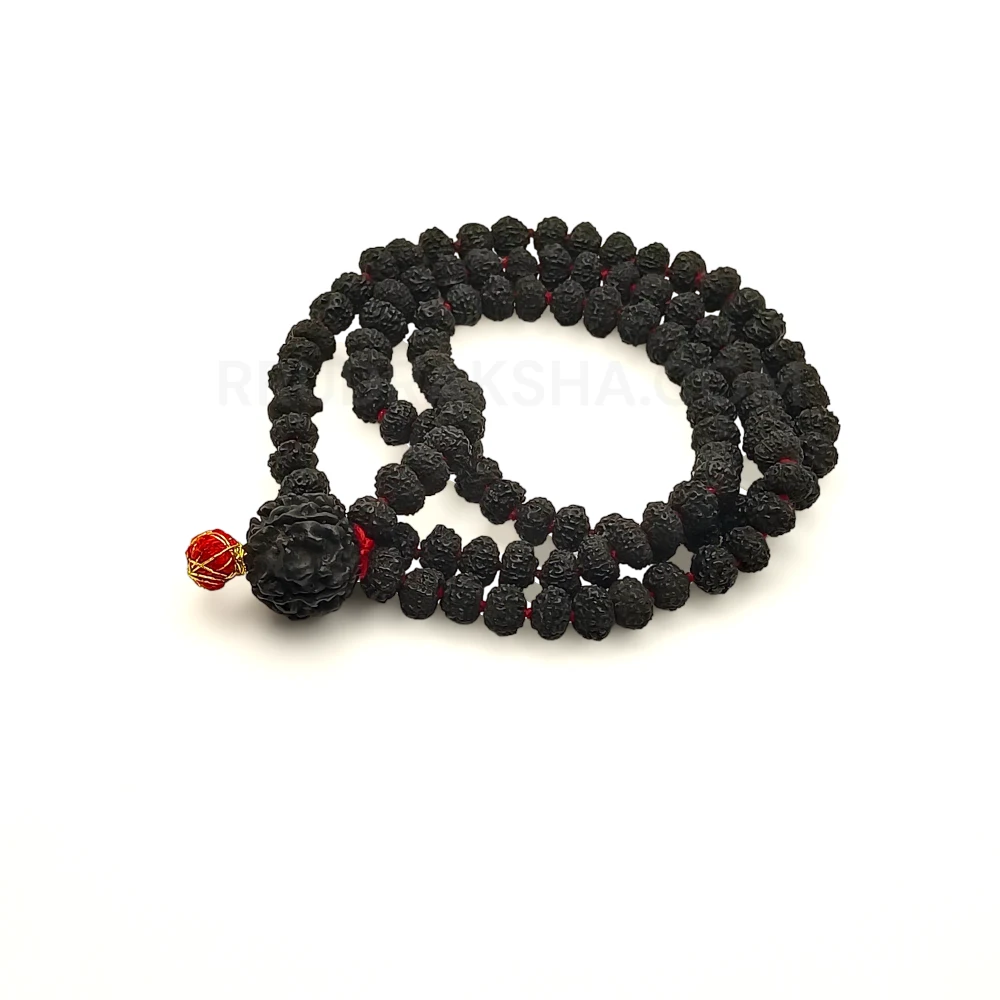
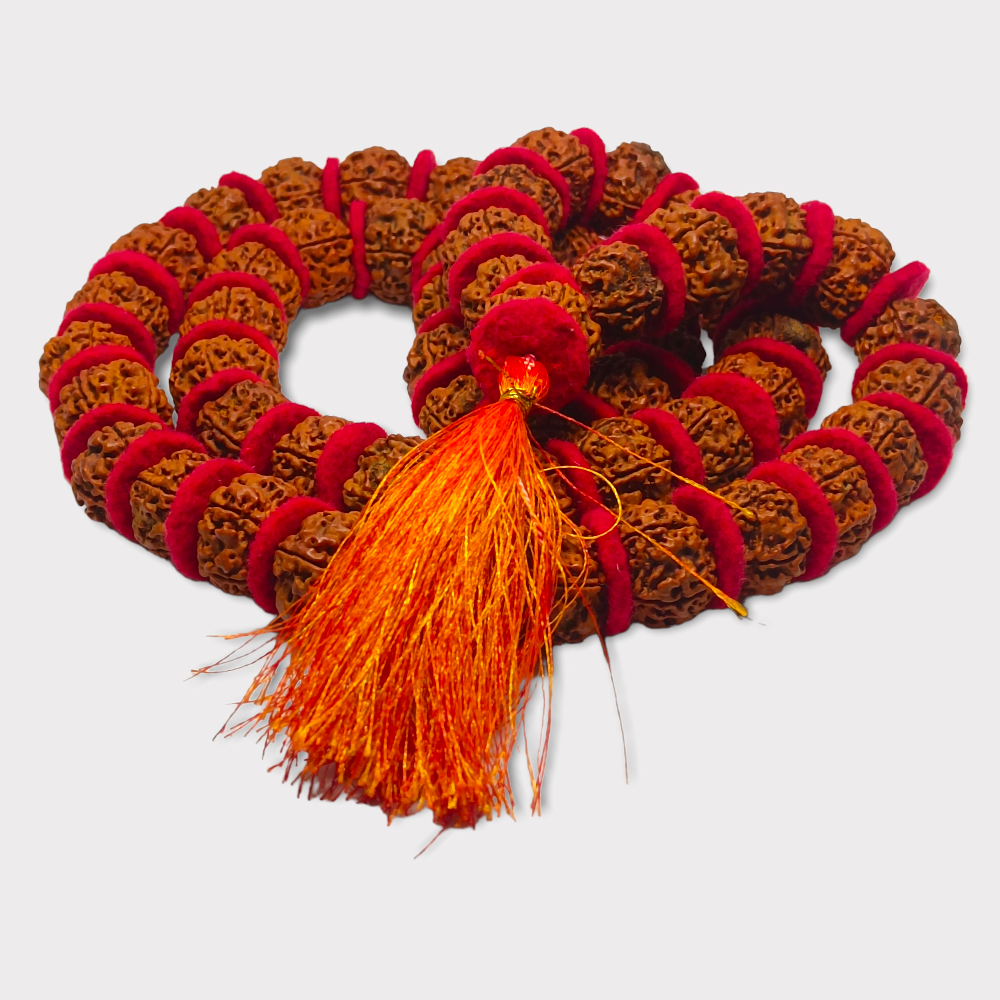
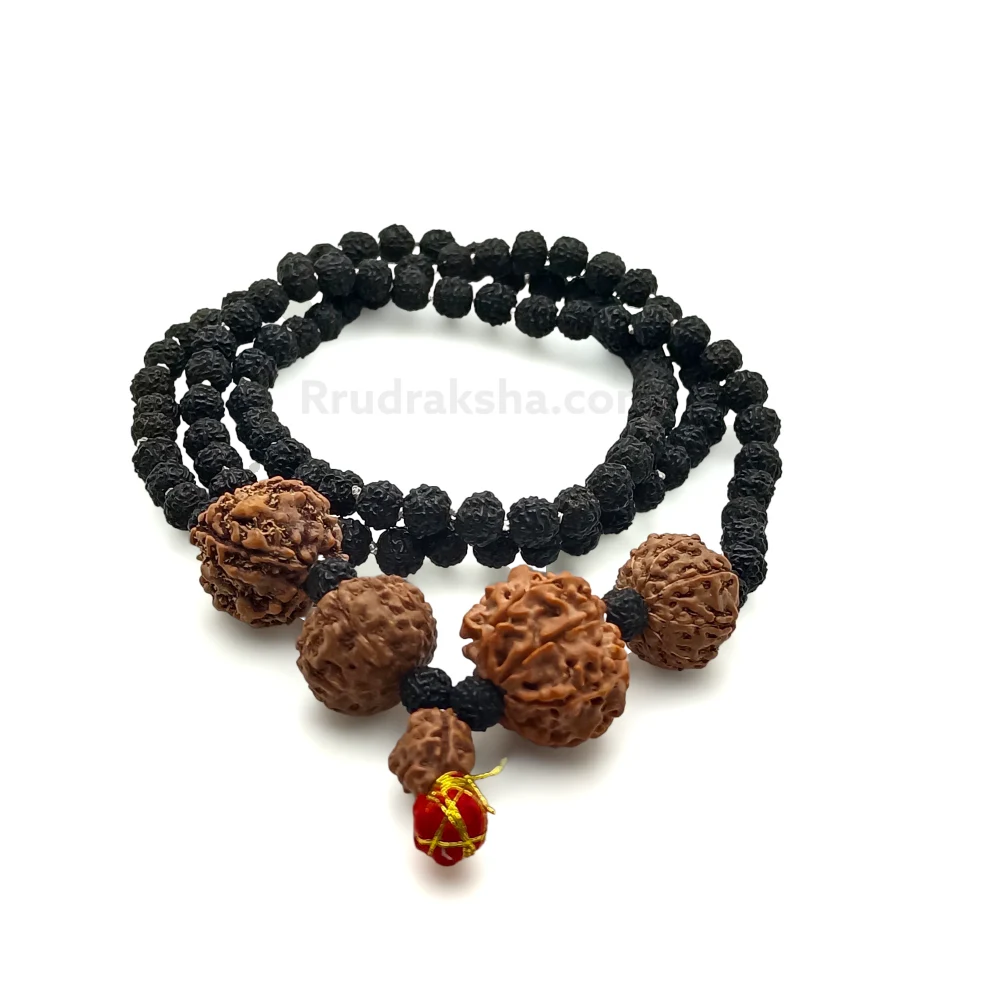
For strong spiritual protection and grounding energy, the Lab-Certified 10 Mukhi Rudraksha is often chosen to shield the mind from negativity and restore stability. ✅
Hinglaj Mata and the Symbolism of Sacred Geography 🌍
One unique aspect of Hinglaj Mata is that its Shakti Peeth identity connects to sacred geography—meaning, the temple is not only a spiritual point but also a symbol of how Shakti spreads across existence.
In Shakti Peeth mythology, after the separation of Sati’s body, Shakti manifests across different regions of the world. This teaches an important spiritual lesson: the Divine Mother is not limited to one place. Shakti exists everywhere. But certain locations become spiritually charged because of devotion, mythology, and collective worship.
Hinglaj represents that charged sacred presence. It symbolizes how faith creates spiritual centers and how spiritual centers keep faith alive for generations.
Hinglaj Mata in Modern Life: Why Devotees Still Seek Her Blessings 🧠
Modern life is filled with uncertainty—financial pressure, emotional stress, overthinking, relationship instability, and constant mental exhaustion. People often feel they are losing control over their inner peace. In such times, devotees naturally seek a form of worship that brings stability.
Hinglaj Mata becomes meaningful because her symbolism is strong. She represents protection that does not make you dependent—it makes you powerful from within. In belief-based understanding, Hinglaj worship supports the mind to become steadier, emotions to become calmer, and faith to become stronger.
This is why Hinglaj Mata devotion remains relevant even today. The world may have changed, but the human need for inner courage has not changed.
Scientific & Modern Perspective: Why Strong Devi Worship Creates Mental Strength ✅
From a modern perspective, intense forms of devotion often create emotional stability because they provide structure. When a person prays sincerely, their mind stops running in uncontrolled loops. The focus shifts from fear to meaning. The heart becomes calmer because devotion creates emotional safety.
Places that carry centuries of worship also create powerful cultural memory. Even without making miracle claims, it is easy to understand why such traditions feel strong. Human beings are meaning-driven. When we connect to sacred stories and divine symbols, our mind gains strength.
Hinglaj Mata represents that strength. She becomes a spiritual anchor not through unrealistic promises, but through the deep psychological and devotional effect of faith.
Frequently Asked Questions (FAQs) ❓
1) Why is Hinglaj Mata Shakti Peeth famous?
Hinglaj Mata is famous because it is widely respected as a powerful Shakti Peeth and a sacred center of Devi worship in Shakta tradition.
2) Is Hinglaj Mata a Shakti Peeth?
Yes, Hinglaj Mata is widely recognized as a Shakti Peeth connected to the Shakti Peeth origin story linked to Sati and Shiva.
3) What is the mythological story behind Hinglaj Mata?
Hinglaj Mata is connected to the broader Shakti Peeth tradition rooted in Daksha Yagna, Sati’s sacrifice, and Shiva’s tandava.
4) What does Hinglaj Mata represent spiritually?
Spiritually, Hinglaj Mata represents protection, endurance, and inner courage, supporting devotees through faith and stability (belief-based meaning).
5) Is Hinglaj Mata worship suitable for beginners?
Yes. Beginners can worship Hinglaj Mata through simple devotion and prayer without needing complicated rituals.
6) What do devotees pray for at Hinglaj Mata?
Devotees commonly pray for protection, strength, courage, and inner stability during difficult phases (belief-based).
7) Why are Shakti Peeths connected to Sati and Shiva?
Shakti Peeths are connected to Sati and Shiva because they are believed to have formed after the cosmic events following Daksha Yagna.
8) Is Hinglaj Mata connected with Bhairav worship?
Many Shakti Peeth traditions connect Bhairav as a guardian energy, symbolizing discipline and protection alongside Devi.
9) What is the deeper spiritual lesson of Hinglaj Mata devotion?
The lesson is that devotion strengthens the inner world, helping the devotee remain stable and courageous through uncertainty.
10) Does Hinglaj Mata worship give instant miracles?
No. Worship is a belief-based spiritual practice that supports inner strength over time, not instant guarantees.
11) What makes Hinglaj Mata different from other Shakti Peeths?
Hinglaj Mata is often associated with spiritual endurance, stability, and disciplined devotion in Shakta tradition.
12) Can Hinglaj Mata devotion be done at home?
Yes. Devotees can pray and connect with Devi at home through sincere devotion, even without temple rituals.
13) Is Hinglaj Mata worship only for Shakta followers?
No. Hinglaj Mata is respected by many devotees across Hindu traditions who seek Devi’s protection and strength.
14) Why do Shakti Peeths feel spiritually powerful?
Shakti Peeths feel powerful because they carry centuries of worship, sacred mythology, and collective devotion, which creates deep spiritual meaning.
15) What is the main message of Hinglaj Mata Shakti Peeth?
The main message is that the Divine Mother builds faith, courage, and inner stability—helping devotees remain strong through life’s storms.
🔱 Conclusion 🌺
Hinglaj Mata is the Shakti Peeth of Endurance, Protection & Inner Strength
Hinglaj Mata Shakti Peeth is revered as a powerful seat of Devi Shakti because it symbolizes the Divine Mother as unwavering protection and spiritual endurance. Rooted in the Shakti Peeth tradition linked to Sati and Shiva, Hinglaj represents a sacred presence that inspires courage and discipline in devotees.
In belief-based devotion, Hinglaj Mata reminds us that true blessings are not always comfort—they are strength. She teaches that the devotee does not need to escape life’s storms; the devotee needs the power to stand strong within them. And that power awakens when faith becomes sincere, steady, and deeply rooted in Shakti.
🙏 हर हर महादेव 🙏





Leave a comment