



📿 Kantha Mala Explained: Spiritual Meaning, Power & Why Sadhus Wear It
In Sanatan Dharma, certain spiritual tools are not designed for comfort, fashion, or convenience. They are designed for transformation. Kantha Mala belongs to this rare category. It is not delicate, subtle, or hidden. It is bold, heavy, visible, and intentional. For centuries, it has been worn by yogis, sadhus, and seekers who chose discipline over distraction and inner stability over outward pleasure.
In today’s world, where spirituality is often marketed as instant peace and quick healing, Kantha Mala stands in sharp contrast. It does not promise ease. It demands alignment. It does not claim miracles. It supports consistency. This is precisely why Kantha Mala has survived generations without dilution — because it is rooted in truth, not trends.
To truly understand Kantha Mala, one must go beyond surface explanations. This is not merely a Rudraksha mala with bigger beads. It is a spiritual instrument refined through lived experience, observation of human psychology, and deep understanding of subtle energy dynamics. Every aspect — the size of beads, the way it sits tightly on the neck, its continuous contact with the body — carries meaning.
🔱 What Is a Kantha Mala in Its True Sense?
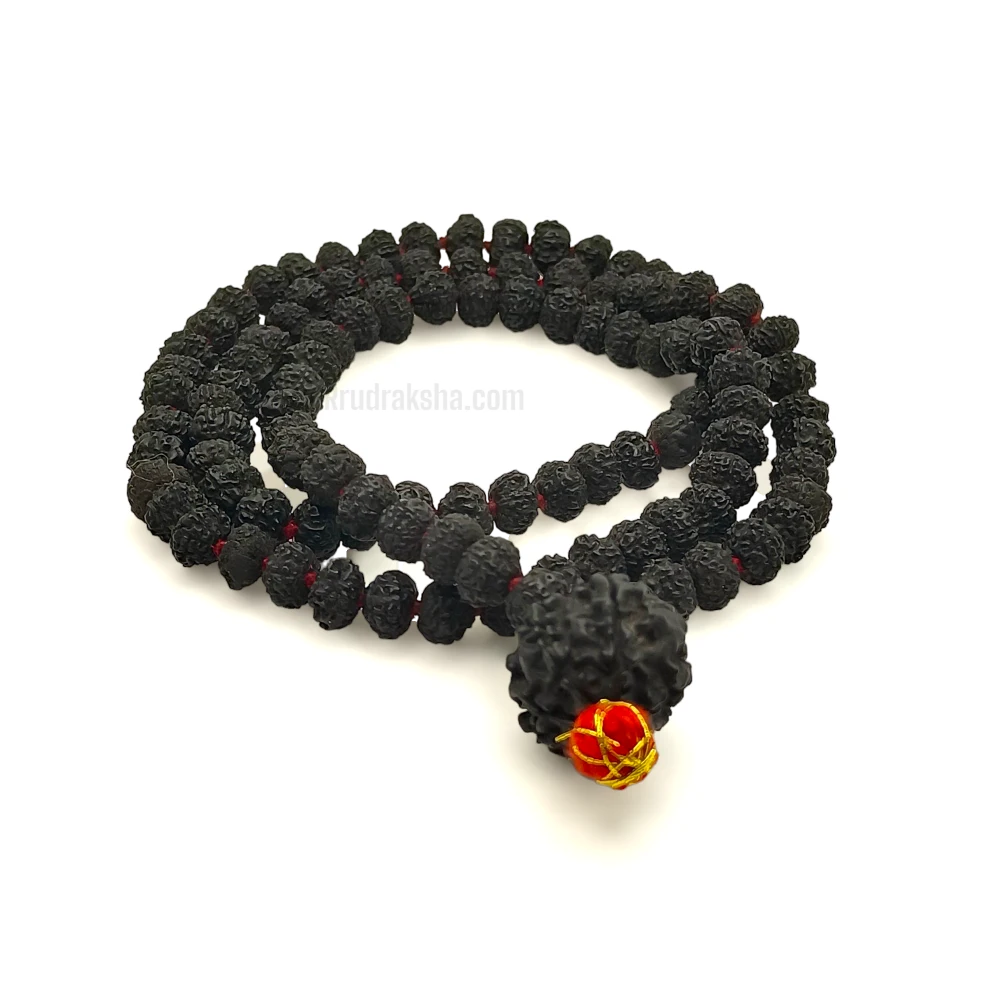
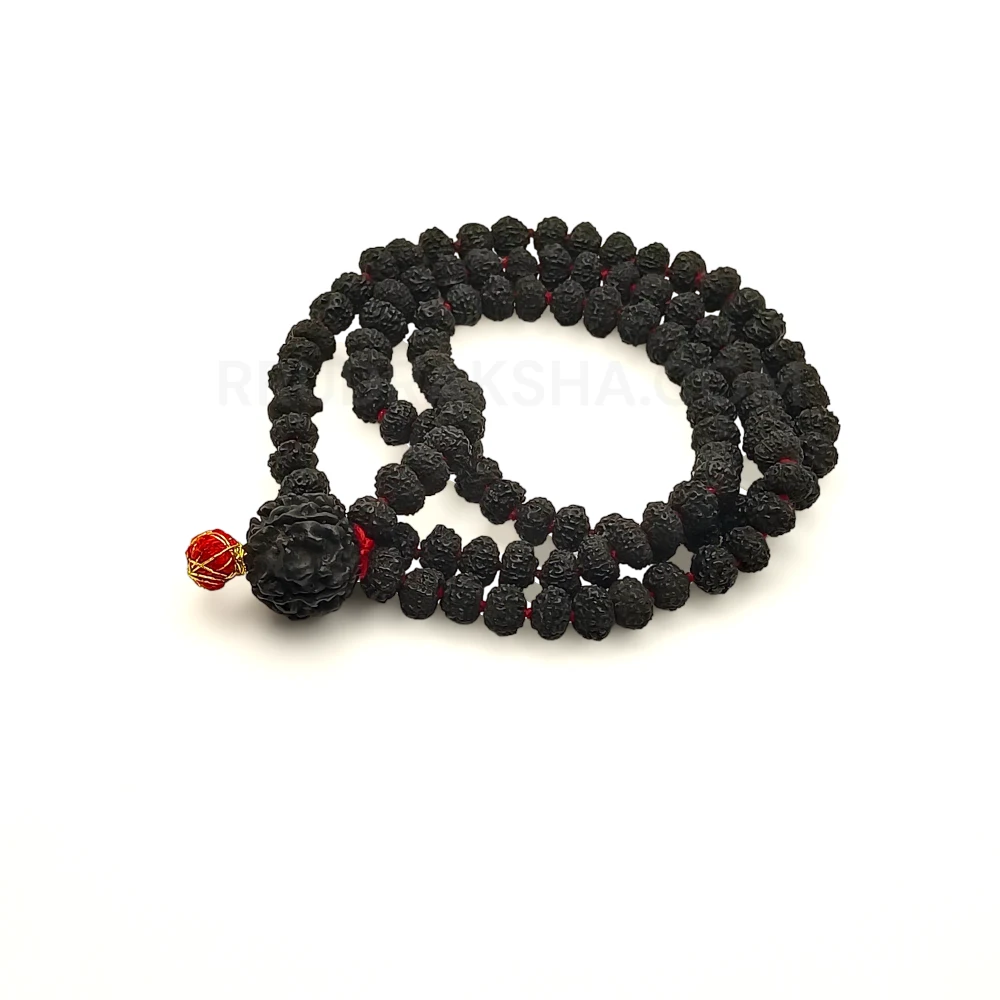
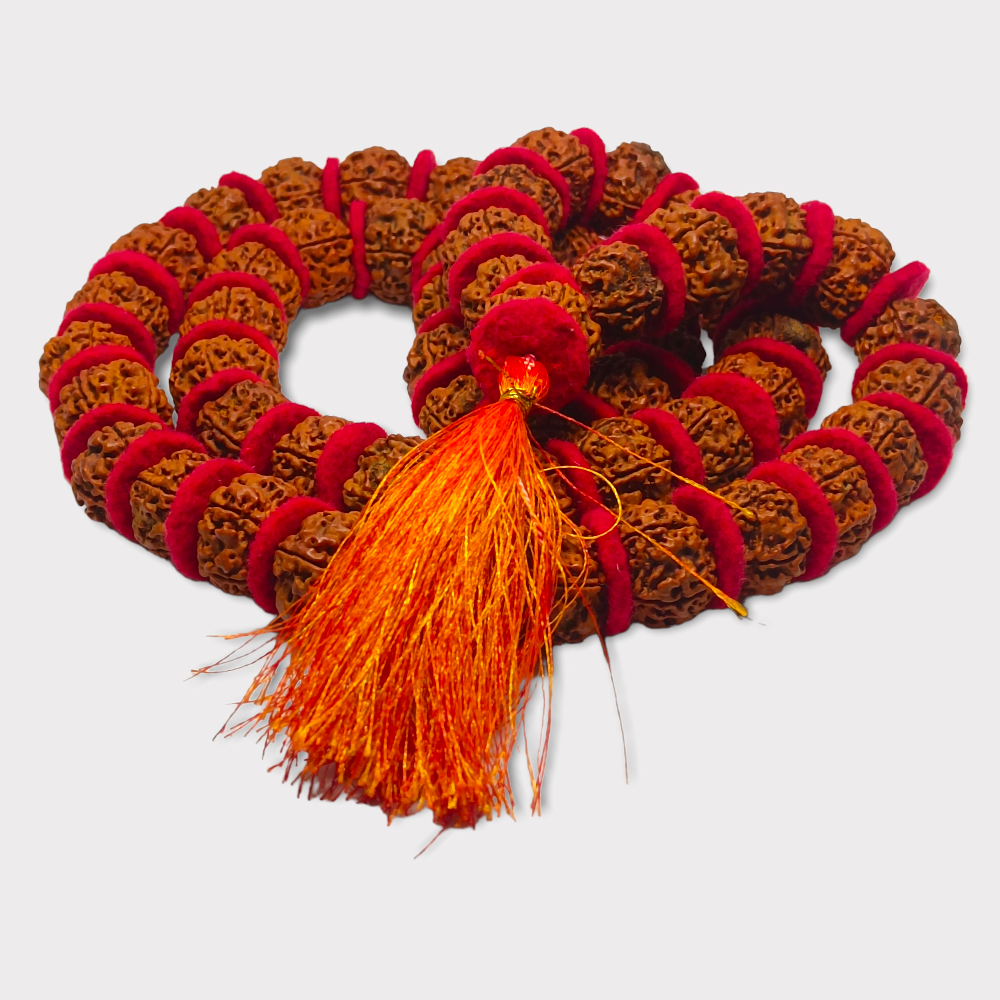
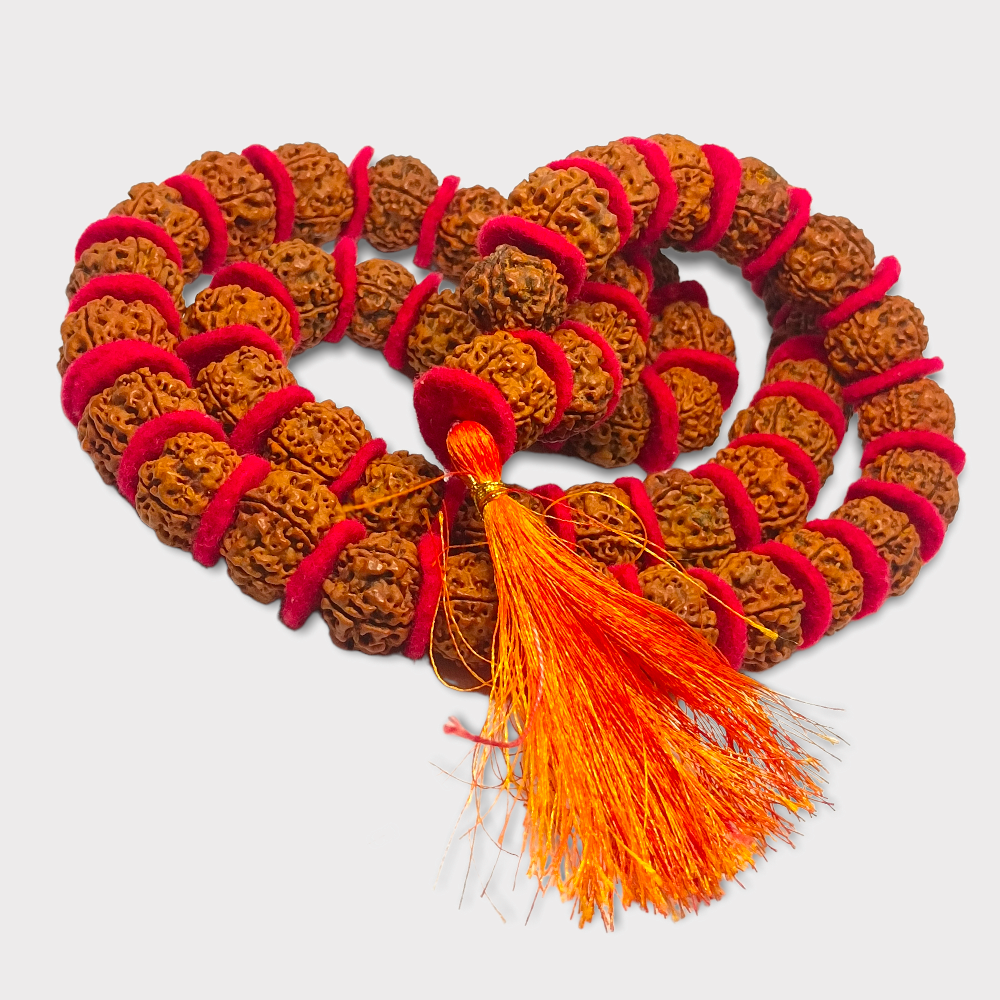
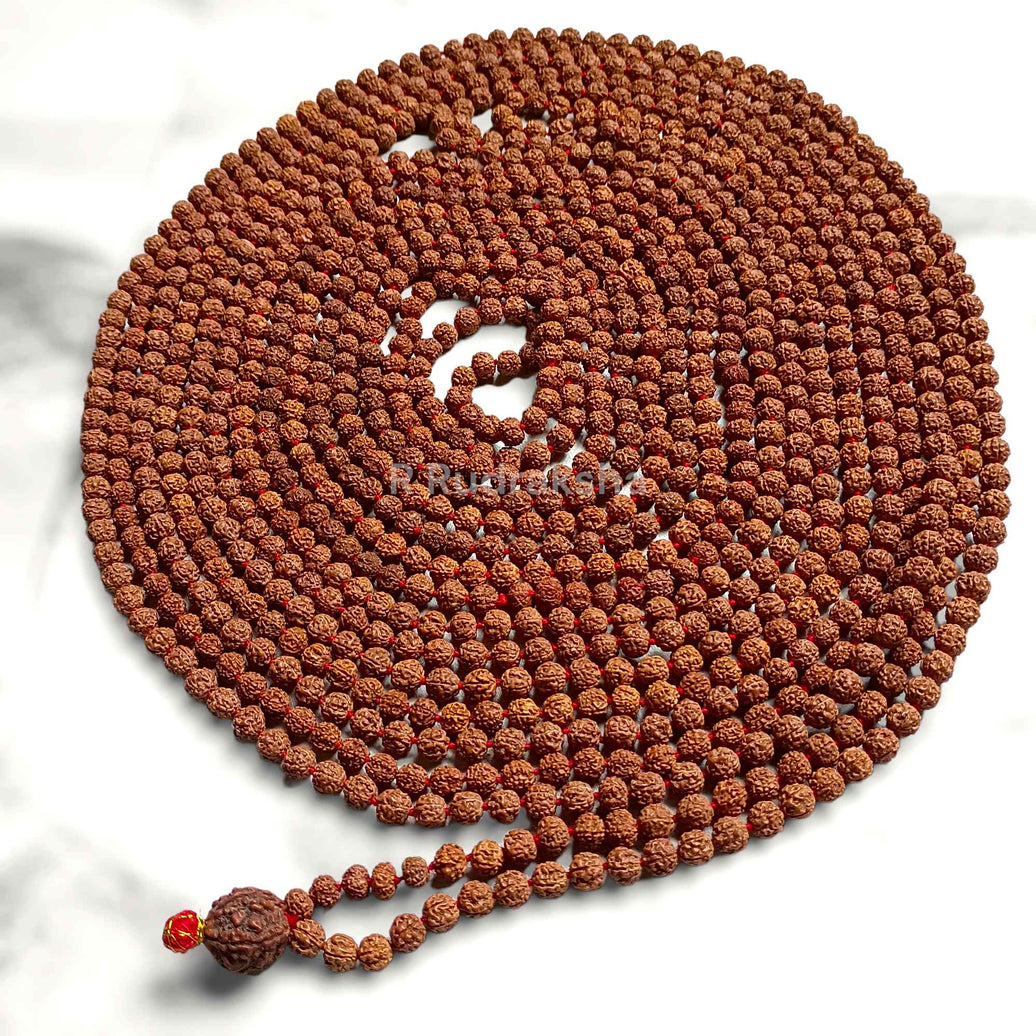
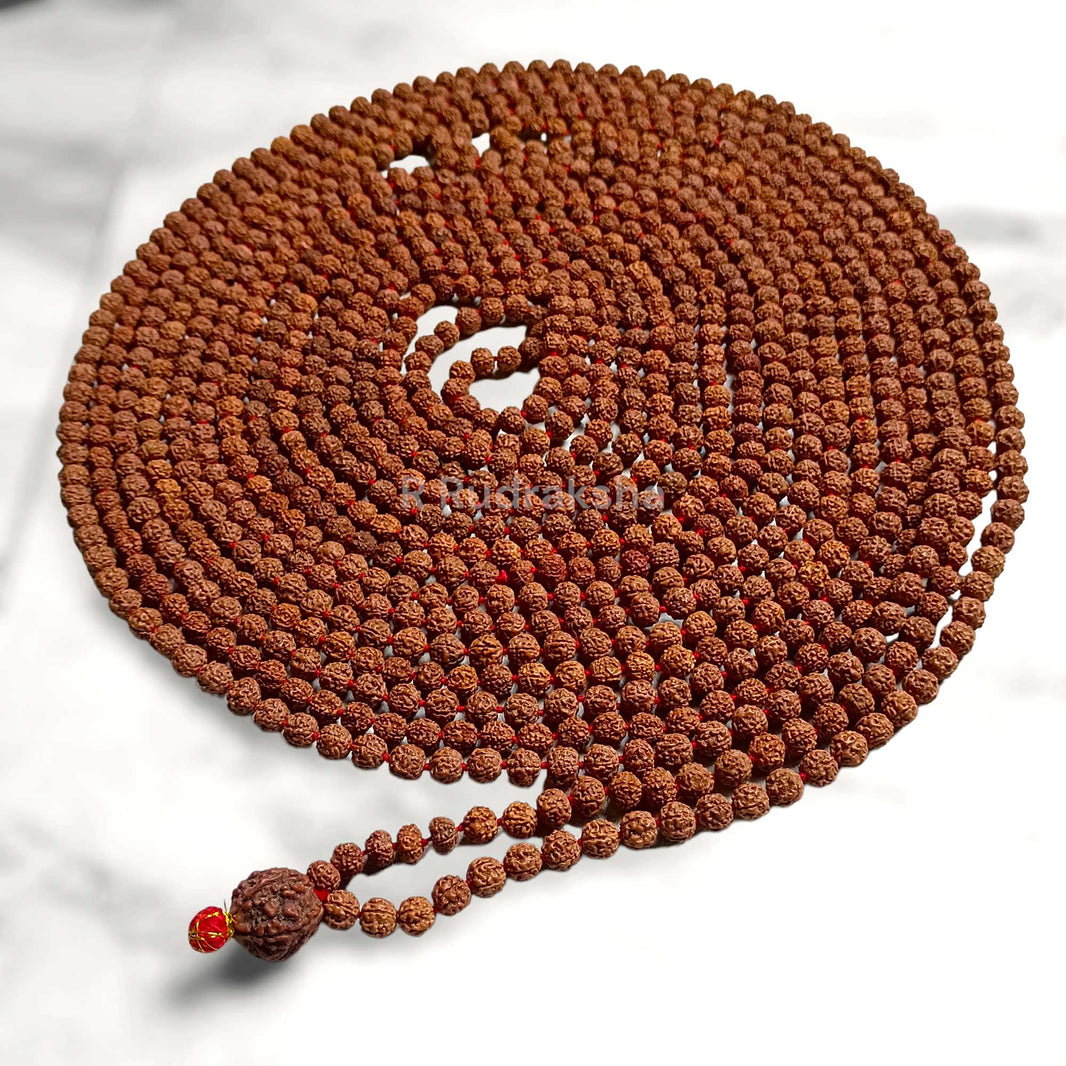
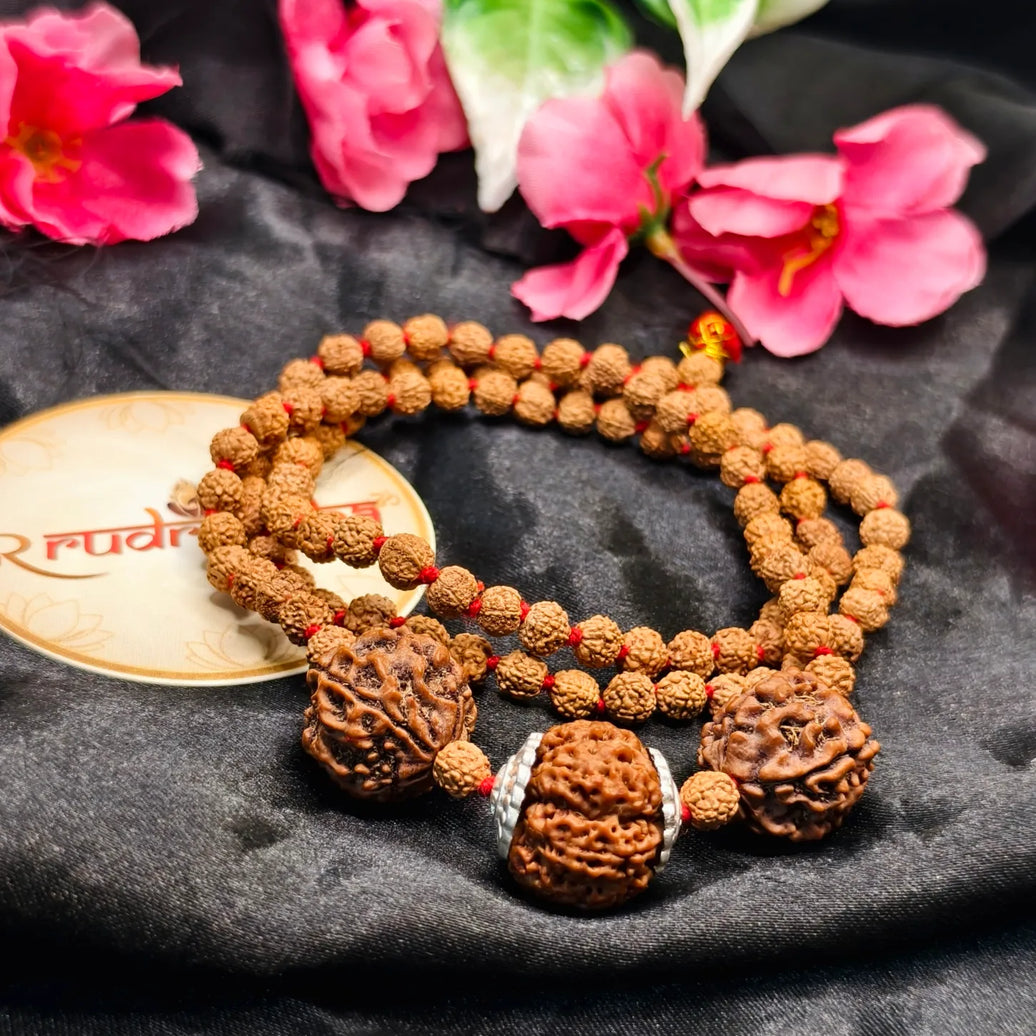
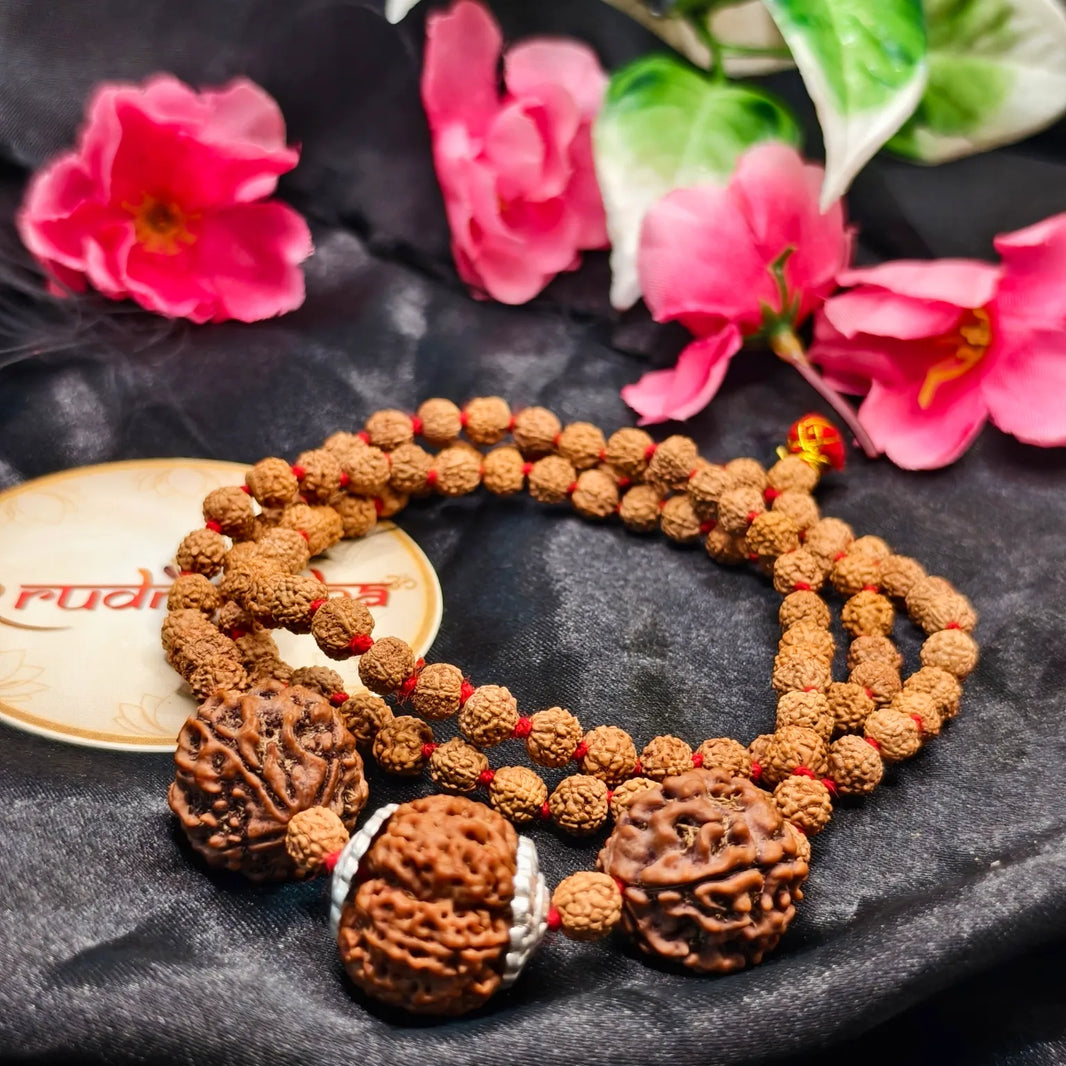
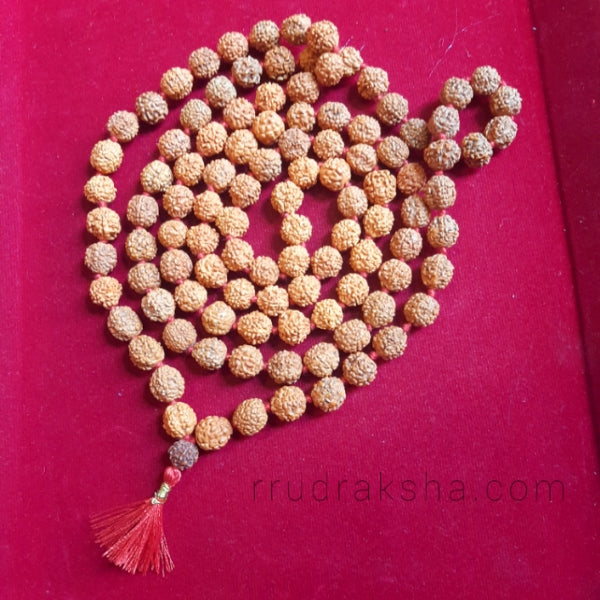
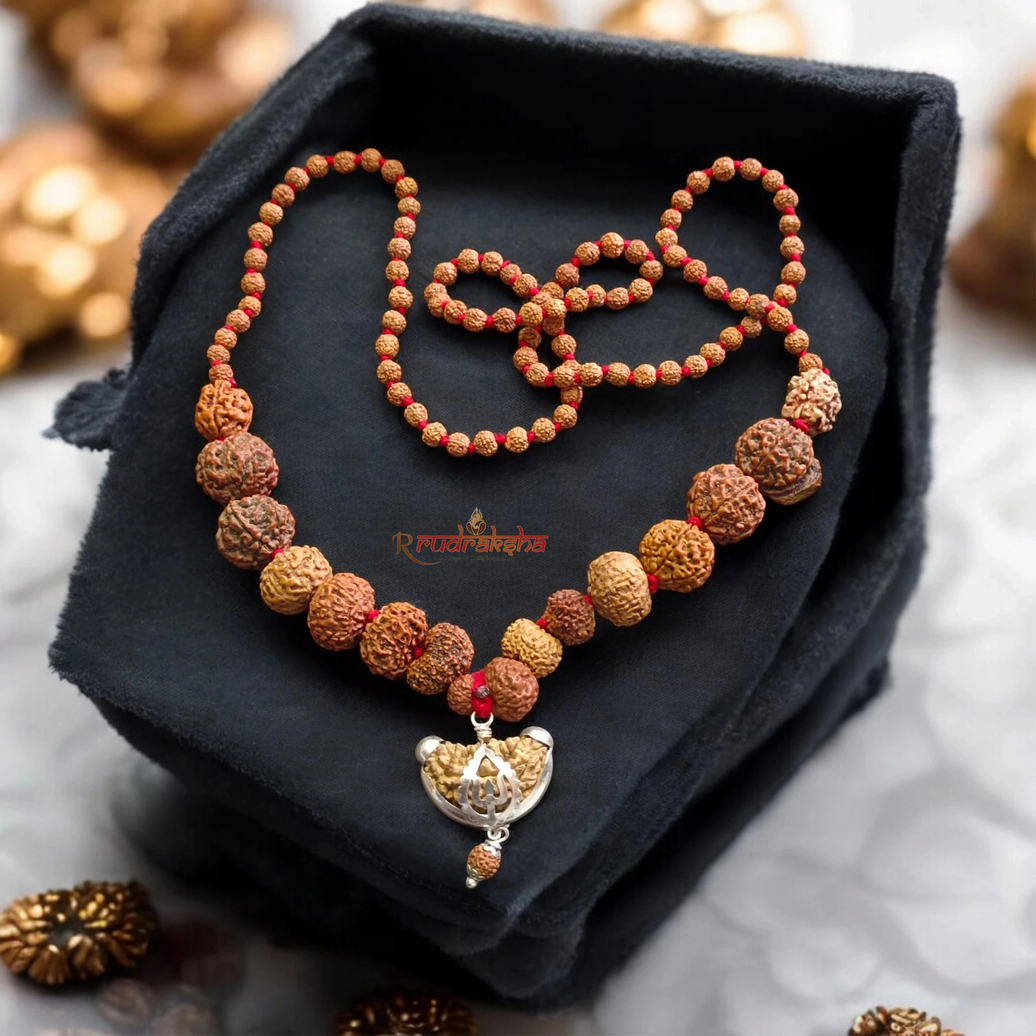
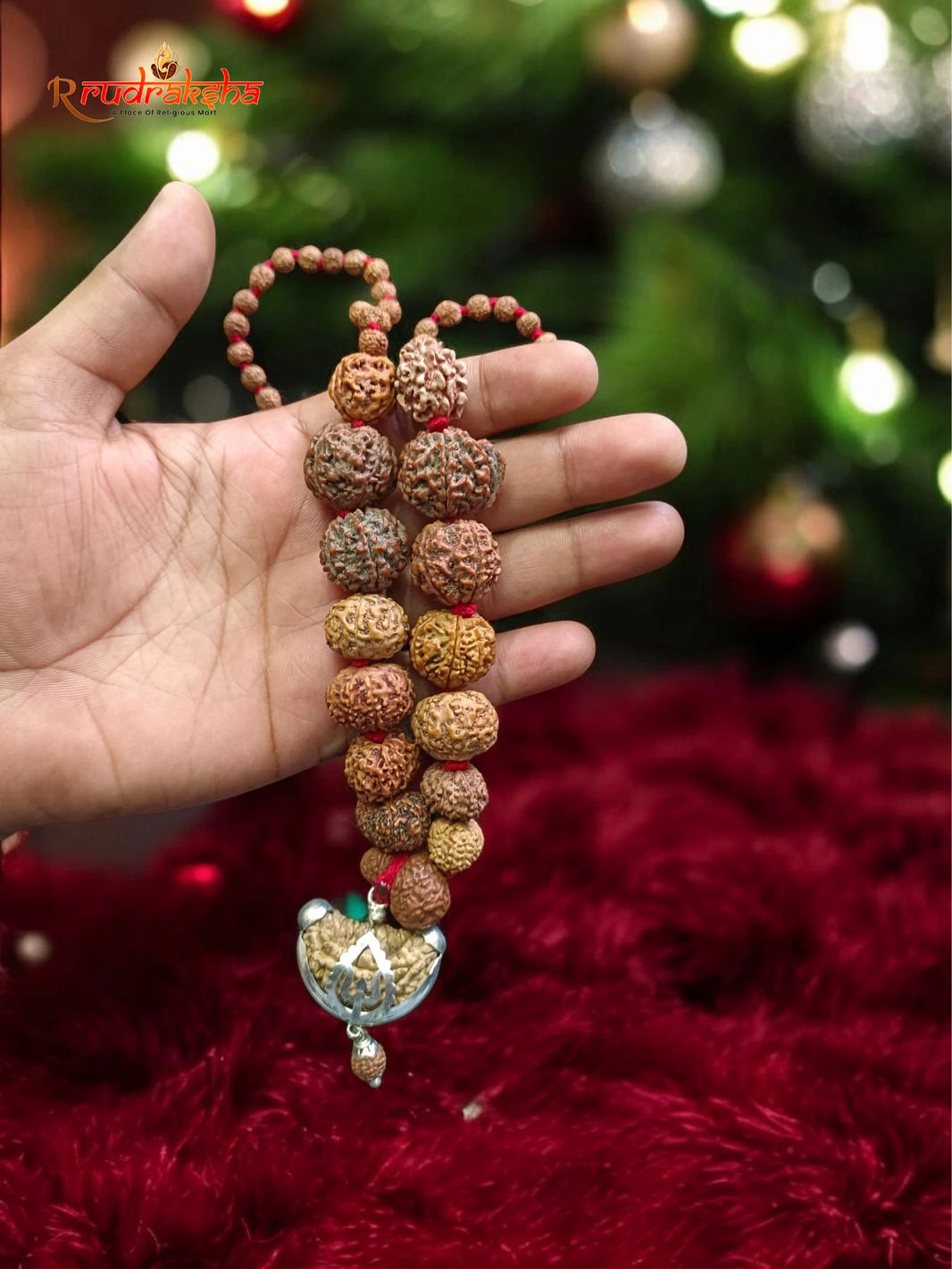
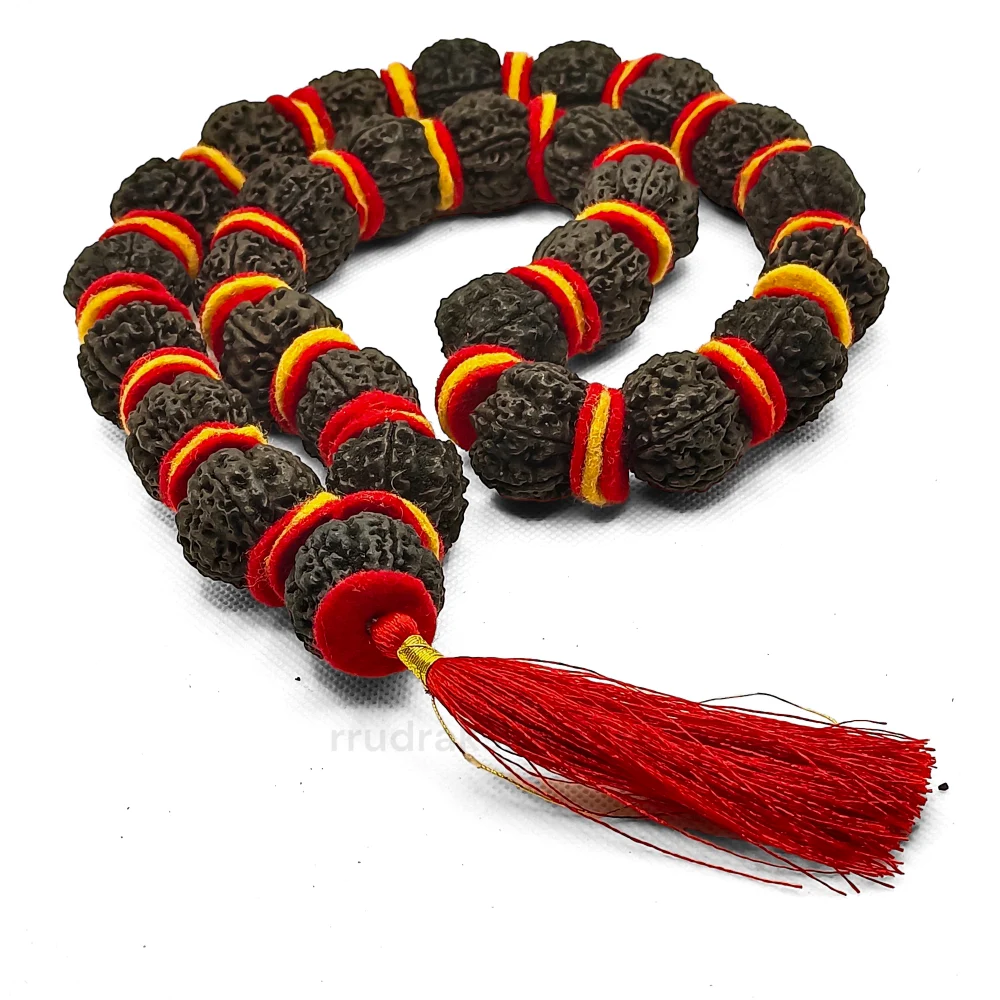
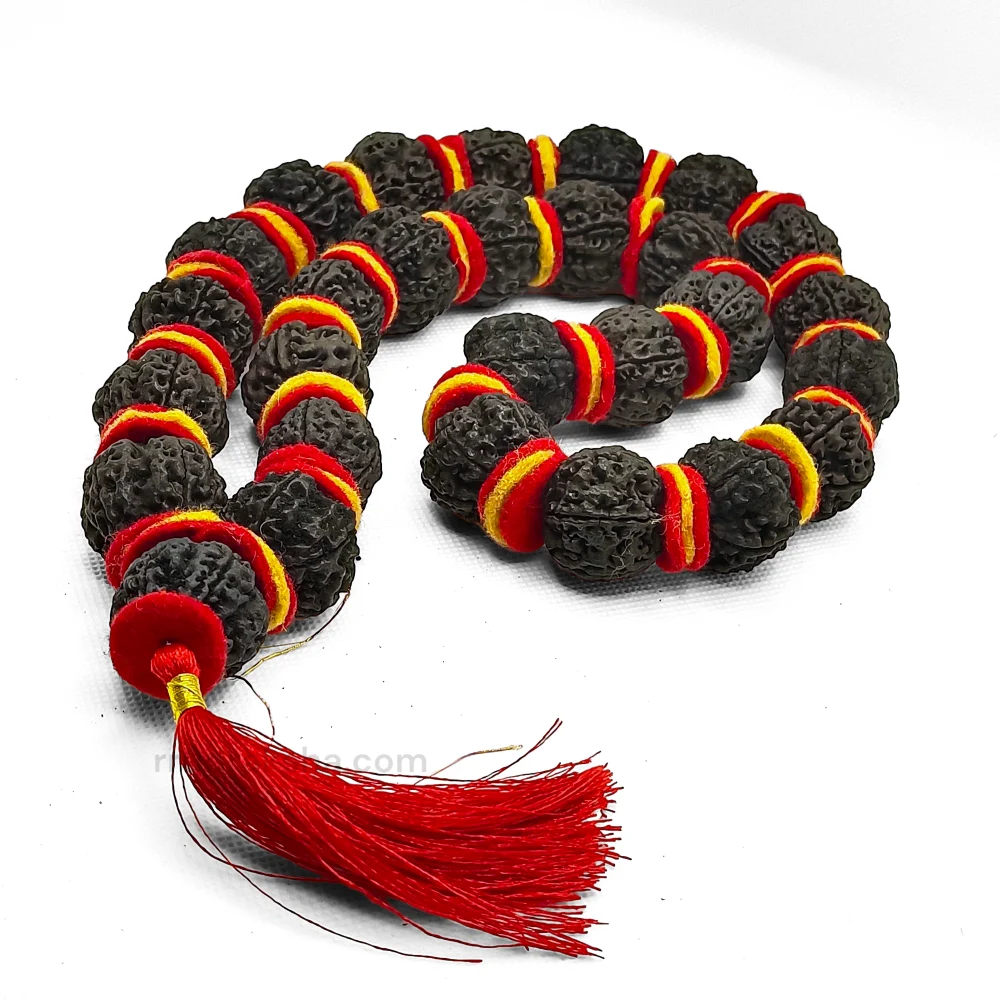
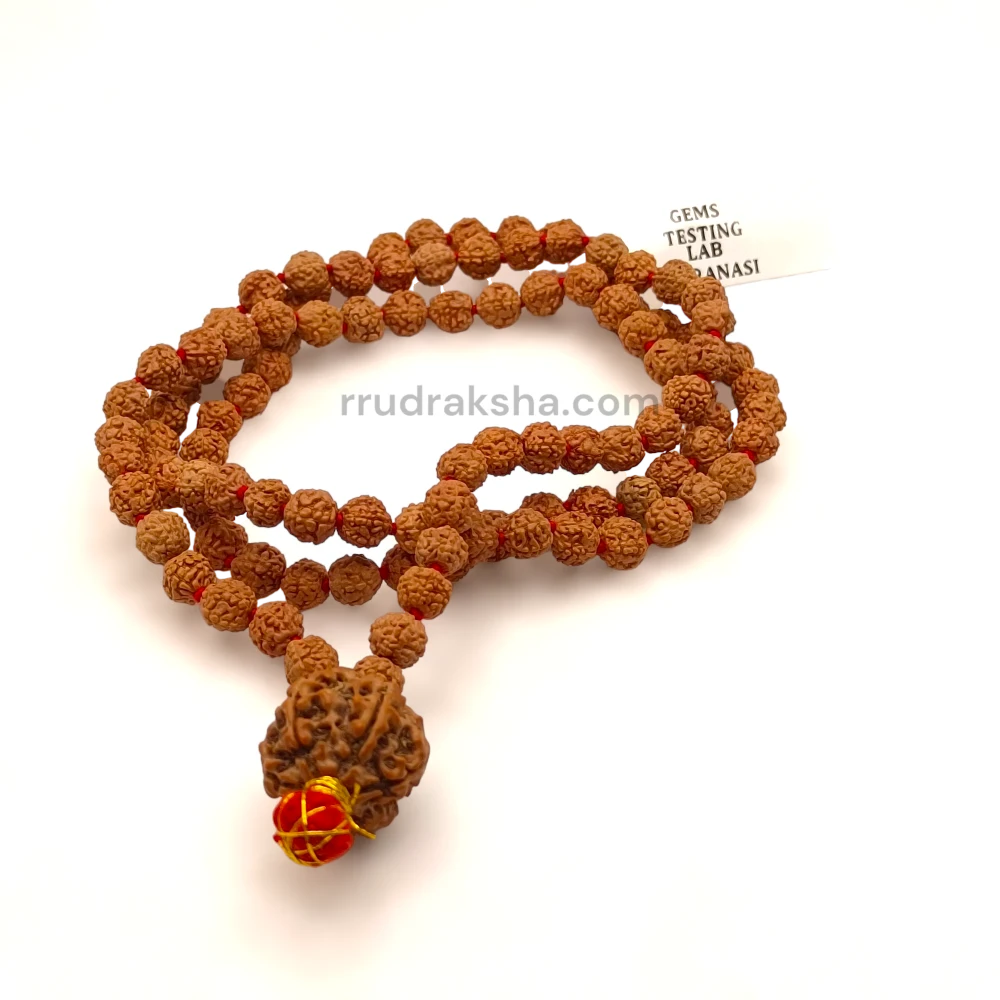
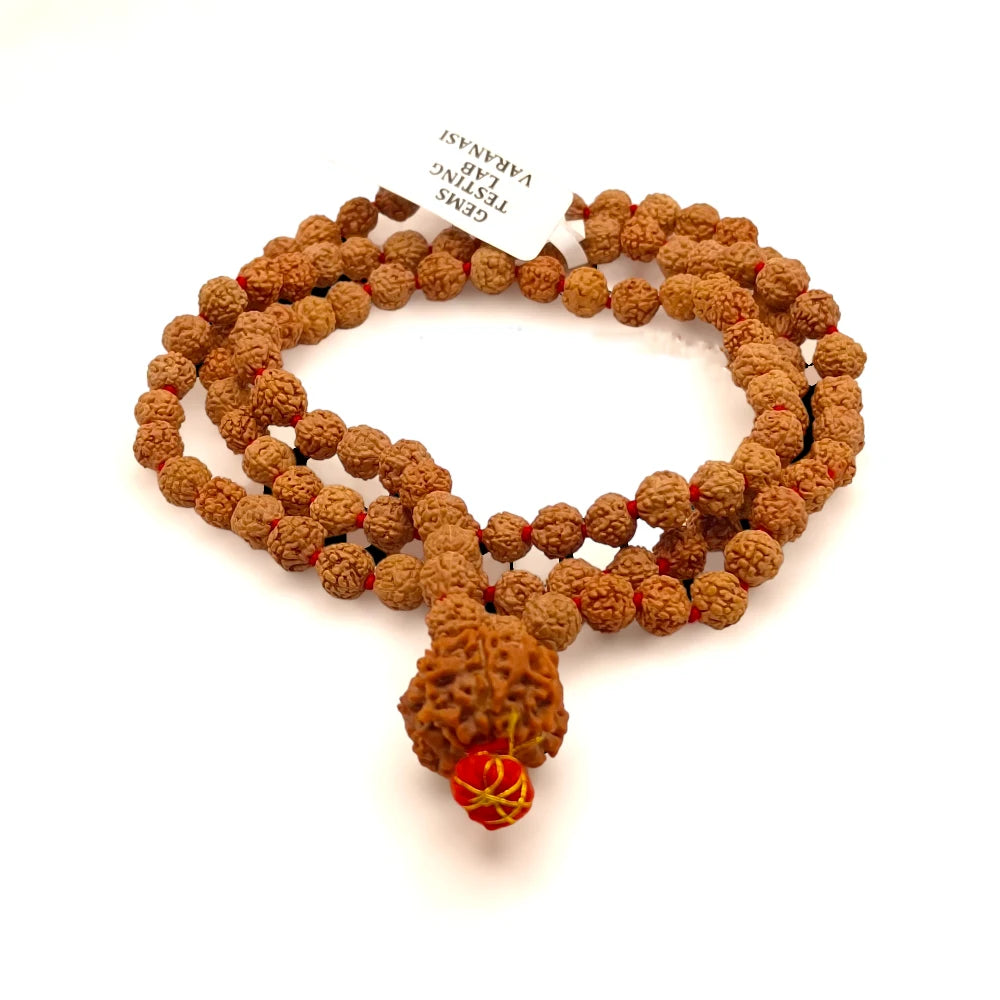
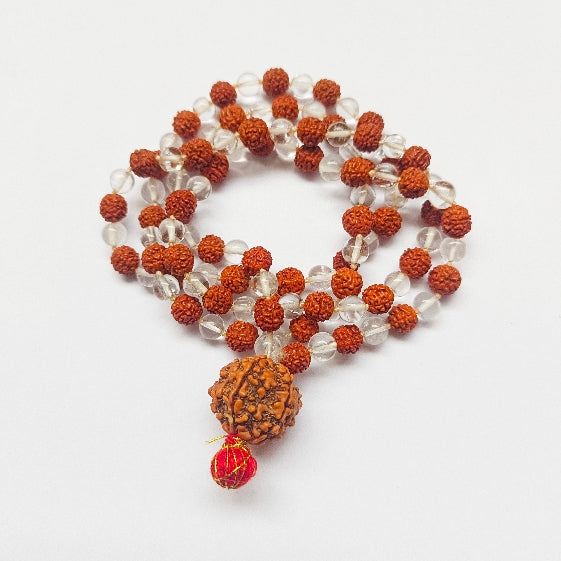
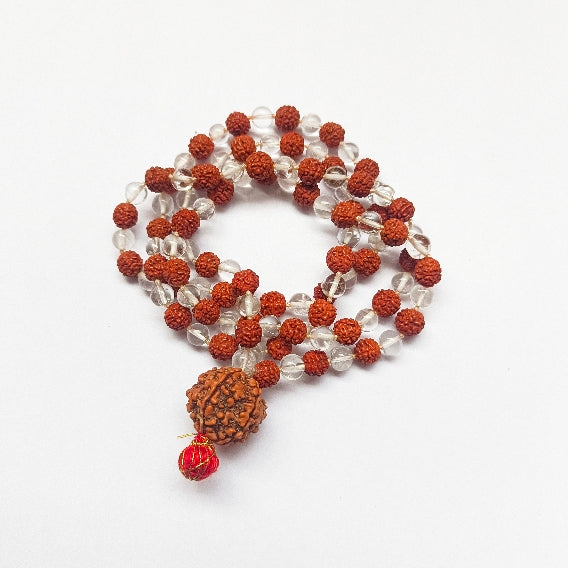
A Kantha Mala is a thick Rudraksha mala worn closely around the neck, traditionally made using large-sized Rudraksha beads strung tightly without excess spacing. The word “Kantha” refers to the neck or throat region, a vital energetic and neurological junction in the human body.
Unlike regular malas that hang loosely and are often removed during sleep or daily activities, a Kantha Mala is meant for continuous wear. Its purpose is not ritualistic alone but transformational. Historically, Kantha Malas were crafted for individuals who had accepted a disciplined life — one that involved restraint, awareness, and sustained inner work.
In traditional spiritual culture, the Kantha Mala was never casually recommended. Gurus allowed it only when the seeker’s lifestyle, temperament, and intent aligned with its intensity. This selectiveness preserved the sanctity of the mala and ensured it was not reduced to a symbolic ornament.
🕉️ Why the Neck Holds Deep Spiritual Importance
The neck is not just a physical connector between the head and the torso. In yogic science, it is a bridge between intellect and emotion, thought and feeling, intention and action. The Vishuddha Chakra, located in the throat region, governs truth, clarity, expression, and purification.
Placing a spiritually charged object like a Kantha Mala at this junction is believed to influence both mental patterns and emotional responses. It creates a constant reminder to remain truthful, disciplined, and aware. Unlike objects worn on the wrist or kept in pockets, the Kantha Mala remains within the wearer’s perceptual field at all times.
This continuous presence is not accidental. Ancient practitioners understood that transformation requires uninterrupted reinforcement. Kantha Mala serves this role silently, without mantra repetition or ritual dependence.
🔥 Kantha Mala and the Path of Shiva
Kantha Mala is inseparable from the Shaiva tradition. Lord Shiva, the Adi Yogi, embodies renunciation, fearlessness, and mastery over the mind. Rudraksha itself is believed to have emerged from Shiva’s tears, making it a symbol of compassion tempered by discipline.
Iconography often depicts Shiva wearing thick Rudraksha malas wrapped closely around his neck. This representation is not decorative symbolism. It conveys Shiva’s state of absolute inner balance — where awareness remains steady regardless of external chaos.
Sadhaks aligned with Shiva do not wear Kantha Mala to imitate him but to resonate with his principles. The mala becomes a reminder of restraint, simplicity, and unwavering focus on truth.
🧘 Why Sadhus Traditionally Wear Kantha Mala
Sadhus live lives that most people cannot imagine — prolonged silence, minimal possessions, intense meditation, and isolation from sensory indulgence. Such a lifestyle amplifies the mind’s tendencies. Without grounding tools, the mind can become unstable or excessively withdrawn.
Kantha Mala serves as a stabilizer. Its constant contact with the skin around the neck creates a grounding effect. Over time, it helps regulate emotional fluctuations and supports mental steadiness. This is not a sudden change but a gradual reconditioning of awareness.
Additionally, Kantha Mala acts as an external boundary. It communicates the wearer’s commitment without words, reducing unnecessary social engagement and distractions. In spiritual life, such boundaries are essential.
🌿 Kantha Mala as a Discipline Tool, Not a Comfort Accessory
Modern spirituality often emphasizes comfort and affirmation. Kantha Mala represents the opposite approach. Initially, its weight and tightness may feel restrictive. This discomfort is symbolic — it reflects the resistance of habits, ego, and mental conditioning.
As the body adapts, the discomfort fades, replaced by a sense of stability. This transition mirrors the spiritual journey itself, where discipline eventually transforms into ease. Kantha Mala does not remove challenges; it strengthens the seeker to face them.
This is why Kantha Mala is unsuitable for casual experimentation. It demands respect, consistency, and sincerity.
📜 Kantha Mala in Ancient Scriptural Thought
Sanatan scriptures rarely promote external symbols without inner readiness. When Rudraksha is mentioned in texts like the Shiva Purana, Padma Purana, and Skanda Purana, the emphasis is always on discipline, purity of intent, and restraint. The Kantha Mala emerges from this same scriptural temperament — not as a named accessory, but as an implied practice reserved for those engaged in sustained spiritual effort.
Descriptions of ascetics adorned with Rudraksha worn tightly around the neck appear repeatedly in scriptural imagery. The intent is not visual identity but energetic alignment. Scriptures recognize that the human body is not merely physical; it is layered with subtle channels that respond to sustained influences.
By positioning Rudraksha continuously at the throat region, ancient practitioners believed the seeker remained aligned with satya (truth) and shuddhi (purity). Speech, intention, and mental clarity were believed to stabilize naturally when the Vishuddha region remained energetically supported.
🧠 The Psychology Behind Continuous Spiritual Tools
From a psychological standpoint, Kantha Mala functions as a constant behavioral anchor. Modern neuroscience acknowledges that habits are reinforced through repeated sensory cues. Objects that remain within sensory awareness influence emotional regulation and decision-making over time.
Unlike malas that are worn temporarily during rituals, Kantha Mala creates an uninterrupted cue. Its presence gently but persistently reminds the wearer of discipline, restraint, and awareness. Over months of wear, this repeated reinforcement begins to alter subconscious patterns.
This explains why many long-term wearers report increased emotional steadiness and reduced impulsivity. These changes are not mystical miracles but natural outcomes of sustained psychological conditioning paired with intention.
🔬 Kantha Mala and the Human Nervous System
The neck region houses critical neural pathways connecting the brain and heart. The vagus nerve, responsible for regulating the parasympathetic nervous system, passes through this area. Continuous tactile stimulation near this region can influence stress response and emotional balance.
Large Rudraksha beads, characteristic of Kantha Mala, create consistent contact pressure. This contact may help activate calming responses within the nervous system, promoting parasympathetic dominance. Such a state supports clarity, focus, and emotional resilience.
This scientific interpretation aligns with traditional observations that Kantha Mala supports steadiness during prolonged meditation and austere lifestyles. Ancient knowledge, though expressed symbolically, often aligns with modern physiological understanding.
⚡ Energetic Logic: Size, Weight, and Stability
In subtle energy traditions, size and weight are not cosmetic details. Larger Rudraksha beads carry greater surface interaction and energetic presence. Kantha Mala’s thickness creates a stabilizing influence rather than a stimulating one.
This is why Kantha Mala is often associated with grounding rather than activation. It does not push energy upward aggressively but regulates flow. For seekers engaging in intense spiritual practices, such regulation prevents imbalance.
Energetically, Kantha Mala is believed to act as a filter — allowing necessary engagement with the world while reducing emotional overload. This quality makes it especially relevant in today’s overstimulated environment.
🌍 Kantha Mala in the Modern World
Modern life places constant demands on attention, emotion, and identity. Even individuals drawn to spirituality struggle with distraction, overstimulation, and emotional volatility. Kantha Mala’s relevance today lies precisely here.
For householders balancing responsibility and inner growth, Kantha Mala provides a silent stabilizer. It does not require withdrawal from life but supports clarity within it. Many professionals, leaders, and creatives have begun exploring such tools not as religious symbols but as anchors of discipline.
This shift marks an important evolution — Kantha Mala is no longer limited to ascetic life. Its core purpose remains the same: stability through consistency.
🌿 Who Is Truly Ready to Wear a Kantha Mala?
Kantha Mala responds to intention more than belief. Those who approach it with respect, consistency, and discipline are more likely to experience its stabilizing effects. It is suitable for individuals who maintain routine, value inner clarity, and are willing to adapt their lifestyle gradually.
It may not be suitable for those seeking instant transformation or those unwilling to engage in self-discipline. Kantha Mala does not override habits; it reveals them. This revelation can be uncomfortable for some.
Understanding readiness is essential. In traditional systems, guidance was offered before adopting such tools. Even today, mindful consideration enhances the experience.
⚠️ Common Misunderstandings About Kantha Mala
One common misunderstanding is that Kantha Mala is merely an extreme version of a Rudraksha mala. In truth, it serves a distinct purpose. Another misconception is that discomfort indicates incompatibility. Often, discomfort reflects initial resistance rather than rejection.
Some believe Kantha Mala guarantees spiritual advancement. In reality, it supports effort; it does not replace it. The mala amplifies discipline already present.
Dispelling these misunderstandings allows seekers to approach Kantha Mala with clarity rather than expectation.
🧭 Lifestyle Alignment: How Kantha Mala Shapes Daily Conduct
Kantha Mala does not function in isolation from daily life. Its impact becomes meaningful when the wearer’s routine supports steadiness and self-awareness. Traditionally, seekers who adopted Kantha Mala also simplified their habits — not out of compulsion, but because clarity naturally invites order.
Daily conduct influenced by Kantha Mala often reflects moderation. Over time, wearers report a reduced urge toward excess — in speech, consumption, or emotional reaction. This is not suppression; it is regulation. The mala’s constant presence gently discourages impulsive behavior and reinforces mindful action.
Importantly, Kantha Mala does not demand perfection. It supports gradual refinement. Small, consistent adjustments in sleep, diet, and focus tend to arise organically as the wearer becomes more aware of internal states.
🥗 Food, Routine, and Inner Discipline
Ancient practitioners emphasized the relationship between food, mind, and subtle energy. While Kantha Mala does not impose dietary rules, it often inclines the wearer toward lighter, more sattvic choices. This inclination is a response to heightened sensitivity, not a moral obligation.
Irregular routines, excessive stimulation, and chaotic schedules can dull awareness. Kantha Mala counters this by fostering rhythm. Regular waking times, mindful meals, and intentional pauses become easier to maintain. Over time, routine shifts from discipline to preference.
This alignment between object and habit illustrates an important principle: spiritual tools are most effective when they harmonize with daily life rather than oppose it.
🌌 Astrological Logic: Neck, Karma, and Planetary Influence
In Jyotish, the neck and throat region are associated with communication, intention, and karmic expression. Planetary influences that disturb clarity — particularly those affecting speech, judgment, or emotional volatility — are believed to manifest tension in this region.
Kantha Mala, worn at the throat, symbolically and energetically supports equilibrium. It does not counter planets in a remedial sense but stabilizes the individual’s response to planetary cycles. This distinction is important. True balance arises from inner steadiness, not external correction alone.
For individuals experiencing frequent mental agitation, indecision, or expressive imbalance, Kantha Mala may serve as a grounding aid when adopted with awareness and consistency.
🚫 Who Should Avoid Wearing Kantha Mala (At Least Temporarily)
While Kantha Mala is powerful, it is not universally appropriate at all times. Individuals undergoing intense emotional upheaval or psychological instability may find its grounding effect overwhelming initially. In such cases, gentler practices are advisable before adopting stronger tools.
Those seeking quick solutions or external validation may also struggle with Kantha Mala. It does not enhance social image; it minimizes it. If the wearer’s intent conflicts with this quality, discomfort may persist.
Temporary avoidance is not rejection. Readiness evolves. Many who initially felt resistance later adopted Kantha Mala successfully once their lifestyle and intent aligned.
⏳ Long-Term Observations from Dedicated Wearers
Over extended periods, dedicated wearers often describe subtle yet profound shifts. Emotional reactions become measured. Decision-making slows but gains clarity. External chaos feels less intrusive. These changes do not announce themselves dramatically; they integrate quietly.
One consistent observation is reduced mental noise. Thoughts continue, but they lose urgency. This state supports meditation naturally, even outside formal practice. Awareness begins to permeate ordinary moments.
Such outcomes highlight the true value of Kantha Mala — not as a spiritual shortcut, but as a companion in sustained self-refinement.
🔄 Kantha Mala vs Modern Spiritual Accessories
Modern spiritual markets often promote tools promising rapid results. Kantha Mala stands apart by offering none. Its value lies in continuity, not novelty. It does not demand belief; it responds to consistency.
This distinction explains its enduring relevance. While trends shift, Kantha Mala remains unchanged because its function is timeless — stabilizing the seeker amid changing circumstances.
In this sense, Kantha Mala is less a product and more a practice embodied in form.
❓ Frequently Asked Questions (FAQs)
What is the main purpose of wearing a Kantha Mala?
The primary purpose of wearing a Kantha Mala is to cultivate inner stability, discipline, and sustained awareness. Unlike decorative spiritual accessories, it functions as a continuous grounding tool that supports emotional balance, mental clarity, and restraint over long periods.
Is Kantha Mala only meant for sadhus and ascetics?
Traditionally, Kantha Mala was associated with ascetics due to their disciplined lifestyle. However, in the modern context, sincere householders, professionals, and spiritual seekers can also wear it if they are prepared for consistency, simplicity, and inner alignment.
Does Kantha Mala require mantra initiation or diksha?
Mantra initiation can deepen the spiritual experience, but it is not mandatory. Kantha Mala responds primarily to intention, consistency, and respect. Regular mindfulness and disciplined living often prove equally influential.
Which Rudraksha mukhi is most commonly used in Kantha Mala?
Five Mukhi Rudraksha is most commonly used due to its balanced and universally supportive nature. It aligns well with mental stability and overall well-being, making it suitable for long-term wear.
Can Kantha Mala be worn all the time, including during sleep?
Traditionally, continuous wear is encouraged, including during sleep, as it maintains energetic consistency. However, personal comfort and gradual adaptation should be respected.
How long does it take to notice changes after wearing Kantha Mala?
Changes are subtle and gradual. Some individuals notice shifts in emotional regulation and focus within weeks, while for others it may take months. Kantha Mala works through steady influence rather than instant effects.
Is it normal to feel discomfort initially?
Yes. Initial physical or psychological discomfort is common and often reflects adjustment rather than incompatibility. As the body and mind adapt, this sensation usually subsides.
Can Kantha Mala replace meditation or spiritual practice?
No. Kantha Mala supports spiritual effort but does not replace personal practice. It enhances consistency and awareness, making meditation and self-reflection more effective.
🧘 Final Conclusion 🌟
Kantha Mala is not a symbol of spiritual identity; it is a commitment to inner discipline. Its power does not lie in appearance or belief, but in consistency. By remaining close to the body day and night, it silently encourages awareness, restraint, and emotional steadiness.
In a time where spirituality is often simplified into comfort and affirmation, Kantha Mala stands as a reminder that true transformation requires patience. It does not offer escape from life’s complexities; it strengthens the individual to face them with clarity and balance.
For those who are ready to walk steadily rather than swiftly, Kantha Mala becomes more than a Rudraksha mala. It becomes a companion — one that reflects the ancient understanding that stability is the foundation of all higher growth.
🙏 हर हर महादेव 🙏





Leave a comment