

















🕉️ The Spiritual Psychology of Mantra Chanting: How Rudraksha Malas Transform Your Mind & Aura
Since ancient times, mantra chanting has been considered one of the most powerful spiritual tools to reshape one’s inner world. The sages of Bharat, after thousands of years of meditation, discovered a profound truth, that the mind can be rewired, elevated, purified, and awakened through the simple but sacred act of repeating a sound. A mantra is not just a word; it is a vibration that enters the depths of consciousness, dissolving negative patterns and awakening states of peace, clarity, and devotion.
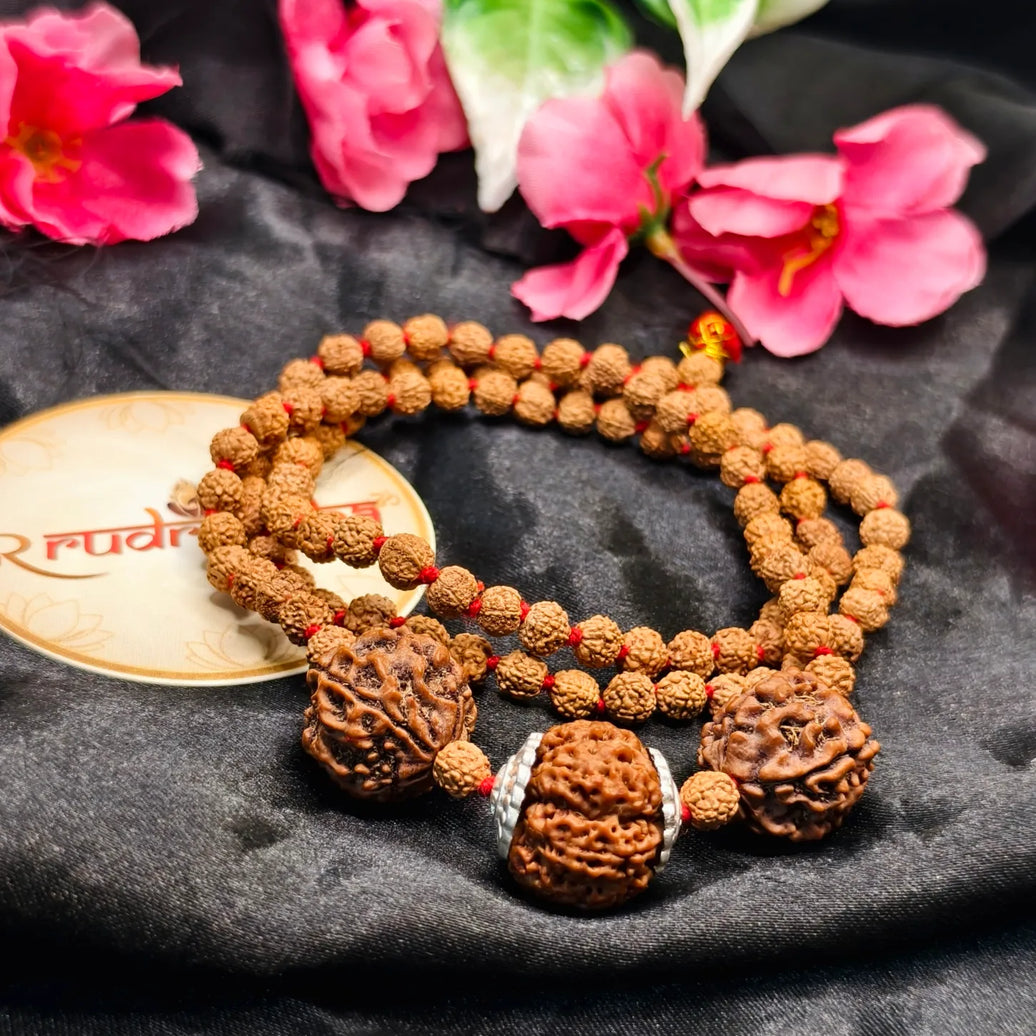
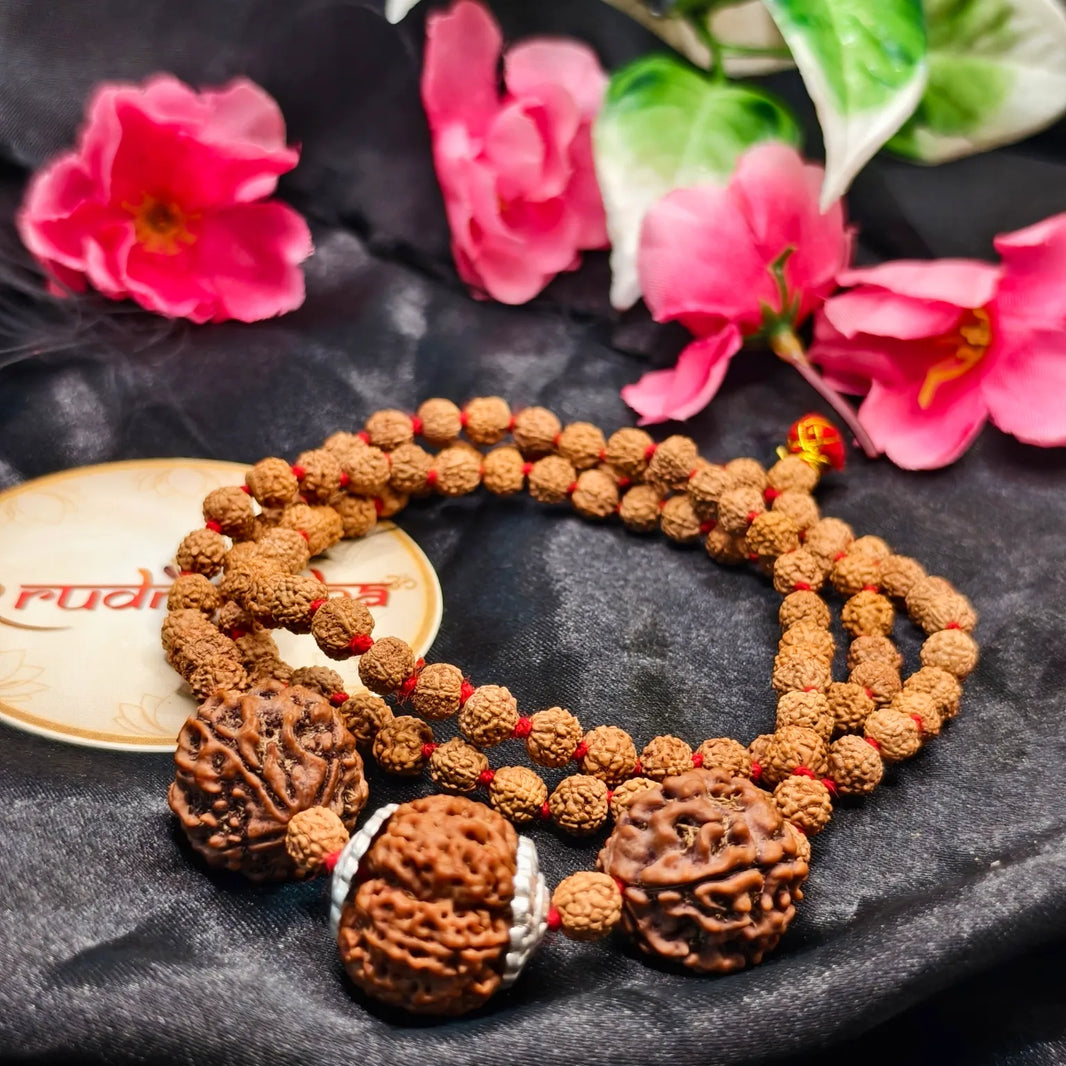
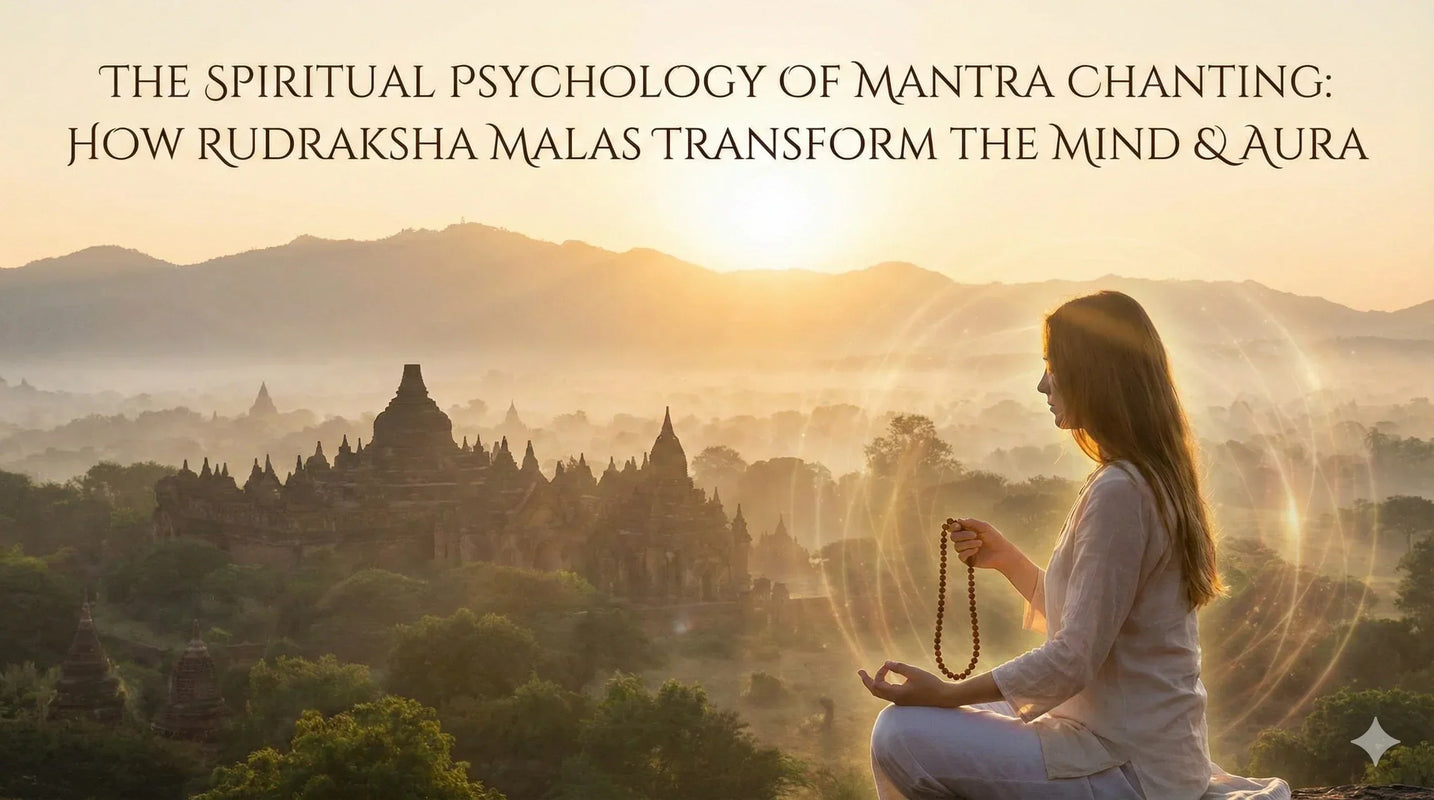
But there is another great secret behind mantra chanting that few people today understand. The ancient rishis never performed japa with empty hands. They used malas—Rudraksha, Sphatik, Tulsi, gemstones—because they knew that the human mind and energy field are influenced not just by sound, but also by touch, rhythm, and vibration. A mala is not just a counting tool. It is a psycho-spiritual instrument, crafted to stabilize the mind, anchor awareness, and amplify the power of every mantra uttered.
Among all malas, Rudraksha is the most revered. Not because of mythology alone, but because its energetic structure interacts with the human biofield in a unique way. When a mantra enters your mind, Rudraksha reinforces its spiritual frequency. When your thoughts begin to wander, the tactile sensation of beads gently brings awareness back. When your aura weakens or becomes clouded, the natural electromagnetic properties of Rudraksha strengthen and purify it.
This is the spiritual psychology of mantra chanting—how sound, touch, breath, and intention merge to awaken the deeper dimensions within you. To understand this, we must journey back to the origins of mantras, the secrets of vibration, and the science behind how Rudraksha becomes a catalyst for transformation.
🌺 The Ancient Foundations of Mantra Science
Long before modern neuroscience existed, the rishis discovered the rhythmic patterns of the mind. They observed that thoughts come in waves, emotions come in ripples, and awareness itself moves in cycles. By entering deep states of meditation, they discovered that the mind could be stabilized through repetition of specific sounds. These sounds were not chosen randomly. They were received intuitively, as revelations—vibrational codes capable of creating harmony between the inner self and the universe.
Every mantra was created from a seed vibration, called a beej. For example:
- OM — vibration of universal consciousness
- HREEM — energy of manifestation
- SHREEM — abundance and prosperity
- KLIM — attraction and inner magnetism
- OM NAMAH SHIVAYA — surrender and inner purification
These beej sounds were known to activate dormant energies in the mind and body. They were formulas that changed how the brain processed information, how energy flowed within the chakras, and how the aura oscillated.
To enhance this inner transformation, the rishis added a mala. The mala served as a conductor through which the vibrational power of the mantra could travel and become stabilized. Rudraksha, especially Panchmukhi and higher mukhis, was known to respond to sound by generating a subtle electromagnetic resonance—an effect that supports emotional stability and deeper concentration.
🔔 The Psychology of Repetition: Why Japa Changes the Mind
Modern psychology has now confirmed what sages knew thousands of years ago: repetition rewires the brain. Whether a person repeats a positive affirmation or a negative thought, the mind creates a neural pathway that becomes stronger each time it is activated. This is how habits are formed, how memories are reinforced, and how emotional responses become conditioned.
Mantra chanting uses this exact principle. But because the mantra is sacred sound, not ordinary language, its effect is many times deeper. A mantra carries three transformative powers:
- Vibration — the physical sound waves affecting the body and mind
- Intention — the mental focus that shapes consciousness
- Energy — the spiritual force embedded within the mantra’s syllables
Through japa, the mind gradually becomes synchronized with the mantra’s frequency. Negative thoughts weaken. Emotional patterns lose their grip. Stress dissolves. The mind gains a new rhythm—one that is peaceful and inwardly aware.
Rudraksha enhances this process by grounding the mind. Every bead one touches becomes a moment of anchoring—a reminder to return to the present, to the mantra, and to the breath. Over hundreds of repetitions, the mind enters a state of trance-like stillness, where the boundary between the chanter and the mantra disappears.
🧘 How Rudraksha Malas Deepens the Chanting Experience
Rudraksha works on the human system through its natural bioelectrical and vibrational properties. Its surface pattern, internal compartments, and organic structure create a subtle energetic field. When worn against the skin, Rudraksha interacts with the heart’s electromagnetic rhythm, leading to a calmer physical and mental state.
During mantra chanting, this effect multiplies. The combination of sound vibration and Rudraksha’s natural resonance creates a powerful feedback loop that:
- Reduces mental restlessness
- Improves concentration
- Stabilizes heart rate and breath
- Increases alpha and theta brain waves
- Strengthens the aura
This is why yogis, saints, and meditators throughout history chose Rudraksha as their preferred mala. It was not a symbol. It was technology—ancient spiritual technology that amplified awareness and cleansed the mind.
🌙 The Aura and its Transformation Through Mantras
The aura is the subtle electromagnetic field surrounding the body. When a person is stressed, angry, anxious, or fearful, the aura becomes weak or distorted. Negative emotions create gaps through which energy is lost, which leads to exhaustion, confusion, and emotional instability.
Mantra chanting repairs this field. Each repetition sends vibration outward into the aura, dissolving negative imprints and strengthening energetic boundaries. When combined with Rudraksha, this cleansing becomes even more powerful.
The sages described this as “tejas” — the glow of internal purity. A person who chants regularly radiates this glow, attracting positivity and repelling negativity. This is not merely spiritual symbolism; it is a real energetic shift felt by both the individual and the people around them.
🔥 The Role of Breath in Mantra Practice
Breath is the bridge between body and mind. When breath becomes slow and rhythmic, the mind automatically becomes calm. During chanting, breath synchronizes with the mantra, creating a natural meditative flow.
The rishis understood this deeply. They recommended:
- Slow, relaxed breathing
- Awareness of the heart center
- Maintaining the spine straight
- Using the mala to maintain rhythm
Rudraksha malas help maintain this rhythm. Each bead is a breath. Each breath is a mantra. Each mantra becomes a doorway to higher consciousness.
As one moves from bead to bead, the mind descends gradually into silence—a silence where thoughts no longer dominate, where emotions soften, and where the divine presence becomes almost tangible.
🌼 The Emotional Healing Power of Mantra Chanting
Many people turn to spirituality not because life is perfect, but because something inside them is seeking peace, healing, or direction. Mantra chanting is one of the most effective spiritual tools for emotional healing because it works on the subconscious mind—the part of us that stores memories, fears, traumas, and unresolved emotions.
A mantra slowly enters this hidden layer of consciousness. It begins to rewrite emotional impressions, dissolving old patterns and creating space for new ones. People who chant regularly often report:
- Reduced anxiety
- Improved emotional stability
- Healing from past traumas
- Increased self-love and compassion
- Freedom from overthinking
Rudraksha malas reinforce this healing. Their grounding nature helps release emotional burdens and brings the mind into a balanced state. This is why so many people feel a sense of calmness simply by wearing a Rudraksha mala—even before chanting begins.
🌈 How Mantras Reshape the Subconscious Mind
The subconscious mind is like fertile soil. Whatever seeds fall into it—positive or negative—begin to sprout and influence our emotional landscape. Ancient sages understood that most human suffering does not originate from the external world but from subconscious impressions formed through past experiences, fears, memories, and desires.
Mantra chanting works at this deepest layer. Each repetition dissolves the emotional charge behind old memories. As the mantra vibration travels inward, it gradually replaces negative impressions with higher vibrations of peace, compassion, and clarity. Over time, the subconscious begins aligning with the qualities of the mantra itself.
For example:
- OM NAMAH SHIVAYA slowly dissolves egoistic tendencies and stabilizes inner strength.
- GAYATRI MANTRA brightens the mind, sharpens intellect, and purifies intention.
- HARI OM creates deep relaxation and reduces anxiety.
This inner cleansing cannot be achieved merely through positive thinking. It requires vibrational transformation—and mantras are designed precisely for this purpose. Rudraksha malas enhance the process by slowing down mental fluctuations and creating energetic grounding, allowing the subconscious mind to receive the mantra more effortlessly.
🌀 Chakras & Mantras: The Hidden Connection
The chakras are not just spiritual concepts—they are vibrational centers that regulate emotions, thoughts, and energetic flow. Each chakra resonates with specific frequencies. When you chant a mantra, its vibration stimulates the chakra associated with that sound.
For example:
- OM resonates with the crown chakra, awakening spiritual awareness.
- SHREEM activates the heart and root chakras, creating abundance energy.
- HREEM purifies the solar plexus, dissolving fear and insecurity.
- OM NAMAH SHIVAYA harmonizes the entire chakra system.
Rudraksha malas intensify this process. Each mukhi (face) of Rudraksha corresponds to a specific chakra and planetary energy. When combined with chanting, the effect becomes multidimensional—sound vibration + Rudraksha resonance + breath rhythm + mental focus. This synergy creates a transformative shift within the energetic body.
🧠 Brainwave Changes During Chanting
Modern science has begun to confirm what yogis knew for centuries: mantra chanting alters brainwave activity. Under stress, the brain moves into beta waves—fast, chaotic, and unstable. But during chanting, the brain gradually shifts into:
- Alpha waves — relaxed awareness
- Theta waves — deep meditation, emotional healing
These brainwave states are associated with creativity, intuition, problem-solving, and emotional balance. Rudraksha malas support this transition by reducing the sympathetic nervous response (fight-or-flight) and enhancing the parasympathetic response (rest-and-heal).
This is why people who chant with a Rudraksha mala report feeling:
- Lighter emotionally
- More present
- Mentally clear
- Less reactive
- More spiritually connected
🌿 Clearing Karma Through Sound & Intention
In the spiritual sciences of Bharat, karma is not punishment—it is energetic memory stored in the subtle body. Mantras are considered the most effective tools to dissolve karmic impressions. They do this by raising the vibrational frequency of the mind, allowing lower energies to dissolve naturally.
Rudraksha malas accelerate this cleansing by creating a stable energetic field around the heart and mind. When worn consistently, they gradually weaken karmic tendencies such as:
- Negative thinking patterns
- Emotional addictions
- Fear-based reactions
- Self-sabotaging behaviors
This is why sages often initiated seekers into mantra sadhana—a sacred combination of discipline, devotion, sound, and Rudraksha energy to purify the soul and awaken its full potential.
🌞 How to Practice Mantra Chanting the Right Way
Every spiritual practice becomes powerful when performed with the right intention and method. Here is the traditional approach practiced by yogis and recommended in ancient texts:
1. Sit with a straight spine
A straight spine allows prana to flow freely. Sit comfortably on a mat or cushion, keeping the chest open and relaxed.
2. Hold the mala with the right hand
Use the thumb and middle finger to move beads. The index finger is kept away as it represents the ego.
3. Chant softly or internally
Internal chanting (mental japa) is considered the most powerful because it dissolves thought patterns directly.
4. Keep the breath slow and natural
Do not force the breath. As the mind relaxes, the breath naturally becomes deeper and smoother.
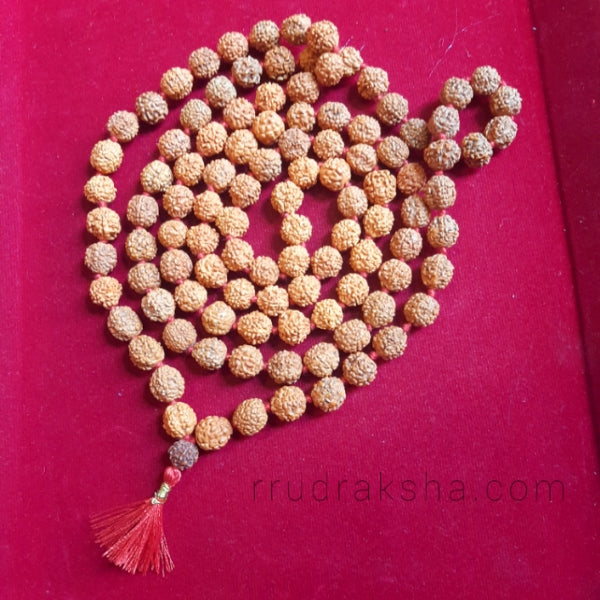
5. Complete one full mala (108 beads)
108 represents cosmic completeness. Completing one round helps stabilize energy and focus.
6. Practice at the same time daily
Regularity strengthens the mind and aligns your internal rhythms with spiritual energy.
7. Wear your Rudraksha throughout the day
This keeps your energy stable and allows the mantra's frequency to remain active in your aura.
🌟 Emotional & Energetic Transformation Through Chanting
Over time, mantra chanting with Rudraksha creates profound emotional shifts. People who practice consistently experience:
- A sense of emotional lightness
- Reduced anger and irritability
- Freedom from anxiety
- Improved relationships
- Greater compassion and patience
- A constant sense of inner support
Energetically, the aura becomes brighter and stronger. Intuition sharpens. Inner confidence grows. You begin operating from clarity instead of confusion, from awareness instead of impulse.
This is the transformation that sages called “Chitta Shuddhi”—purification of consciousness.
❓ FAQs — Mantra Chanting & Rudraksha
1. How long should I chant every day?
Even 10–15 minutes daily creates powerful changes. Advanced practitioners may chant for 30–60 minutes.
2. Can beginners use Rudraksha malas?
Yes. Rudraksha is suitable for everyone, regardless of spiritual experience.
3. What is the best time for chanting?
Early morning (Brahma Muhurta) is ideal, but evening chanting is also highly effective.
4. Can I chant multiple mantras?
Yes, but focus on one mantra until its vibration stabilizes within you.
5. Do I need initiation (diksha)?
Not necessarily. Some mantras require initiation, while universal mantras like OM or Mahamrityunjaya can be chanted by anyone.
6. How do I know if chanting is working?
You will feel calmer, more focused, less reactive, and more connected inwardly.
7. Can I wear Rudraksha while sleeping?
Yes, but if it feels uncomfortable, place it near your pillow to continue receiving its energy.
8. Do I need to cleanse my mala?
Occasionally. You can cleanse it with incense smoke or by chanting 108 mantras with intention.
🌼 Conclusion: The Inner Revolution Awaits
In a world filled with noise, distraction, and emotional turbulence, mantra chanting offers a return to the center of your being. It is a doorway to peace, clarity, and divine awareness. Rudraksha malas amplify this journey, helping you remain grounded, focused, and energetically aligned.
When sound vibration enters the mind, it transforms thought. When vibration enters the heart, it transforms emotion. When vibration enters the soul, it transforms destiny.
Mantra chanting is not just a practice—it is a path. A path to discover your true self, to awaken your inner brilliance, and to walk with grace in a world that often forgets silence. May Rudraksha be your companion, and may every mantra you chant take you one step closer to the divine presence within.
🙏 हर हर महादेव 🙏





Leave a comment